

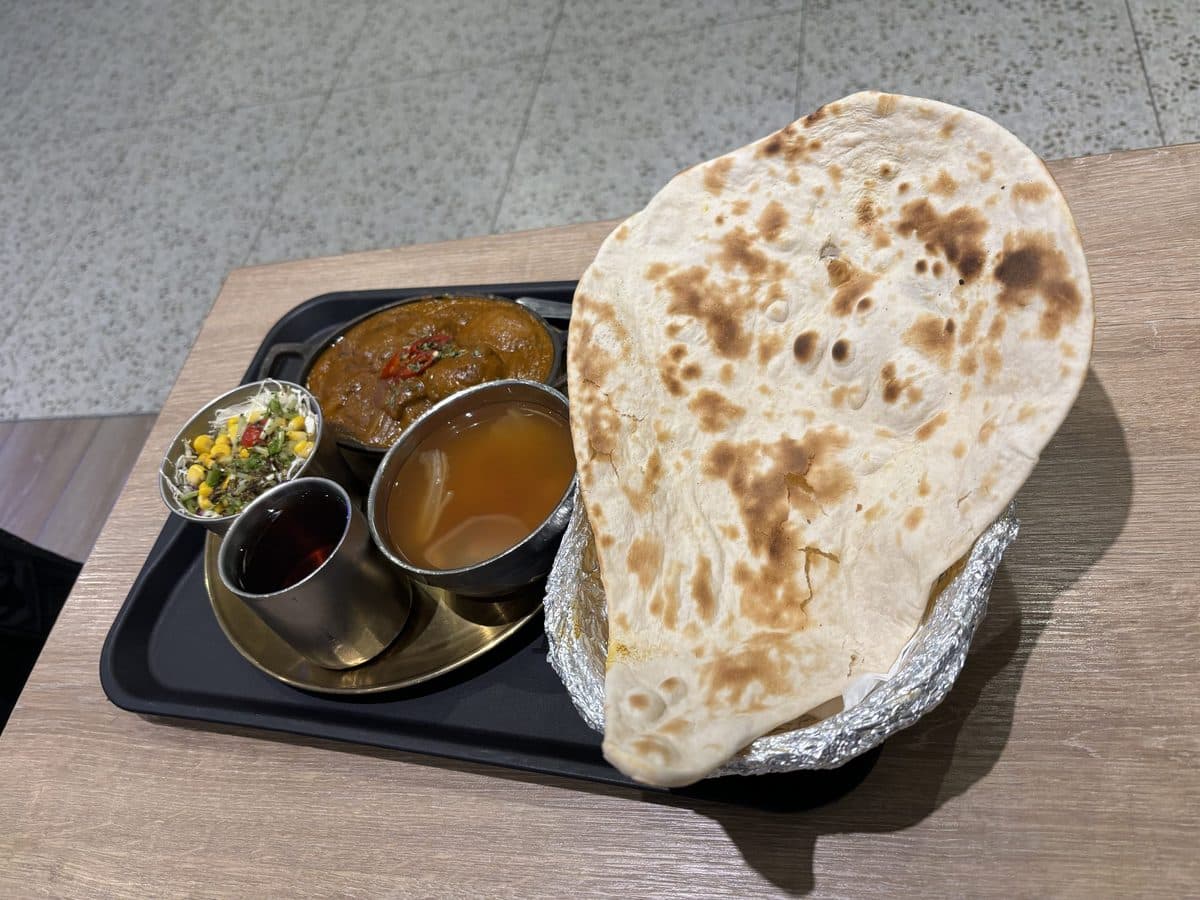
Short answer: a typical home-cooked Pakistani plate lands between 400 and 700 calories, and the difference between a light plate and a heavy one is almost always oil, not the dish. This chart covers 23 common desi dishes with calorie ranges and macros for realistic servings, so a plate can be logged without guessing. Every number below is a range, because that is the only honest way to describe food cooked in someone else's kitchen.
How to read this chart
Servings reflect how Pakistanis actually eat: plates, pieces, cups, and glasses, not 100-gram lab portions. Protein, carbs, and fat are estimates for the same serving. Where a dish swings a lot between home and restaurant cooking, both ends are covered. Each dish name links to a detailed post that breaks down the dish further and lists its sources. The figures below are built on USDA FoodData Central values, published nutrition sheets, and the per-dish research in those posts; where a number is inherently approximate, the range says so.
Rotis and breads
Breads are the quiet part of the plate. Nobody weighs a roti, but two large ones with ghee can carry more calories than the salan next to them.
| Dish | Typical serving | Calories | Protein | Carbs | Fat | | Roti | 1 medium (~40 g) | 100 to 130 | 3 to 4 g | 20 to 25 g | 1 to 2.5 g | | Paratha | 1 homemade (~60 g) | 150 to 220 | 4 to 5 g | 27 to 30 g | 4 to 7 g | | Anda paratha | 1 homemade (~90 g) | 220 to 300 | 8 to 10 g | 30 to 36 g | 9 to 13 g |
A dhaba paratha fried in a visibly oily tawa runs 280 to 400 for one piece, nearly double the homemade version. A teaspoon of ghee on a roti adds roughly 40 calories.
Rice and biryani
| Dish | Typical serving | Calories | Protein | Carbs | Fat | | Chicken biryani | 1 restaurant plate (~350 g) | 550 to 750 | 30 to 42 g | 85 to 100 g | 18 to 35 g | | Daal chawal | 1 home plate | 420 to 560 | 14 to 18 g | 85 to 100 g | 6 to 11 g | | Rajma chawal | 1 home plate (~405 g) | 570 to 640 | 19 to 21 g | 96 to 101 g | 9 to 14 g |
Biryani is the widest swing here. Homemade biryani with measured oil can sit near 160 to 190 per 100 grams; a restaurant degh plate with the oil pooled on top pushes the same plate toward 750.
Daals and curries
This is where most Pakistani dinners live, and where oil does the most damage. A single extra tablespoon of oil in the pot adds about 120 calories to the whole dish, and in a two-person pot that is 60 per plate.
| Dish | Typical serving | Calories | Protein | Carbs | Fat | | Daal (moong/masoor) | 1 cup homemade (~200 g) | 220 to 290 | 12 to 16 g | 34 to 42 g | 4 to 10 g | | Chana / chole | 100 g, home style | 150 to 200 | 8 to 10 g | 24 to 28 g | 4 to 8 g | | Chicken qeema | 150 g, homemade | 220 to 300 | 22 to 27 g | 5 to 8 g | 10 to 15 g | | Beef qeema | 150 g, homemade | 320 to 410 | 24 to 29 g | 4 to 7 g | 20 to 28 g | | Chicken karahi | 1 restaurant plate (~350 g) | 550 to 750 | 45 to 55 g | 10 to 20 g | 40 to 60 g | | Chicken qorma | 1 plate (~300 g) | 500 to 850 | 30 to 40 g | 12 to 25 g | 35 to 75 g | | Haleem | 1 bowl beef, homemade (~250 g) | 400 to 475 | 25 to 32 g | 40 to 50 g | 15 to 22 g | | Nihari | 1 cup restaurant beef (~240 g) | 400 to 550 | 34 to 46 g | 8 to 18 g | 23 to 35 g |
The karahi and qorma ranges look alarming until you notice the fat column. Both are meat dishes cooked in generous oil, and the restaurant versions are built around that roghan, the red oil that floats on top. A lean homemade nihari, cooked with trimmed meat and skimmed stock, can come in at 210 to 280 for a serving, less than half the restaurant cup.
Kebabs and grilled meat
Grilled meat is the most forgiving category on this chart. The calories come from the meat itself, and there is no hidden oil pool.
| Dish | Typical serving | Calories | Protein | Carbs | Fat | | Seekh kebab | 1 chicken (~60 g) | 100 to 130 | 9 to 11 g | 1 to 3 g | 6 to 9 g | | Chapli kebab | 1 restaurant beef (~130 g) | 250 to 330 | 16 to 20 g | 7 to 11 g | 18 to 25 g | | Chicken tikka | 1 piece (~75 g) | 100 to 140 | 15 to 20 g | 1 to 2 g | 4 to 7 g |
A beef seekh kebab runs 130 to 170 for the same size, because beef mince carries more fat than chicken. Tikka is the protein bargain of Pakistani BBQ: around 150 to 190 calories and nearly 30 grams of protein per 100 grams.
Breakfast
| Dish | Typical serving | Calories | Protein | Carbs | Fat | | Halwa puri set | 1 puri + 80 g halwa + 100 g chana | 450 to 550 | 11 to 14 g | 62 to 78 g | 16 to 22 g |
The dhaba version, two puris, a bigger halwa scoop, and oily chana, runs 650 to 850. It is the highest-calorie item on this chart, and most of it arrives before 10 in the morning.
Snacks
| Dish | Typical serving | Calories | Protein | Carbs | Fat | | Samosa | 1 standard bakery (~40 g) | 160 to 190 | 2 to 3 g | 14 to 16 g | 11 to 13 g | | Gol gappay | 6 pieces, khatta pani | 180 to 240 | 4 to 6 g | 35 to 45 g | 8 to 12 g |
Gol gappay surprise people. Six pieces feel like nothing, but the fried puris plus sweetened meetha pani push a large plate to 240 to 330.
Chai and lassi
| Dish | Typical serving | Calories | Protein | Carbs | Fat | | Chai (doodh patti) | 1 cup (~200 ml) | 130 to 170 | 5 to 7 g | 16 to 20 g | 5 to 8 g | | Sweet lassi | 1 glass (~250 ml) | 200 to 280 | 6 to 8 g | 28 to 40 g | 5 to 8 g | | Namkeen lassi | 1 glass (~250 ml) | 110 to 140 | 6 to 7 g | 8 to 12 g | 5 to 7 g |
Sugar is doing most of the work in sweet lassi and milky chai. A dhaba lassi made with buffalo milk and a slab of malai on top can reach 350 to 450 for a large glass.
The three things that decide every number
Almost every range on this chart is set by the same three levers.
Oil and ghee quantity. One tablespoon of cooking oil carries about 120 calories, and desi cooking does not measure tablespoons. The difference between a home daal and a dhaba daal is usually one or two spoonfuls of fat in the tarka. This is the single biggest reason restaurant plates land at the high end of every range.
Portion size of the starchy base. Rice and roti are served by the scoop and the stack, not by weight. A biryani plate can be 250 grams or 450 grams depending on who is holding the spoon, and that alone moves the total by 200 calories or more.
Meat cut and cooking style. Chicken breast tikka and beef nihari with visible fat are different foods wearing similar names. Grilled, dry-cooked, and lean-cut preparations sit at the low end of their ranges; slow-cooked, oil-heavy gravies sit at the high end.
Logging a plate without a scale
Take a normal dinner: 2 medium rotis and a cup of daal. In CalsFlow I would type it plainly, "2 medium rotis + 1 cup moong daal with normal tarka", and the app reads it as 200 to 260 for the rotis and 220 to 290 for the daal, landing the plate at 420 to 550. It also shows what it assumed about the oil. If that daal came from a dhaba where the tarka was visibly swimming, I adjust the oil up and watch the range move to 550 to 700. The range moves with what was actually eaten, which is the whole point.
For a fuller walkthrough of portion guessing, see how to count calories in Pakistani food and counting without a barcode scanner.
FAQs
Is Pakistani food good for weight loss?
The cuisine is not the problem. Daal, chana, grilled kebabs, and roti are all reasonable diet food; the calories pile up through oil, large rice portions, and fried breads. A home plate of daal chawal at 420 to 560 fits comfortably inside most daily targets. For what those targets look like, see how many calories you should eat per day.
Which Pakistani dish has the most calories on this chart?
The dhaba halwa puri set at 650 to 850, followed by restaurant plates of chicken karahi, biryani, and qorma at up to 750 to 850. None of them are off limits; they just need to be the day's main event rather than a side.
Why ranges instead of exact numbers?
Because exact numbers would be a lie. Two homes cooking the "same" karahi can differ by 200 calories on oil alone. A range that contains the truth beats a precise number that misses it. Weighing a dish once, even roughly, calibrates your eye for every plate after.
How do I count calories in desi food when eating out?
Match the dish to the closest row on this chart, take the restaurant end of the range, and add breads separately. Dhaba and restaurant food almost always sits at the high end because of oil. Our guide on counting without a scale covers the cup, piece, and palm methods in detail.
Start from the chart, then log the plate
Charts are for planning; logging is for accountability. The next time you eat out, find the dish here, note the portion in cups or pieces, then describe the meal in CalsFlow and adjust the oil to match what you saw. The chart gives you the range, the app holds you inside it.
Photo: WordPress Photo Directory, CC0.
CalsFlow provides nutrition estimates, not medical advice.