

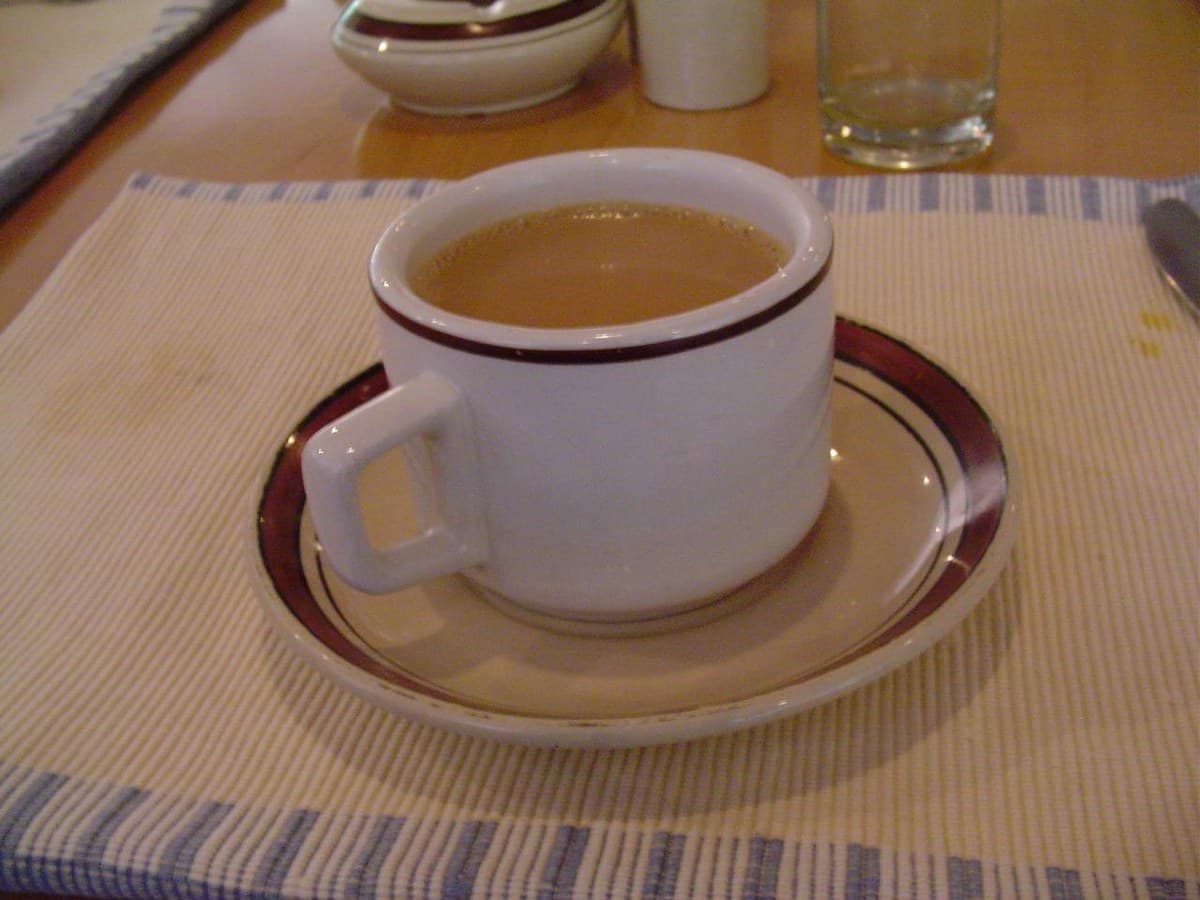
Short answer: a cup (about 200 ml) of homemade doodh patti with two teaspoons of sugar has roughly 130–170 calories. A lighter half-milk chai lands at 60–100, and a dhaba cutting chai from the corner shop sits around 60–90. The tea leaves themselves contribute almost nothing. Everything in the number comes from two things: how much milk went in, and how much sugar.
Milk and sugar decide the number
Chai is one of the simplest drinks to reverse-engineer. There are only three ingredients that matter.
Whole cow milk is about 60 kcal per 100 ml (USDA FoodData Central). One teaspoon of sugar adds 16 kcal, and two is 32. Brewed tea is 0–2 kcal, a rounding error.
Do the math on a standard home doodh patti: 200 ml of milk (120 kcal) plus two teaspoons of sugar (32 kcal), and you land at about 150. Your cup will drift up or down from there based on how your house pours.
One Pakistani wrinkle: the milk itself. If your household buys from a doodh wala, you are likely getting buffalo milk, which runs around 90–100 kcal per 100 ml compared to roughly 60 for cow milk. A doodh patti made from buffalo milk lands at the top of every range below, even with the same sugar.
The chai menu, ranked
| Chai | Portion | Calories | Protein | Carbs | Fat |
|---|---|---|---|---|---|
| Doodh patti, homemade, 2 tsp sugar | 1 cup (~200 ml) | 130–170 | 5–7 g | 16–20 g | 5–8 g |
| Regular home chai, half milk half water, 2 tsp sugar | 1 cup (~200 ml) | 60–100 | 3–4 g | 10–16 g | 2–4 g |
| Doodh patti, no sugar | 1 cup (~200 ml) | 100–130 | 5–7 g | 9–12 g | 5–8 g |
| Dhaba cutting chai, sweet | 1 small glass (~120 ml) | 60–90 | 2–3 g | 9–14 g | 2–4 g |
| Hotel karak / extra sweet doodh patti | 1 cup (~250 ml) | 170–220 | 6–8 g | 22–28 g | 6–9 g |
| Café chai latte, sweetened concentrate | 12 oz (~350 ml) | 190–310 | 6–9 g | 34–47 g | 3.5–9 g |
The café row is a different drink wearing chai's name. Chain latte mixes are mostly sugar syrup with milk; at 190–310 kcal a 12 oz serving (Nutribit), one is a small meal, not a tea break. Homemade chai never reaches those numbers unless someone really goes at it with the sugar.
Why the number swings
Cup size is the quiet variable. A "cup" at one house is a 150 ml mug and at another a 250 ml glass, and the calorie count follows the milk. Then comes the spoon. Many people say "two spoons" while pouring what is closer to three heaped ones, and every extra teaspoon is 16 kcal you never tasted as extra sweetness because the milk masks it.
Hotels and dhabas push the top end. A hotel karak is often made with evaporated or condensed milk and enough sugar to carry the whole cup, which is why the same "one chai" can be 80 calories at home and 200 outside. If you drink most of your chai out, log toward the top.
Cutting the sugar is the cheapest calorie saving in Pakistani cooking. Dropping from two teaspoons to none takes about 30–35 kcal out of every cup, and across four cups a day that is more than 130 kcal gone without changing a single meal. You will notice the taste change for about a week. Most people who make the switch stop noticing after that.
Chai and weight loss
Three to four cups of doodh patti a day adds up to 400–600 kcal, and it is the kind of total that sneaks past people who are otherwise eating carefully. The cups feel like water breaks, not food. They count anyway.
That does not mean chai has to go. Halving the milk, dropping a teaspoon of sugar, or switching one of the four cups to plain green tea cuts the daily chai budget nearly in half. What fails is the combination of four sweet doodh pattis plus a paratha breakfast, which can pass 1,000 kcal before lunch. Numbers for the paratha side of that morning are in our paratha calories guide.
How to track chai in CalsFlow
In CalsFlow, type:
"1 cup doodh patti, 2 sugar, 200ml"
You get the calorie and macro estimate plus the assumptions behind it: the milk type it guessed, the cup size, the sugar. Drink dhaba chai most mornings? Add "buffalo milk, 3 sugar" and watch the number move. The useful habit is naming the milk and the sugar, because those two lines decide nearly the whole estimate. Same honest-entry approach as our guide to counting calories in Pakistani and desi food.
A quick note on caffeine
Black tea brings caffeine, roughly 75 mg per mug on the NHS's estimate, so four strong cups add up to a meaningful dose. Most healthy adults handle that fine, but caffeine later in the day messes with sleep, and sleep is doing quiet work for your appetite the next day. During pregnancy, the NHS advises keeping total caffeine from all sources under 200 mg a day (source). If chai is your main caffeine source, two to three cups keeps you comfortably inside that line.
FAQs
How many calories are in chai without sugar?
A 200 ml cup of doodh patti without sugar runs about 100–130 kcal, all from the milk. A half-milk chai without sugar drops to roughly 40–70.
Is doodh patti worse than regular chai?
For calories, yes, because it is all milk and no water. A doodh patti has roughly twice the milk of a standard chai, so it carries roughly twice the calories at the same sugar level.
Does chai have protein?
A little. A full-milk cup gives you 5–7 g from the milk itself, which is not nothing for a drink. It will not replace an actual protein source; our protein guide has the targets.
How many cups of chai is too many?
For calories, watch the total, not the count. Four light half-milk cups are under 400 kcal; four hotel karaks can pass 800. Caffeine-wise, most people start feeling it past four or five strong cups, and the NHS pregnancy ceiling of 200 mg a day works out to about two or three mugs.
Drinking a different-sized cup, or buffalo milk from the doodh wala? Describe it in CalsFlow and adjust the milk and sugar lines. Get the app on the Google Play Store.
CalsFlow provides nutrition estimates, not medical advice.