

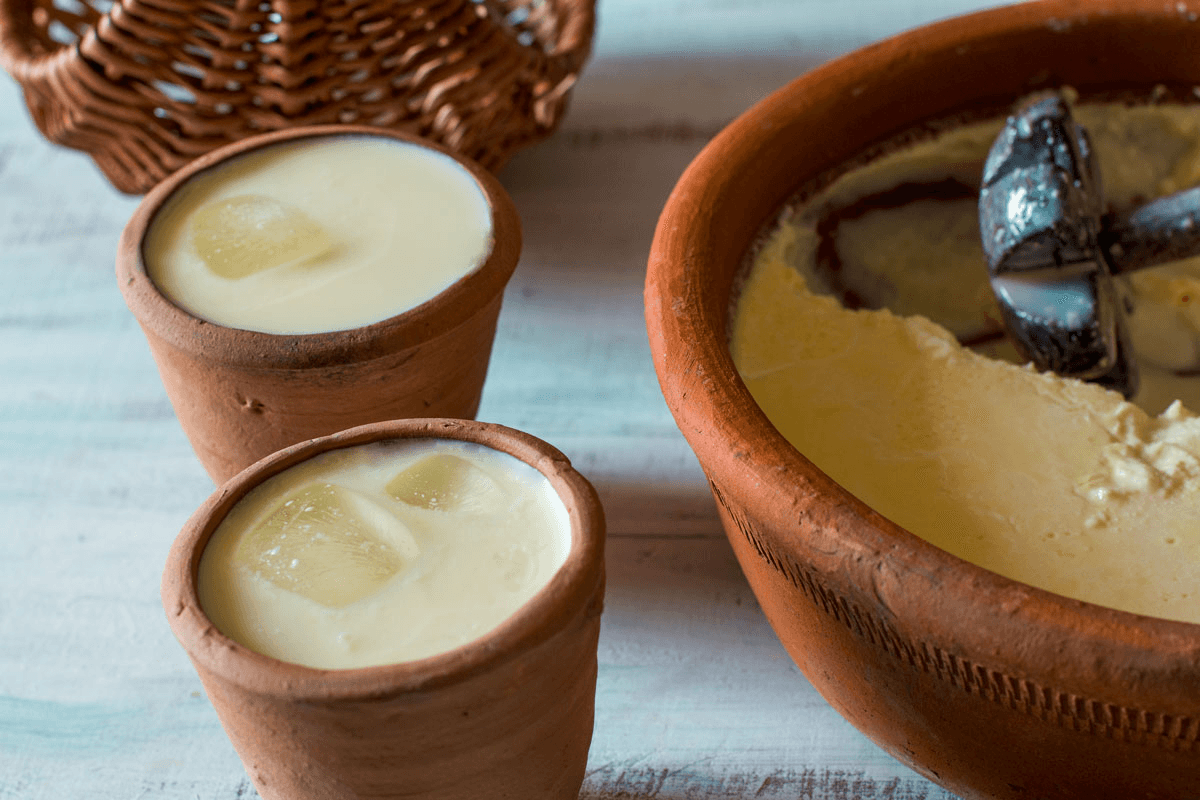
Short answer: a 250 ml glass of homemade sweet lassi has roughly 200–280 calories. A namkeen (salted) lassi the same size comes in at 110–140, since the only real difference is the sugar. Mango lassi lands between 220–300. The drink itself is just yogurt thinned with water or milk, so almost every calorie above 120 comes from whatever gets added after the churn.
Where the calories actually come from
Plain whole milk yogurt, the base of every lassi, is about 61 kcal per 100 g (USDA FoodData Central), with roughly 3.5 g of protein. The yogurt in a standard glass, around 200 g of dahi, accounts for close to 120 kcal before a single spoon of sugar.
Sugar does the rest. One tablespoon adds about 50 kcal, and most home recipes use two. That one decision carries a lassi from 120 to 220. Some houses thin the yogurt with milk instead of water, which adds another 30 kcal or so per half cup.
The Pakistani wrinkle is the same one we found with chai: the dahi itself. Buffalo milk yogurt is noticeably richer than cow milk yogurt, so lassi made from the doodh wala's milk can carry about half again the calories of the same recipe made with packaged cow milk dahi, before anything else changes.
The lassi menu, compared
| Lassi | Portion | Calories | Protein | Carbs | Fat |
|---|---|---|---|---|---|
| Sweet lassi, homemade, 2 tbsp sugar | 1 glass (~250 ml) | 200–280 | 6–8 g | 28–40 g | 5–8 g |
| Namkeen (salted) lassi | 1 glass (~250 ml) | 110–140 | 6–7 g | 8–12 g | 5–7 g |
| Mango lassi, homemade | 1 glass (~250 ml) | 220–300 | 6–8 g | 36–48 g | 5–8 g |
| Dhaba lassi, buffalo milk, malai on top | 1 large glass (~350 ml) | 350–450 | 9–12 g | 38–52 g | 16–24 g |
The dhaba row is a different animal. The glass is bigger, the yogurt comes from richer buffalo milk, and the malai spooned on top is essentially clotted cream. One of these can carry the calories of a full meal while feeling like a drink.
Why one glass is a snack and another is a meal
Glass size does quiet work. A home glass is usually 200–250 ml. A dhaba kulhar or the steel glass at a lassi shop can hold 350 ml or more, and the calorie count follows the volume straight up. Then the malai. A generous spoonful adds 60–80 kcal you barely register because it melts into the froth.
Sugar is the sneaky part. People describe their lassi as "not too sweet" while adding three heaped tablespoons, and every tablespoon past the second is 50 kcal with no extra nutrition. Mangoes add their own sugar too: a ripe one carries about 15 g of natural sugar per 100 g (USDA FoodData Central), which is why even an unsweetened mango lassi runs sweeter than it tastes.
Lassi and weight loss
A daily namkeen lassi is one of the easiest drinks to keep: around 120 kcal, a decent hit of protein, and it fills the cold drink slot for the whole afternoon. Sweet lassi is a different calculation. Two homemade glasses a day is 400–560 kcal, almost entirely from the sugar.
The sugar math is worth seeing once. WHO advises keeping free sugars under 10% of daily energy, about 50 g on a 2000 kcal diet (source). Two sweet lassis put roughly 50–60 g of added sugar in the day by themselves, which is the whole allowance in a drink. Dropping to one tablespoon of sugar per glass, or switching the second glass to namkeen, fixes most of that without giving up the habit.
How to track lassi in CalsFlow
In CalsFlow, type:
"1 glass sweet lassi, homemade, 2 spoons sugar"
You get the calorie and macro estimate plus the assumptions behind it: the yogurt amount it guessed, the glass size, the sugar. Drink most of your lassi at a dhaba? Add "buffalo milk, malai" and watch the estimate climb. The trick is spelling out the sugar and the milk, because those two lines decide nearly the whole number. Same approach as our guide to counting calories in Pakistani and desi food.
FAQs
Is lassi good for weight loss?
Namkeen lassi, mostly yes. It is filling, low in calories, and easy to make a daily habit. Sweet lassi can still fit, but count it like food, because at 200-plus calories it is closer to a snack than a drink.
How many calories in a dhaba lassi?
The big glass with malai on top runs 350–450 kcal. Bigger glass, richer buffalo milk yogurt, and the cream on top each push it up. If the dhaba is your regular spot, log toward the top of the range.
Does lassi have protein?
A fair amount for a drink. The yogurt in a glass gives 6–8 g, which is more than most cold drinks and juices manage. It will not replace an actual protein source; our protein guide has the daily targets.
Is mango lassi healthier than sweet lassi?
Not really, for calories. The mango replaces some of the added sugar with fruit sugar, and you get vitamin C and fiber with it, but the totals end up in the same neighborhood. Pick the one you enjoy and track it honestly.
Having lassi with parathas this morning? That combo is a classic for a reason, and the numbers for the other half are in our paratha calories guide.
Drinking a bigger glass, or buffalo milk from the doodh wala? Describe it in CalsFlow and adjust the yogurt and sugar lines. Get the app on the Google Play Store.
Cover photo: Vivekpat30 via Wikimedia Commons (CC BY-SA 4.0).

CalsFlow provides nutrition estimates, not medical advice.