

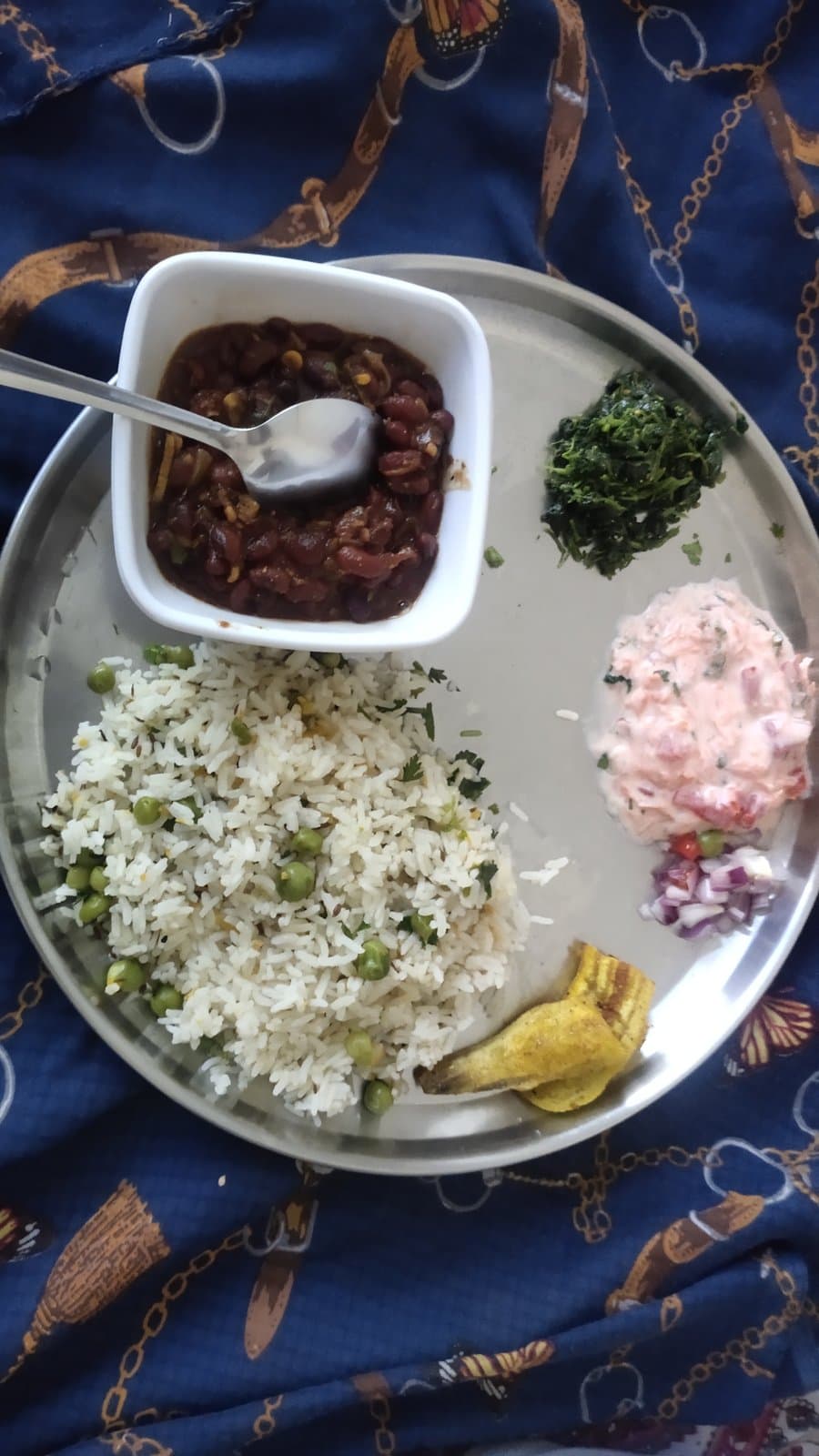
Short answer: a homemade plate of rajma chawal carries 570 to 640 calories. That is roughly one cup of rajma curry over one and a half cups of steamed rice. A dhaba plate, cooked in more oil with a bigger mound of rice, climbs to 680 to 800. The beans themselves are calorically cheap. The oil in the gravy and the amount of rice decide the number.
Rajma, also called laal lobia in Pakistan, is a staple of Punjabi kitchens on both sides of the border: red kidney beans simmered in a tomato and onion gravy, served over rice. It is regular, everyday food in the Punjab province of Pakistan, and unlike most celebratory dishes it has a quiet nutritional case for itself. This post breaks down exactly where the calories sit so you can log a plate without guessing.
What actually sets the number
The beans. Plain boiled kidney beans are among the most calorie efficient foods in the desi kitchen. USDA data puts 100 grams of cooked red kidney beans at 127 kcal with 8.7 grams of protein and 6.4 grams of fiber (myfooddata.com). A cup of plain beans, around 180 grams, runs about 229 kcal. This is the component that fills you up without costing much.
The gravy. This is the first real lever. A typical home recipe starts the masala with two to three tablespoons of oil for a pot that serves four, which lands at roughly 60 to 90 kcal of oil per plate. Onion and tomato add a little more. Nothing alarming. The problem is only when the gravy swims in oil, which is common at restaurants and roadside dhabas, where the hand pouring oil into the karahi has no measuring spoon.
The rice. This is the second lever and usually the bigger one. Cooked white rice runs 130 kcal per 100 grams (calzen.ai, source USDA), so one and a half cups, about 225 grams, adds roughly 290 kcal. Rice portions vary more than people admit. A careful home serving and a dhaba plate can differ by a full cup, which alone swings the total by nearly 200 kcal.
The finishing touches. A spoon of ghee melted over the rice adds about 120 kcal. A side of sliced onion and green chili adds almost nothing. Achar adds flavor and very few calories.
Rajma chawal calories and macros
| Plate | Portion | Calories | Protein | Carbs | Fat |
|---|---|---|---|---|---|
| Plain cooked kidney beans | 100 g | 127 | ~9 g | ~23 g | ~0.5 g |
| Rajma curry, homemade with gravy | 1 cup (~180 g) | 280 to 330 | 13 to 15 g | 33 to 38 g | 8 to 13 g |
| Rajma curry, restaurant style | 1 cup (~180 g) | 330 to 400 | 13 to 15 g | 32 to 36 g | 15 to 22 g |
| Cooked white rice | 1.5 cups (~225 g) | ~290 | ~6 g | ~63 g | ~0.7 g |
| Homemade plate (1 cup rajma + 1.5 cups rice) | ~405 g | 570 to 640 | 19 to 21 g | 96 to 101 g | 9 to 14 g |
| Dhaba or restaurant plate | ~450 g | 680 to 800 | 20 to 22 g | 105 to 115 g | 20 to 30 g |
| Plate as served | 100 g | 130 to 155 | 4.5 to 5.5 g | 23 to 26 g | 2 to 3.5 g |
Bean values come from USDA food composition data; curry rows add gravy oil, onion, and tomato, with the restaurant row priced for the extra oil that goes into commercial gravies.
Why homemade and dhaba plates are different foods
The ingredients list is the same, but the proportions are not. At home, a family pot of rajma uses a few tablespoons of oil spread across four or five plates, and the rice is scooped with a household bowl. A dhaba pot gets a generous pour of oil because customers judge gravy by its shine, and the rice is heaped. Neither cook is doing anything wrong. The home cook is feeding family, the dhaba is selling comfort.
The practical takeaway: if you log "rajma chawal" as one number everywhere, you will be off by up to 200 kcal depending on where you ate. Log the plate honestly. Homemade and restaurant are two different entries, not two versions of one.
How to track a plate in seconds
Type it the way you would describe it to a friend:
"1 plate homemade rajma chawal, medium oil, 1.5 cups rice"
In CalsFlow you get the calorie and macro estimate plus the assumptions behind it: how much of the plate it counted as beans versus rice, what oil level it priced into the gravy, and whether it treated the plate as home style. Ate at a dhaba instead? Say so and the estimate shifts with the oil and the rice. Same describe-what-you-see approach as our guide to counting calories in Pakistani and desi food.
Rajma chawal and protein
This is where rajma quietly beats most rice dishes. A homemade plate delivers 19 to 21 grams of protein, which is more than a plate of daal chawal at similar calories, and the beans bring fiber that plain rice dishes lack. For vegetarians trying to hit a protein target, it is one of the strongest daily staples in the Pakistani kitchen. Our protein guide explains how to set a target; rajma plates make reaching it much easier.
It is still a carb heavy meal, and it will not rescue a weight loss plan on its own. But as plates go, one with 20 grams of protein and 11 grams of fiber keeps you full far longer than the same calories of paratha or samosa, which is what actually controls how much you eat for the rest of the day.
FAQs
How many calories in one plate of rajma chawal? A homemade plate runs 570 to 640 kcal. A restaurant or dhaba plate with more oil and more rice lands at 680 to 800.
How many calories in rajma chawal per 100 grams? About 130 to 155 kcal per 100 grams of the plate as served. The beans alone are 127 per 100 grams; the gravy and rice move it only slightly per gram.
How much protein is in rajma chawal? Roughly 19 to 21 grams per homemade plate. Most of it comes from the beans, which carry about 8.7 grams of protein per 100 grams cooked.
Is rajma chawal good for weight loss? Better than its reputation suggests. The fiber and protein make a plate genuinely filling, and it beats fried snacks at similar calories. The risks are the rice portion and extra oil. Keep the rice to one and a half cups and skip the ghee drizzle and the plate stays reasonable.
Is rajma chawal healthy? Kidney beans bring protein, fiber, iron, and potassium with almost no fat. Paired with rice in normal portions it is a balanced meal. The health question is always the same one: how much oil went into the gravy.
The bottom line
One homemade plate: 570 to 640 kcal, with the gravy oil and the rice portion doing almost all the variation. Dhaba plates run 680 to 800. It is one of the more protein rich vegetarian staples in the Pakistani kitchen, which makes it easier to log with confidence than it looks. Eating rajma chawal today? Describe the plate in CalsFlow: where you ate, how much rice, and how oily the gravy looked, and get your real number.
Cover photo: Rajma Chawal Thali by Ashviin khemka, CC BY-SA 4.0, via Wikimedia Commons. CalsFlow provides nutrition estimates, not medical advice.