

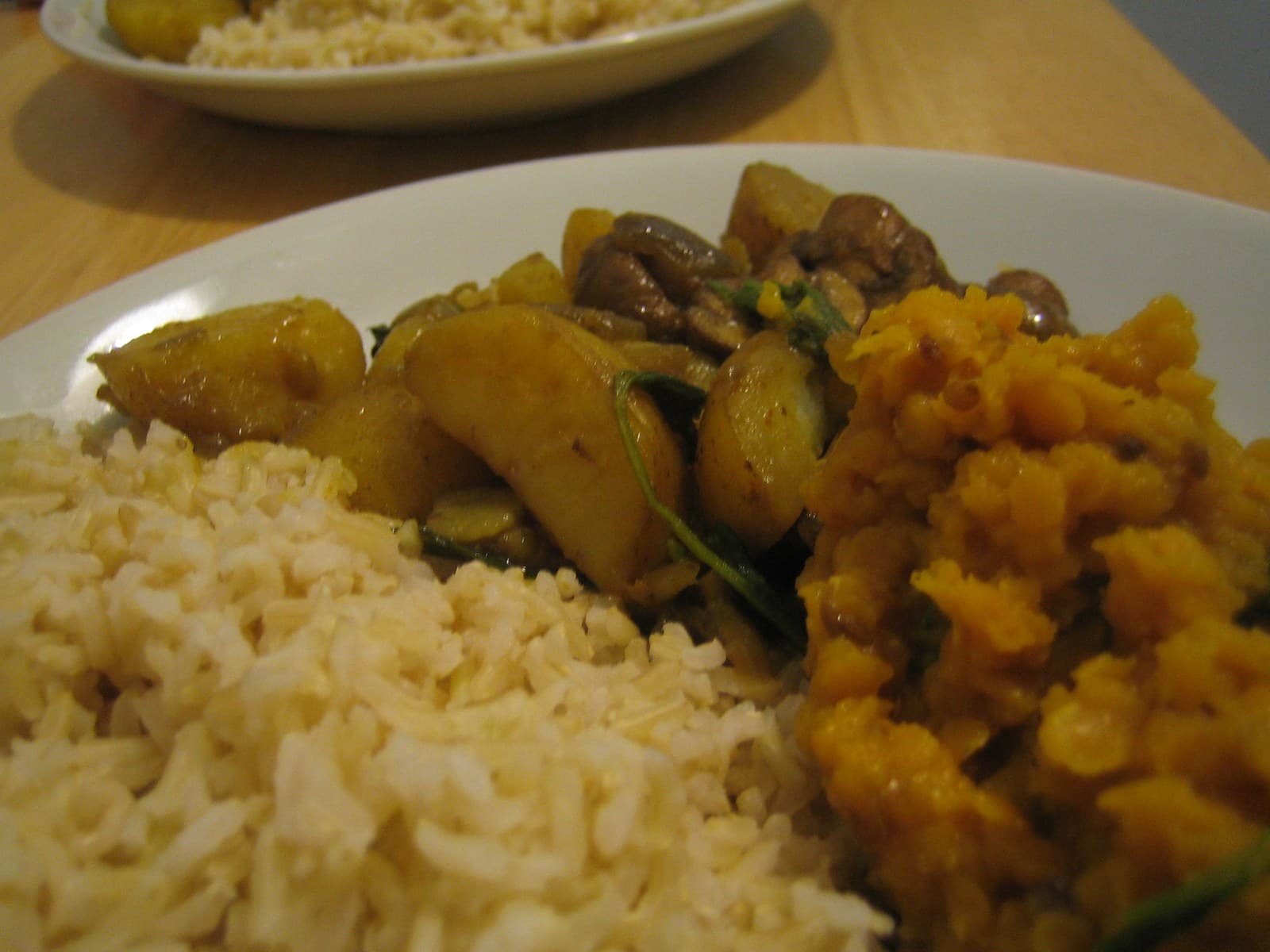
Short answer: a typical homemade plate of daal chawal carries roughly 420 to 560 calories. Picture about 1.5 cups of cooked rice with a cup of daal poured over it. The range is wide because of two things: how much rice is actually on the plate, and how much oil went into the tarka.
Daal chawal is Pakistan's everyday comfort meal. Cooked lentils with a spiced tempering, served over plain boiled rice. It shows up on dinner tables a few times a week in most homes, which makes it one of the meals worth knowing properly if you track calories at all.
What decides the number
The rice portion. Rice is the calorie engine of this plate. A cup of cooked basmati weighs around 150 to 160 grams and lands near 200 kcal; USDA data puts cooked white rice at about 130 kcal per 100 g. Home plates usually hold one and a half to two cups. That alone is 300 to 400 kcal before the daal even arrives. If your plate leans heavy on rice and light on daal, the number climbs fast.
How thick the daal is. Plain boiled lentils run about 115 kcal per 100 g, with roughly 9 g of protein. But a daal is not a bowl of plain lentils. A thin, soupy moong daal is mostly water. A thick chana daal is mostly lentils. Same cup, very different food. A cup of homemade daal with a light tarka sits around 150 to 210 kcal. The thicker and oilier it gets, the higher it climbs.
The tarka. This is the quiet calorie driver. A tablespoon of oil or ghee adds roughly 120 kcal to the whole pot. A home cook might use one or two tablespoons for four servings. A dhaba or restaurant kitchen can easily double that per plate, and nobody announces it. When daal chawal surprises people, the tarka is almost always the reason.
Which daal it is. Moong and masoor daals are the lightest and the most common pairing with rice. Chana daal is a little denser and richer. Maash sits somewhere in between. The differences are modest, maybe 20 to 30 kcal per cup, so this matters far less than the rice and the oil.
The extras. A papad on the side, a spoon of ghee melted over the top, achaar. None of them are the meal, but a spoon of ghee adds about 120 kcal and a papad adds 30 to 50. They count.
Daal chawal calories and macros
| Portion | Calories | Protein | Carbs | Fat |
|---|---|---|---|---|
| 100 g plain boiled lentils (no tarka) | 110 to 120 | 8 to 9 g | 19 to 21 g | <1 g |
| 1 cup cooked daal, homemade, light tarka (~240 g) | 150 to 210 | 9 to 12 g | 24 to 30 g | 4 to 7 g |
| 1 cup cooked basmati rice (~155 g) | 195 to 210 | ~4 g | 43 to 45 g | <1 g |
| 100 g cooked white rice | 130 to 140 | ~2.7 g | ~28 g | <0.5 g |
| Home plate: 1.5 cups rice + 1 cup daal | 420 to 560 | 14 to 18 g | 85 to 100 g | 6 to 11 g |
| Dhaba/restaurant plate, heavy ghee tarka | 600 to 800 | 15 to 20 g | 95 to 115 g | 18 to 28 g |
| 1 spoon of ghee on top (extra) | ~120 | 0 g | 0 g | ~14 g |
These line up with the base ingredients. Cooked lentils sit around 115 kcal per 100 g and cooked white rice around 130 per 100 g in USDA's FoodData Central (fdc.nal.usda.gov), so the plate math is just those two numbers plus the tarka.
How daal chawal compares
Against chicken biryani, daal chawal is the lighter plate. Biryani's meat, layered rice and cooking oil push a typical plate to 500 to 700 kcal, sometimes more. Daal chawal's ceiling stays lower because lentils are lean and the only real fat is the tempering.
Against daal with roti, it is usually the heavier meal. Two rotis with daal tend to run lower than a full plate of rice with daal, mostly because people serve themselves less bread by weight than rice. If the choice is between the two in a deficit, daal roti is the safer pick; our roti calories breakdown shows how portions decide everything there too.
And it beats the deep fried options without trying. A samosa plate and a daal chawal plate can look equally filling, but they are not the same food at all.
Logging it in CalsFlow
I typed "1 plate daal chawal, homemade, light oil" into CalsFlow to see what it assumes. It split the plate into 1.5 cups of cooked basmati and a cup of moong daal with a light tarka, then returned a 420 to 540 kcal range with the assumptions listed. The rice portion was doing most of the work, exactly as expected.
Then I changed the description to "dhaba style, extra ghee tarka." The estimate jumped to around 620 to 760 kcal and the app flagged the tarka as the biggest uncertainty. That matches the lesson in our guide to counting calories in desi food: for a plate like this, the two details worth adjusting are the amount of rice and the amount of oil in the tempering. Everything else is noise.
The protein angle
A home plate of daal chawal delivers roughly 14 to 18 g of protein. Respectable for a vegetarian meal, but not a high protein one. Lentils bring the protein, rice brings very little, and the two complement each other on amino acids, which is part of why this pairing has fed the subcontinent for centuries.
If protein is the goal, the fixes are easy: make the daal thick rather than soupy, be generous with the lentils and light with the rice, or add a boiled egg or a bowl of dahi on the side. Our protein requirements article walks through daily targets if you want to see where this plate fits.
FAQs
How many calories are in 1 plate of daal chawal? About 420 to 560 kcal for a typical home plate, and 600 to 800 at a dhaba or restaurant where the tarka is heavy. The rice portion and the oil decide it.
Is daal chawal good for weight loss? It can be. Lentils bring protein and fiber for relatively few calories, which keeps you full. The risk is the rice: it is easy to serve yourself two big cups. Keep the rice to about a cup, keep the daal thick, go easy on the tarka, and it fits a deficit comfortably.
Which has more calories, daal chawal or biryani? Biryani, in most cases. A biryani plate typically runs 500 to 700 kcal against daal chawal's 420 to 560 at home.
Does daal chawal have protein? Yes, roughly 14 to 18 g per home plate, almost all of it from the lentils.
Eating daal chawal tonight and wondering about the tarka? Describe the plate in CalsFlow, set the rice amount, and adjust the oil until it matches your kitchen. You can grab it on Google Play.
Cover photo: Dahl, curry and rice by Gordon Joly via Wikimedia Commons (CC BY-SA 2.0). CalsFlow provides nutrition estimates, not medical advice.