

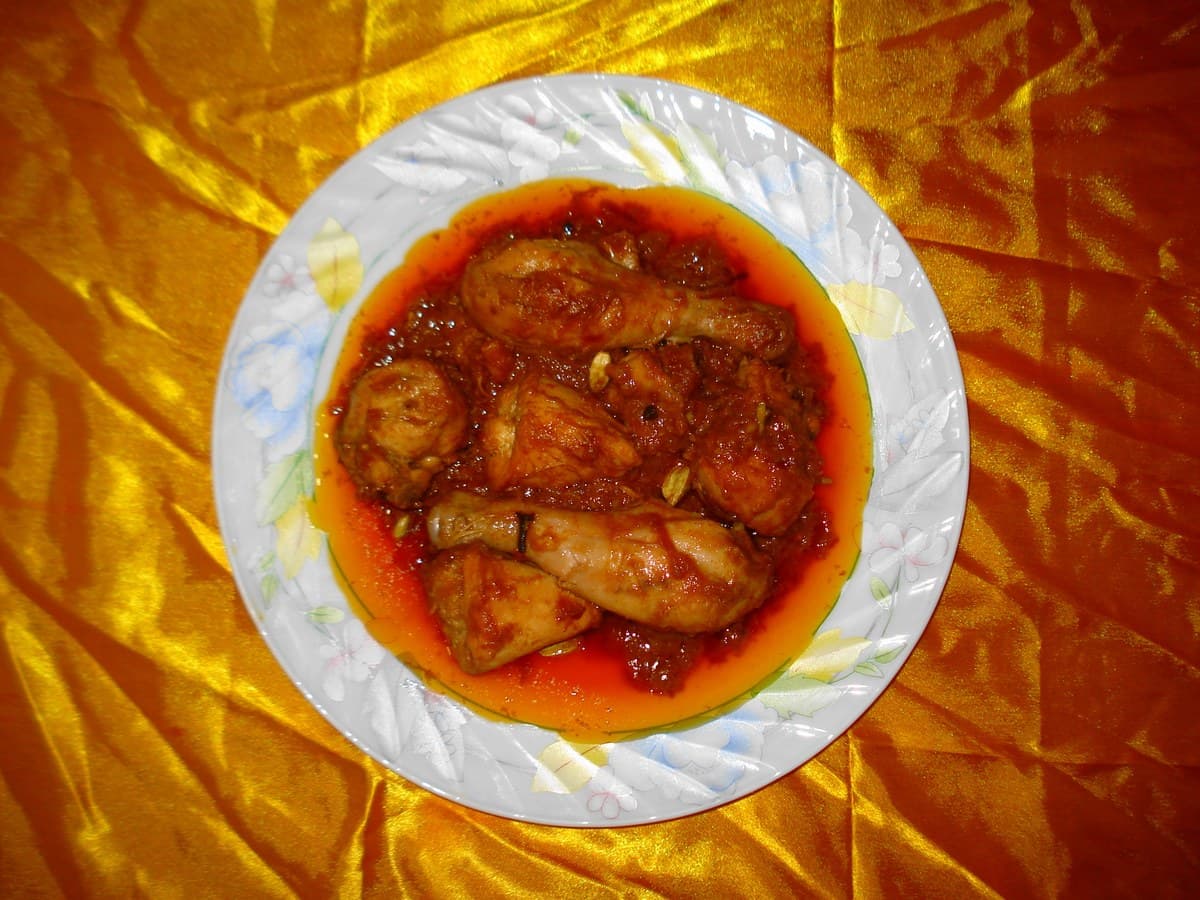
Short answer: a typical plate of chicken qorma (about 300 g with gravy) has 500 to 750 calories. Per 100 g, expect 170 to 280 kcal, and the spread comes down to one thing more than any other: oil. Pakistani qorma, the yogurt-and-browned-onion kind served at weddings and dhabas, runs richer than the mild coconut-cream "korma" found abroad.
Why qorma calories swing so much
The roghan. That glossy red oil floating on top is the giveaway. In a proper qorma, oil is cooked until it separates and rises. It looks great and tastes like the whole point of the dish, but it is pure fat. Two extra tablespoons of visible oil on a plate add roughly 240 calories, and nobody at a shaadi is skimping.
Homemade vs degi. Home qorma uses measured oil, often 2 to 3 tablespoons for a whole pot. A deg, the giant pot at weddings and restaurants, gets oil by the ladleful. Restaurant qorma lands 20 to 40 percent higher per 100 g, same as chicken karahi.
Bone-in chicken. Pakistani qorma is almost always bone-in pieces, which means 100 g on your plate includes bone weight. A bone-in leg with clinging gravy weighs roughly 150 g, of which maybe 90 g is edible. Good for flavor, tricky for estimating.
Yogurt, not cream. Traditional qorma thickens with yogurt and browned onion paste. Some restaurant versions add cream or ground nuts, which push calories up. The British-style korma, coconut and cream based, is a different dish nutritionally.
Gravy to meat ratio. Qorma gravy is where the oil lives. A plate that is mostly two chicken pieces with a spoon of gravy can be 200 calories lighter than the same pieces drowned in salan.
Chicken qorma calories and macros
| Portion | Calories | Protein | Carbs | Fat |
|---|---|---|---|---|
| 100 g, homemade (moderate oil) | 170 to 220 | 10 to 13 g | 4 to 7 g | 12 to 16 g |
| 100 g, restaurant or degi | 220 to 280 | 10 to 13 g | 5 to 8 g | 16 to 24 g |
| 1 large piece with gravy (~150 g) | 250 to 400 | 15 to 20 g | 6 to 10 g | 18 to 30 g |
| 1 plate, homemade (~300 g) | 500 to 650 | 30 to 40 g | 12 to 20 g | 35 to 50 g |
| 1 plate, restaurant (~300 g) | 650 to 850 | 30 to 40 g | 15 to 25 g | 50 to 75 g |
| Plus 2 rotis | add 200 to 280 | add 6 to 8 g | add 40 to 50 g | add 2 to 4 g |
For reference, the chicken itself is lean: cooked chicken breast is about 165 kcal and 31 g protein per 100 g (USDA FoodData Central). Everything above that number in qorma is the gravy. One tablespoon of cooking oil alone is around 120 kcal.
Qorma with roti is the standard pairing, and two rotis add roughly 200 to 280 calories depending on size (see roti calories). A plate of qorma with two rotis is a 700 to 1,100 calorie meal before you touch anything else.
Qorma vs karahi vs nihari
People mix these up, and for tracking it matters:
- Karahi is tomato and ginger, cooked fast in a wok. Similar oil levels, a bit less gravy, so per 100 g it usually lands close to qorma or slightly lower. Details in chicken karahi calories.
- Qorma is yogurt and browned onion, slow-braised until the oil separates. Thicker, richer gravy; the oil count is the whole story.
- Nihari is the slow overnight stew, usually beef, with the most fat of the three. See nihari calories.
Same chicken, three different calorie profiles. The gravy decides.
The honest way to log qorma
Qorma is hard to track because the gravy hides everything. What works:
- Count the pieces, not the plate. Log "2 chicken leg pieces with gravy" instead of "1 plate qorma." Pieces are countable; gravy depth is not.
- Read the oil. A thin sheen means moderate oil; a deep red pool means degi-style richness. When in doubt, log the higher-oil version. Overestimating slightly beats the alternative.
- Separate the bread. Roti, naan, and rice are separate entries. A naan can quietly add 300 or more calories to a qorma meal.
In CalsFlow, type:
"degi chicken qorma, 2 leg pieces, lots of gravy, with 2 rotis"
You get the estimate with the assumptions spelled out: piece count, oil level, gravy amount. Eating the homemade version tonight? Dial the oil down and watch the number move. Two weeks of this and you will know your usual order by heart.
Is chicken qorma healthy?
It is protein-rich and built on yogurt, onion, and spices, which is a fine base. The problem is dose: restaurant qorma can deliver a full meal's fat in the gravy alone. At home, qorma is very fixable: measure the oil, use low-fat yogurt, and it drops 100 to 200 calories per serving without tasting like diet food. (If protein is your target, how much protein you need per day is worth a read.)
FAQs
Is qorma the same as korma? Same dish, different spelling. Qorma is the Urdu and Pakistani spelling; korma is the common English one. Note the Pakistani version, yogurt, browned onion, visible oil, is richer than the mild coconut-cream korma served in Western restaurants.
Can I eat chicken qorma while losing weight? Yes, with portion control. Keep the chicken pieces, go light on the gravy, and pair with one roti instead of two. The broader pattern for Pakistani and desi food: measure the oil, not the dish.
How many calories are in chicken qorma with naan? Roughly 900 to 1,200: 500 to 750 for the qorma plate plus 300 to 450 for a restaurant naan. It is one of the heavier common combos, so log the naan honestly.
Does qorma have more calories than chicken karahi? Usually a little more per 100 g, because qorma gravy carries more separated oil. But the gap is small compared to the gap between any homemade salan and its restaurant version.
The bottom line
Chicken qorma: 170 to 280 kcal per 100 g, 500 to 850 per plate, with 30 to 40 g of protein hiding under the gravy. Count the pieces, read the oil, log the bread separately. Having qorma this weekend? Describe it in CalsFlow and get your real number, assumptions included.
CalsFlow provides nutrition estimates, not medical advice.