

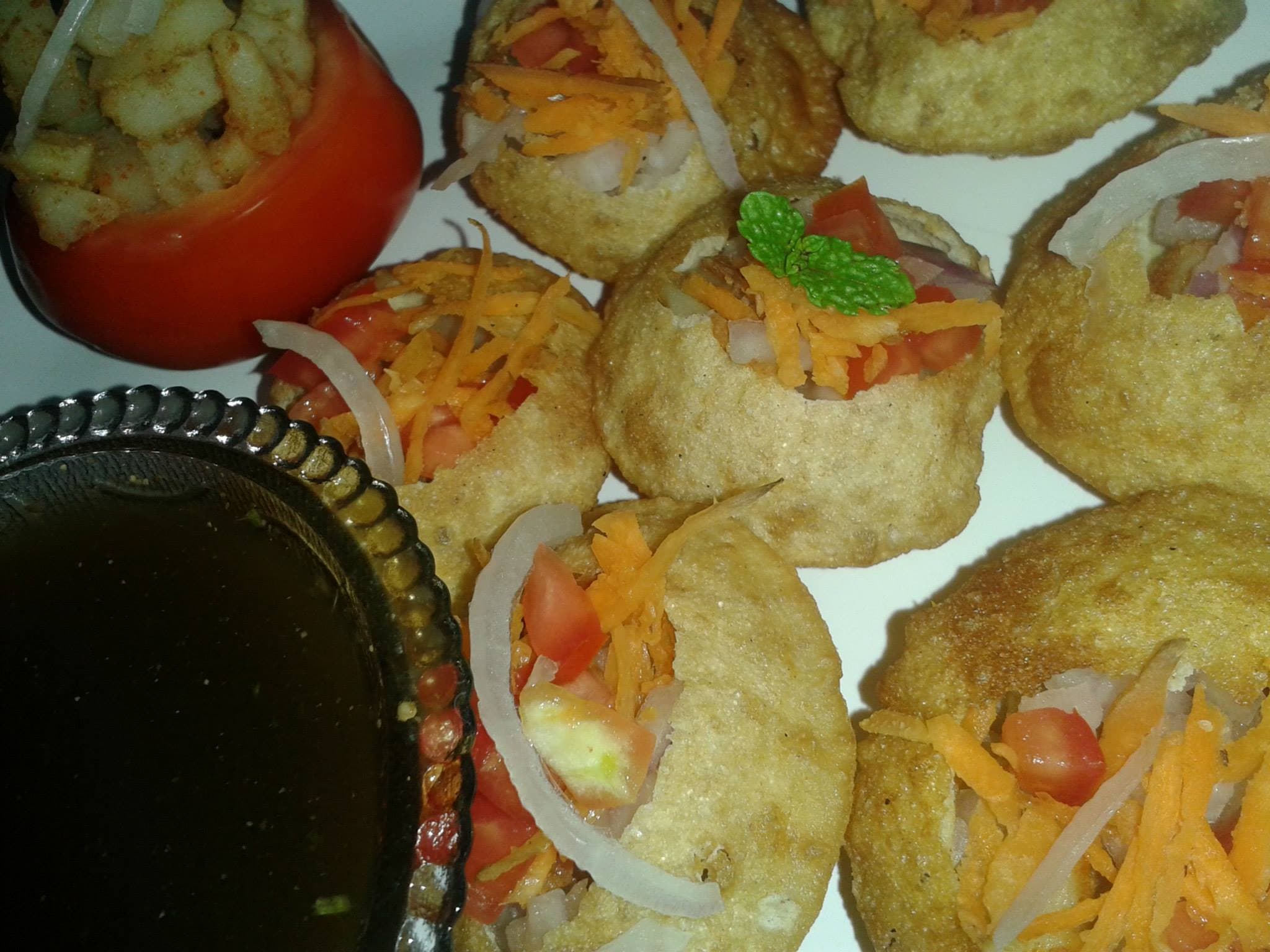
Short answer: one gol gappa carries 30 to 40 calories, and a standard street plate of six lands around 180 to 280 kcal. The numbers swing on three things: how much oil is in the fried puri, how generous the filling is, and whether the vendor is using the tangy khatta pani or the sweet meetha imli one.
For a deep-fried street snack, that is a modest plate. It is the reason gol gappay get a surprising amount of goodwill from people watching their weight. The plate is mostly water, air, and a thin fried shell. But "per piece" numbers stay honest only if you count the pieces and know which pani came with them.
What is inside one gol gappa
Three components, each with its own calorie contribution.
The puri. A hollow shell of suji and maida, deep fried until it puffs. One empty puri, roughly 7 to 8 g, holds about 20 to 25 kcal. The frying is doing the work here. Puris fried fresh in hot oil absorb less than ones sitting in oil that has been reused all evening, and street stalls vary.
The filling. The classic Pakistani stall filling is mashed potato mixed with boiled chana, onion, and masala. A spoonful, about 10 to 15 g, adds 10 to 15 kcal. Potato-heavy fillings run higher than chana-heavy ones, and a spoon of meetha imli chutney drizzled inside adds another 5 to 10 kcal of pure sugar.
The pani. This is the big fork in the road. Khatta pani, the tangy mint, coriander, and green chili water, is almost calorie-free at around 5 kcal per puri. Meetha pani, the sweet imli and jaggery water, adds roughly 10 to 15 kcal per piece. Two plates that look identical can differ by 60 to 90 kcal on the pani alone.
Gol gappay calories and macros
| Gol Gappay | Portion | Calories | Protein | Carbs | Fat |
|---|---|---|---|---|---|
| 1 piece, empty puri | ~8 g | 20 to 25 | 0.5 g | 3 to 4 g | 1 g |
| 1 piece, khatta pani, typical filling | 1 piece | 30 to 40 | ~1 g | 6 to 8 g | 1 to 2 g |
| 1 piece, meetha pani, generous filling | 1 piece | 40 to 55 | ~1 g | 8 to 10 g | 1.5 to 2.5 g |
| Street plate, khatta pani | 6 pieces | 180 to 240 | 4 to 6 g | 35 to 45 g | 8 to 12 g |
| Street plate, meetha pani | 6 pieces | 240 to 330 | 4 to 6 g | 45 to 55 g | 8 to 12 g |
| Extra large plate | 8 pieces | 240 to 360 | 5 to 8 g | 50 to 65 g | 10 to 16 g |
| Home style, chana filling, light puri | 6 pieces | 150 to 200 | 5 to 7 g | 30 to 38 g | 5 to 8 g |
The per-plate macro ranges line up with independent nutrition breakdowns: one analysis puts six pieces at 200 to 320 kcal with 35 to 45 g of carbs and 4 to 6 g of protein (fooddy.in), a recipe analysis by Tarla Dalal lands a full serving at 329 kcal (india.com), and a Pakistani home-style gol gappay recipe reports 270 kcal per serving (yummytraditional.com).
Why the vendor matters more than the recipe
Two stalls, same menu board, different plates. Puris from a vendor who fries in small batches in fresh oil carry less oil than puris that have sat in a lukewarm karahi all day. A stall that fills with mostly chana gives you more protein and fiber for similar calories than one that fills with mostly potato. And the sweet water is the silent multiplier. None of this is visible from the price board, so if a number matters to you, watch the build: oil sheen on the puris, potato versus chana ratio, which pani jug the vendor reaches for.
How to track gol gappay in seconds
In CalsFlow, type:
"6 gol gappay, khatta pani, potato and chana filling, street stall"
You get the calorie and macro estimate plus the assumptions behind it: the calories it assigned per piece, how much it credited to the filling versus the puri, and whether it counted a sweet pani. Had meetha pani instead? Say so, and the estimate moves up with the sugar. This is the same describe-what-you-see approach from our guide to counting calories in Pakistani and desi food. The detail that changes the number most is the pani, so name it.
Gol gappay and weight loss
Gol gappay are one of the friendlier street snacks for someone cutting calories. A full plate of six with khatta pani sits in the same range as a single samosa, and the water in each piece makes the plate feel bigger than its calories. Two honest caveats. First, nobody stops at six with good gol gappay, and a second plate doubles everything. Second, the meetha pani version is a different snack: the sugar water adds up across six pieces, and the plate lands closer to a small meal.
Chana in the filling helps a little with fullness. Boiled chana brings protein and fiber, and our chana calories guide has the full numbers for that side of the plate. Just do not let the healthy ingredients talk you into a third plate. The filling is honest; the portion count is what gets you.
FAQs
How many calories are in 1 gol gappa? About 30 to 40 kcal for a typical street piece with khatta pani and a potato chana filling. A plain empty puri is around 20 to 25 kcal, and a meetha pani piece with a generous filling runs 40 to 55.
How many gol gappay are in a plate? Six is the standard plate at most Pakistani stalls. Some serve five, larger appetites order eight. One plate of six with khatta pani lands around 180 to 280 kcal.
Are gol gappay good for weight loss? Relatively. A khatta pani plate is a light, filling snack that beats most other street food on calories. The risk is the count, not the snack: two plates with sweet pani approach a full meal. Log the pieces and the pani and you can keep them in a plan easily.
Is meetha pani worse than khatta pani? For calories, yes, noticeably. Sweet imli pani adds roughly 10 to 15 kcal per piece over the near zero of khatta pani, which adds up to 60 to 90 extra calories across a plate of six.
How many calories in gol gappay without potato? Swap the potato for extra chana and a six piece plate drops to roughly 150 to 200 kcal with a bit more protein. The puri itself is the largest fixed cost, so the savings are modest but real.
The bottom line
One gol gappa: 30 to 40 kcal. A plate of six: 180 to 280 kcal with khatta pani, up to 330 with meetha pani. The puri is fried, the pani decides the rest. Eating gol gappay today? Describe the plate in CalsFlow: piece count, filling, and which pani, and get your real number.
Cover photo: gol gappay by Bhavana Homecook via Wikimedia Commons (CC BY-SA 4.0). CalsFlow provides nutrition estimates, not medical advice.