

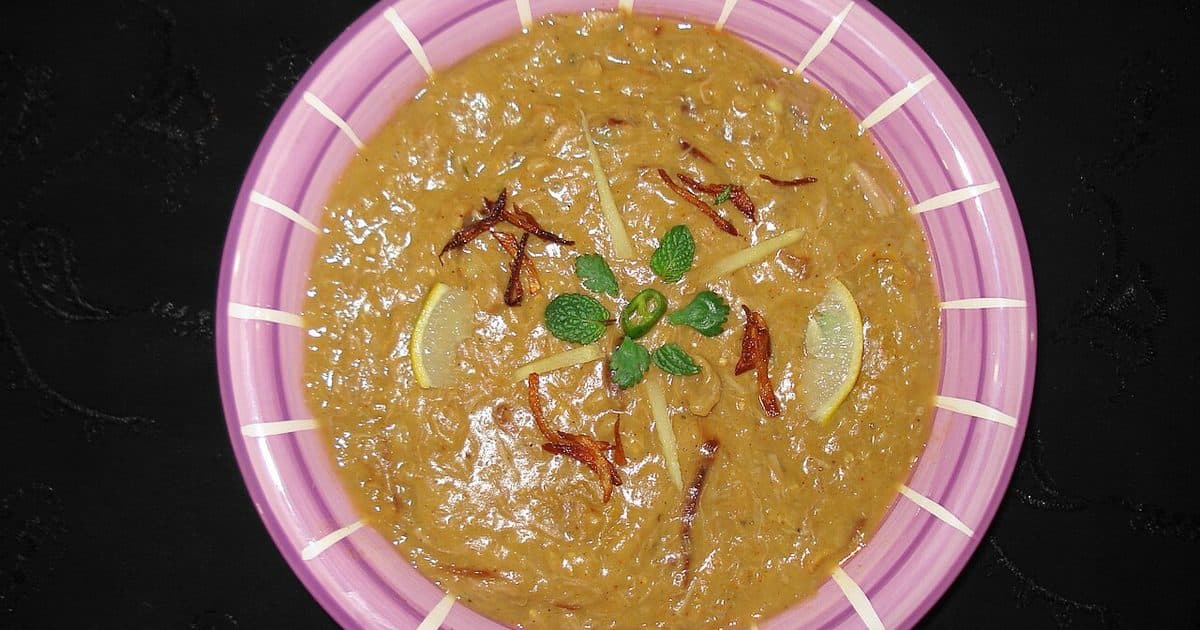
Short answer: a 250 g bowl of beef haleem with a normal amount of ghee has roughly 400 to 475 calories. Per 100 g, that works out to 160 to 190 kcal. Haleem looks like a heavyweight on the plate, and it is one, but it earns those calories honestly: wheat, lentils, and meat slow-cooked into a bowl with 25 g or more of protein. The ghee on top is what separates a sensible bowl from a 600 calorie one.
Database entries mostly agree with that neighborhood. FatSecret's generic haleem entry lists 157 kcal per 100 g, with 9.8 g protein, 15.2 g carbs, and 6.9 g fat (fatsecret). SnapCalorie puts it a little leaner at 140 kcal per 100 g, and a Pakistani food calorie chart compiled by home cooks lands at 180 with 12 g of protein (scribd). A ghee-heavy chicken haleem recipe runs noticeably richer, about 222 kcal per 100 g (clearcals). So the center of the range is honest middle ground, and the spread tells the real story.
What decides where your bowl lands
The meat first. Haleem is usually made with beef or mutton in Pakistan, chicken in leaner home versions. The meat barely changes the per-100 g number on its own because it is stretched across all that grain and daal. It matters more than it looks, though, because fatty beef chuck renders more of its fat into the pot than a lean chicken breast does.
Then the ghee. A tablespoon of ghee is about 120 calories, and some degh sellers finish each bowl with a visible spoonful while home cooks might use half that across the whole pot. That one difference alone can swing a bowl by 100 calories or more. This is the same dynamic as the tarka on daal: the base dish is lean, the fat on top writes the final number.
Thickness counts too. Proper haleem is thick enough to stand a spoon in, thick enough that it falls slowly off it. The thicker it is, the more wheat, barley, and lentils in each spoonful. A thinner, soupier bowl stretches the same pot further and logs lower.
The toppings are small but not zero. Fried onions, ginger juliennes, green chilies, and lemon are the standard garnish set. A handful of crispy fried onions adds real oil, maybe 40 to 60 calories. Ginger, chilies, lemon, and coriander are free by comparison.
Portion size is the quiet variable. Haleem is sold by the plate or the bowl at degh stalls, and those plates are often 300 g or more. Weighing is overkill for most people, but knowing your "bowl" is closer to 300 g than 250 g keeps the estimate honest.
Haleem calories and macros
| Haleem | Portion | Calories | Protein | Carbs | Fat |
|---|---|---|---|---|---|
| Beef haleem, homemade, moderate ghee | 100 g | 160 to 190 | 10 to 13 g | 16 to 20 g | 6 to 9 g |
| Beef haleem, homemade, moderate ghee | 1 bowl (~250 g) | 400 to 475 | 25 to 32 g | 40 to 50 g | 15 to 22 g |
| Chicken haleem, light ghee | 100 g | 140 to 170 | 10 to 14 g | 14 to 18 g | 5 to 8 g |
| Chicken haleem, light ghee | 1 bowl (~250 g) | 350 to 425 | 25 to 35 g | 35 to 45 g | 12 to 20 g |
| Restaurant or degh haleem, ghee-heavy | 100 g | 200 to 230 | 9 to 12 g | 15 to 19 g | 10 to 14 g |
| Restaurant or degh haleem, ghee-heavy | 1 bowl (~250 g) | 500 to 575 | 22 to 30 g | 38 to 48 g | 25 to 35 g |
The middle rows anchor on the fatsecret and snapcalorie entries; the top and bottom rows account for ghee and meat choices the databases average away.
The protein case for haleem
This is where haleem quietly beats most of the Pakistani plate. Twenty-five to 32 g of protein per bowl puts it ahead of daal, ahead of a roti-and-sabzi meal, and roughly on par with a chicken breast dinner. The combination of meat, lentils, wheat, and barley also means the protein comes with a complete-ish amino acid profile, grains and legumes covering each other's gaps the same way daal and roti do.
For context, a sedentary adult needs about 0.8 g of protein per kilogram of body weight per day, and active people need more. Our protein guide walks through the math. One bowl of haleem covers roughly a third of a 70 kg adult's daily protein before you have eaten anything else. Ramadan iftars figured this out centuries ago: haleem is one of the most filling things you can break a fast with, which is exactly why it shows up on every iftar table in the country.
How to track haleem in seconds
In CalsFlow, type:
"1 bowl beef haleem from the degh, fried onions on top, no bread"
You get the calorie and macro estimate plus the assumptions behind it: the bowl weight it guessed, the ghee it allowed for, the meat it assumed. Bought it from a stall that floats ghee on top like they are proud of it? Say so in the entry and the estimate moves up. Made it at home with chicken and a measured spoon of ghee? Say that instead, and it comes down.
The detail that matters most is the ghee and the vendor, not the exact grain mix. Wheat versus barley versus mixed daals barely moves the number. "Degh, ghee on top" versus "home, light ghee" moves it a lot. This is the same honest-entry approach as our guide to counting calories in Pakistani and desi food: describe what is actually in front of you, check the assumptions, adjust what is wrong.
Haleem in a weight-loss diet
Haleem is one of the easier heavy dishes to keep while cutting. The protein and fiber keep you full for hours relative to the calories, and a bowl on its own is a complete meal. The failure mode is never the haleem. It is the haleem going down with two naans, or a second bowl because the degh was right there.
If you are cutting, eat the bowl, skip the bread, and go easy on the ghee when you log it. A home-style chicken haleem at 350 to 425 kcal per bowl with 25 g plus of protein is genuinely one of the best dinner options in Pakistani cooking. Compare the bread side of the equation in our roti calories guide before you decide the naan is worth it.
FAQs
How many calories are in 1 bowl of haleem? About 400 to 475 kcal for a 250 g bowl of beef haleem with moderate ghee. Ghee-heavy restaurant haleem runs 500 to 575 for the same bowl.
Is haleem good for weight loss? It can be. High protein and high fiber make it very filling per calorie, which is most of the battle. Keep the portion to one bowl, watch the ghee, and skip the naan.
Which has more calories, chicken or beef haleem? Beef haleem usually runs a little higher, mainly because beef recipes tend to use more ghee and fattier cuts. A lean chicken haleem made at home can come in 50 to 100 calories lighter per bowl.
Is haleem healthier than nihari? Different dishes, different strengths. Haleem brings more protein and fiber thanks to the grains and lentils; nihari is meat-forward and usually fattier per 100 g. Full numbers for the other side of the comparison are in our nihari calories guide.
The bottom line
Haleem: 400 to 475 kcal per 250 g bowl, 160 to 190 per 100 g, with the ghee and the bowl size deciding almost everything. One bowl is a protein-heavy, genuinely filling meal; two bowls with naan is a different story. Eating haleem this week? Describe the bowl in CalsFlow, say how much ghee was on it, and get your real number.
CalsFlow provides nutrition estimates, not medical advice.