

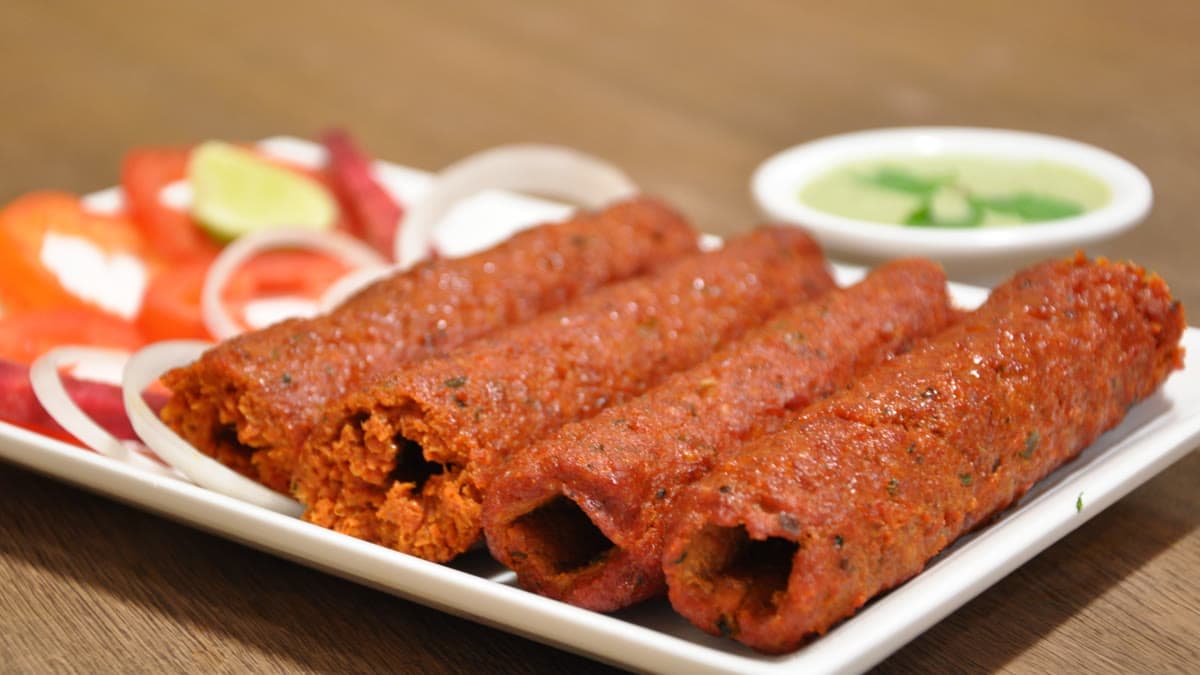
Short answer: one seekh kebab skewer (roughly 50 to 70 grams) carries 100 to 180 calories. Chicken lands at the lower end, beef or mutton at the higher end. Per 100 grams, expect about 150 to 200 kcal for chicken seekh kebab and 200 to 270 kcal for beef or mutton.
Seekh kebab is spiced minced meat shaped around a metal skewer and grilled, usually over charcoal or in a tandoor. It is one of the simpler dishes to estimate, because there is no gravy hiding a cup of oil. Most of the calories sit in the meat itself, plus whatever fat gets brushed on during grilling.
Why one skewer can vary so much
The meat is the whole dish here, so it drives nearly everything.
Chicken vs beef vs mutton. Chicken mince is the leanest option, especially if the butcher used breast. Beef and mutton mince carry more fat, and many butchers deliberately mix in charbi, which is animal fat, because a very lean kebab dries out and slides off the skewer. That extra fat is most of the difference between chicken and beef.
Basting. Watch a kebab stall and you will see the cook brush the skewers with oil or melted butter as they turn over the coals. It adds shine and keeps the outside from drying. Each brushing adds a thin layer of fat, and stalls baste generously.
Grill vs pan. On a charcoal grill or in a tandoor, dripping fat falls away from the meat. A kebab cooked in a pan at home sits in its own rendered fat and reabsorbs some of it. Restaurant grilled is usually the leaner end.
Skewer size. There is no standard skewer. A homemade one might be 40 grams; a chunky dhaba one can pass 80. When someone asks how many calories in one seekh kebab, the honest follow up is how big was the skewer.
Seekh kebab calories and macros
| Portion | Calories | Protein | Carbs | Fat |
|---|---|---|---|---|
| 1 chicken seekh kebab (~60 g, grilled) | 100–130 | 9–11 g | 1–3 g | 6–9 g |
| 1 beef or mutton seekh kebab (~60 g, grilled) | 130–170 | 9–12 g | 1–3 g | 9–13 g |
| 100 g chicken seekh kebab | 150–200 | 14–18 g | 2–7 g | 10–14 g |
| 100 g beef or mutton seekh kebab | 200–270 | 15–20 g | 3–9 g | 14–22 g |
| 2 beef seekh kebabs + 1 roti (typical meal) | 420–560 | ~25 g | ~40 g | ~17 g |
These ranges cross check against the ingredients themselves. Cooked ground beef (80% lean) comes in around 270 kcal and 26 g protein per 100 g in USDA's FoodData Central (fdc.nal.usda.gov), so the protein figure for beef kebabs is not surprising. The small carb count comes from the onion, breadcrumbs or besan some recipes use as binder, and the spice mix.
Malai seekh kebab, the creamy white version with added cream or cheese, lands around 150 to 175 kcal per 100 g for chicken, roughly the same as a regular chicken kebab because the cream mostly replaces some meat. Do not assume it is the light option. The flavor says otherwise, and the fat content confirms it.
How this compares to other desi options
For anyone eating out, seekh kebab is one of the friendliest orders in the Pakistani food lineup. A chicken karahi plate can run 450 to 700 calories before the roti even enters the picture, because the gravy holds a lot of oil (chicken karahi calories). Two grilled chicken kebabs with a roti get you a filling, high protein meal for roughly the same as the karahi alone, with almost no guesswork about hidden oil.
Logging it in CalsFlow
I typed "2 chicken seekh kebabs from a dhaba and 1 roti" into CalsFlow to see what it does. It assumed about 60 g per skewer, grilled, and returned a 200 to 260 kcal range for the kebabs, with the assumptions shown. That part matters, because the assumptions are where the error lives.
Then I changed one detail: the skewers were pan fried at home in a little oil, not grilled. The estimate moved up, and the app kept the new assumption visible. That is the right way to use it. Start with the base estimate, then adjust the one or two details that actually move the number: size of the skewer and cooking method. If you are tracking Pakistani food regularly, our guide to counting calories in desi food covers the same describe and adjust approach for everything from daal to biryani.
For the roti in that meal, the calories depend on its size too. Our roti calories breakdown covers that separately.
The protein angle
Two chicken seekh kebabs deliver roughly 20 g of protein, which is close to half of what many people need in a full meal. Beef versions go higher. That makes kebabs genuinely useful for anyone trying to hit a daily protein target without blowing their calorie budget. Our protein requirements article walks through how much you actually need.
One caveat worth knowing: beef and mutton kebabs bring saturated fat along with the protein. Chicken is the leaner default if you are eating kebabs often. Red meat in moderation is fine; seekh kebab three times a week as your main protein is a lot of it.
FAQs
How many calories are in one seekh kebab? About 100 to 130 kcal for chicken and 130 to 170 kcal for beef or mutton, assuming a typical 60 g skewer. Big dhaba skewers can run 50% higher.
Is seekh kebab good for weight loss? It is better than most restaurant food. Grilled, high in protein, low in carbs, no sugary gravy. Order chicken, skip the basting if you can, and eat it with salad or raita instead of three naans.
Which has more calories, chicken or beef seekh kebab? Beef and mutton versions run about 30 to 50% higher, mostly because of the fat content of the mince. Malai seekh kebab, despite the creamy flavor, sits in roughly the same range as regular chicken kebab.
Had seekh kebabs at a dhaba last night and not sure how big the skewers were? Describe them in CalsFlow and adjust the portion until it matches what you remember. You can grab it on Google Play.
Cover photo: Mutton seekh kebab by Dheerajk88 via Wikimedia Commons (CC BY-SA 4.0). CalsFlow provides nutrition estimates, not medical advice.