

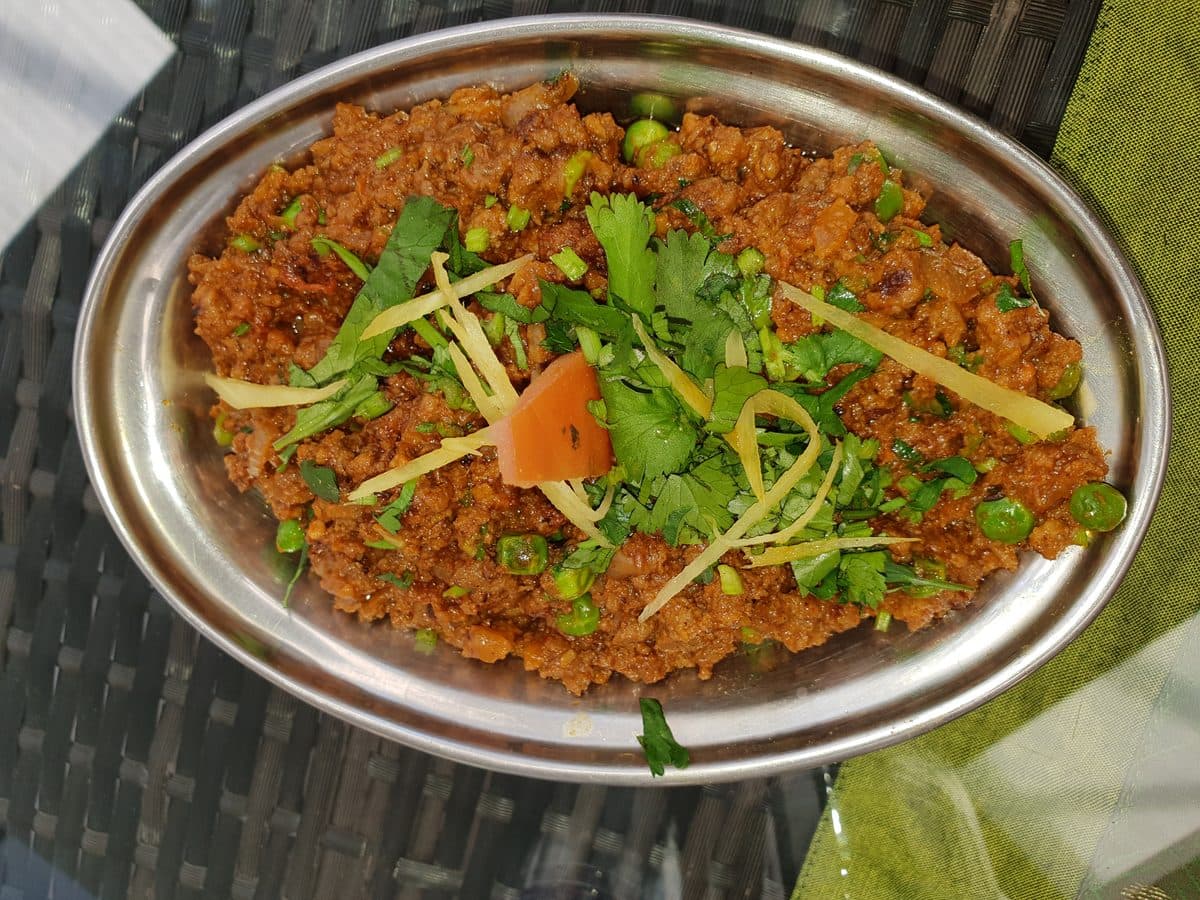
Short answer: a 150 gram plate of homemade chicken qeema carries 220 to 300 calories. The same plate of beef qeema lands at 320 to 410, and mutton qeema at 350 to 460. The meat does most of the work here. Oil, additions like potato, and how big the scoop is decide the rest.
Qeema, spelled keema or kheema depending on who is writing the menu, is minced meat cooked down with onion, tomato, ginger, garlic, and masala until the oil separates and everything turns into one crumbly, rich mixture. It is regular weeknight food across Pakistan, eaten with roti or paratha, and it shows up in two famous variations: qeema matar with peas, and aloo qeema with potatoes. Here is where the calories actually sit, so the plate can be logged without guessing.
What actually sets the number
The meat. This is the biggest lever by far. Chicken mince is the leanest of the three: USDA-based food data puts 100 grams of cooked ground chicken at about 189 kcal with 23 grams of protein (foodnutri.com, source USDA). Ground beef at 80 percent lean runs about 244 kcal per 100 grams cooked (aqua-calc.com, source USDA), with lean braised ground lamb at about 192 kcal with 22.6 grams of protein (nutritionvalue.org, source USDA).
The catch is that Pakistani butchers do not sell mince with a lean percentage printed on the pack. Mutton qeema in particular is usually ground from fatty goat meat, and beef qeema from whatever the butcher minced that morning, so real plates run higher than the leanest database numbers. The ranges below are priced for that reality.
The oil. Qeema is a bhuna dish, and bhunoing means cooking until the oil separates and glistens. Most home recipes start with two to three tablespoons of oil for half a kilo of mince. One tablespoon of oil is about 120 kcal, so the oil alone adds 240 to 360 kcal to the pot, or 60 to 90 kcal per plate across four servings. This is where restaurants and dhabas push hardest, because shinier gravy sells.
The additions. Potato and peas dilute the calories rather than raising them. Aloo qeema replaces some of the mince in the finished dish with potato at roughly 87 kcal per 100 grams, so per 100 grams it is lighter than plain qeema. People do tend to serve themselves bigger scoops of it, which cancels part of the saving. Qeema matar works the same way with peas.
The portion. A qeema plate is not a fixed unit. Home servings usually run 130 to 180 grams of the mince mixture. A dhaba plate can push past 200 grams, and at 250 kcal per 100 grams, every extra 50 grams on the spoon adds another 125 kcal.
Qeema calories and macros
| Plate | Portion | Calories | Protein | Carbs | Fat |
|---|---|---|---|---|---|
| Chicken qeema, homemade | 150 g | 220 to 300 | 22 to 27 g | 5 to 8 g | 10 to 15 g |
| Chicken qeema, restaurant style | 150 g | 300 to 400 | 22 to 26 g | 5 to 8 g | 18 to 26 g |
| Beef qeema, homemade | 150 g | 320 to 410 | 24 to 29 g | 4 to 7 g | 20 to 28 g |
| Beef qeema, restaurant style | 150 g | 400 to 510 | 24 to 29 g | 4 to 7 g | 30 to 40 g |
| Mutton qeema, homemade | 150 g | 350 to 460 | 22 to 27 g | 4 to 7 g | 24 to 32 g |
| Aloo qeema (chicken), homemade | 150 g | 180 to 250 | 15 to 20 g | 12 to 17 g | 8 to 13 g |
| Chicken qeema as served | 100 g | 150 to 200 | 15 to 18 g | 3 to 5 g | 10 to 15 g |
| Beef qeema as served | 100 g | 220 to 270 | 16 to 20 g | 3 to 5 g | 15 to 22 g |
| Mutton qeema as served | 100 g | 240 to 300 | 15 to 18 g | 3 to 5 g | 18 to 26 g |
Cooked mince values come from USDA-based food data; dish rows add pot oil, onion, tomato, and water loss, with the restaurant rows priced for the extra oil and fattier mince that go into commercial cooking.
Why dhaba qeema is a different number
Dhaba qeema is usually mutton, made from the fattiest mince of the three, and it is cooked with a heavier hand on the oil. A 200 gram dhaba plate of mutton qeema can run 600 to 740 kcal before any bread touches the plate, roughly double a modest homemade chicken plate. It is not a scam. It is the product: dhaba customers judge qeema by its richness, the same way chicken karahi regulars do.
Then there is the bread. Qeema is almost never eaten alone. Two rotis add another 200 to 300 kcal (roti calories), and a paratha adds 250 to 400 on its own (paratha calories). The mince is only half the plate's story.
How to track a plate in seconds
Type it the way you would describe it to a friend:
"150g homemade chicken qeema, medium oil, with 1 roti"
In CalsFlow you get the calorie and macro estimate plus the assumptions behind it: which meat it priced in, what oil level it assumed, and how it counted the roti. Had mutton at a dhaba instead? Say so and the estimate shifts with the fattier mince and the extra oil. It is the same approach our guide to counting calories in Pakistani and desi food recommends: describe what you see.
Qeema and protein
This is where qeema quietly beats most desi comfort food. A 150 gram plate of chicken qeema delivers 22 to 27 grams of protein, comparable to a plate of chicken qorma and ahead of most daal and rice combinations at similar calories. For anyone trying to hit a daily protein target, qeema is one of the easiest dinners in the Pakistani kitchen to log with confidence. Our protein guide explains how to set a target; a qeema plate gets you a long way there.
The fat rides along with the protein, especially in beef and mutton versions, where a plate can carry 25 to 40 grams of fat. That is not a reason to avoid it. It is a reason to be honest about which meat was in the mince, because swapping mutton for chicken at the same portion can move a plate by 100 kcal without changing the protein much.
FAQs
How many calories in 100 grams of qeema? Homemade chicken qeema runs 150 to 200 kcal per 100 grams. Beef qeema lands at 220 to 270, and mutton qeema at 240 to 300. Restaurant versions of all three run higher because of extra oil.
How many calories in chicken qeema vs beef qeema? A 150 gram plate of homemade chicken qeema is 220 to 300 kcal; the same plate of beef qeema is 320 to 410. The chicken plate carries slightly less fat and nearly the same protein.
Is qeema good for weight loss? It can be, because the protein keeps you full. The risks are the oil and the bread. Cook it with measured oil, pick chicken mince, and count the rotis honestly, and qeema fits a deficit better than most fried snacks at similar calories.
Is qeema healthy? It brings good protein, iron, zinc, and B12 with real food ingredients. The watch point is saturated fat in beef and mutton versions, which is worth knowing rather than fearing.
Is keema the same as qeema? Yes. Keema, qeema, and kheema are different romanizations of the same dish. Search results mix them freely, so do the spellings on menus.
What is the difference between qeema matar and aloo qeema? Both stretch the mince with a vegetable. Qeema matar uses green peas, aloo qeema uses potato. Per 100 grams both are slightly lighter than plain qeema, and the pea version keeps the protein a touch higher.
The bottom line
A 150 gram homemade plate: 220 to 300 kcal for chicken, 320 to 410 for beef, 350 to 460 for mutton. The meat is the main lever, the oil is the second, and the scoop size does the rest. Eating qeema today? Describe the plate in CalsFlow: which meat, how oily it looked, and how big the serving was, and get your real number.
Cover photo: Keema Matar by Cabeza2000, CC BY-SA 4.0, via Wikimedia Commons. CalsFlow provides nutrition estimates, not medical advice.