

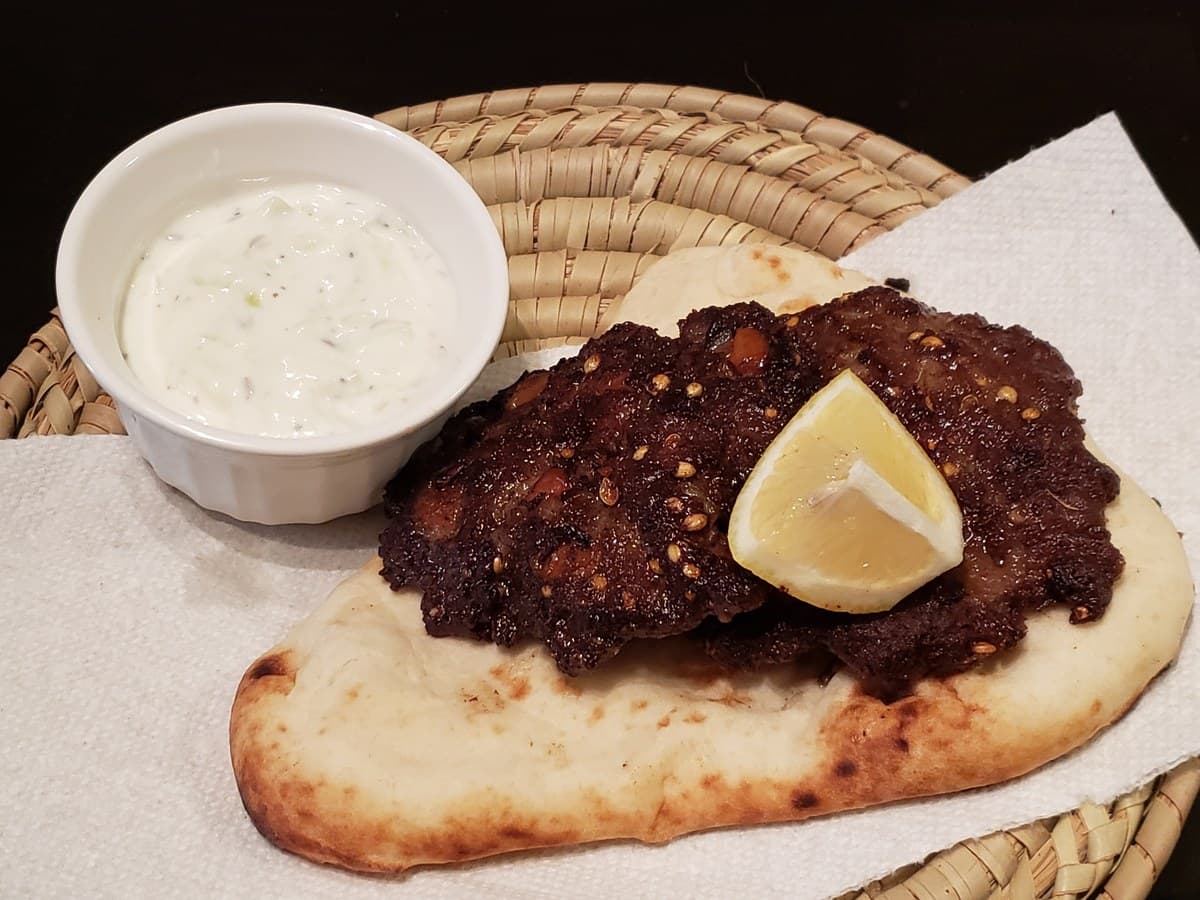
Short answer: one chapli kebab carries 120 to 330 calories. The small frozen kind sits at the lower end; a big dhaba-style beef patty lands at the higher end. Per 100 grams, expect roughly 180 to 220 kcal for beef and 170 to 200 for chicken.
Chapli kebab is a flat, round patty of spiced mince, shallow fried until the outside crisps. It comes from Peshawar, and its name comes from the Pashto word "chaprikh," meaning flat. What sets it apart from other kebabs is the mix: crushed dried pomegranate seeds (anardana), crushed coriander seeds, cumin, green chilies, tomato, and cornmeal, makai ka atta, as the binder. Most stalls press a slice of tomato onto the patty while it fries.
Why one piece can vary so much
Size. This is the big one. Frozen chapli kebabs from brands like K&N's run about 65 to 75 grams. A dhaba or tandoor-shop patty can be twice that or more. The nutrition labels on the frozen kind say 120 to 140 kcal per piece: eatthismuch.com lists Al Safa's beef chapli at 120 kcal for a 64 g patty, and myfooddata lists K&N's chicken chapli at 140 kcal for a 74 g patty. A restaurant patty made from 130 g of raw mince starts near 300 kcal before the frying oil.
The meat. Beef and mutton mince carry more fat than chicken, and many butchers mix in a little charbi, animal fat, because very lean mince dries out and crumbles in the pan. Chicken chapli kebab, especially from breast-heavy mince, runs noticeably leaner per piece.
Shallow frying. Unlike seekh kebab, which grills over coals and lets fat drip away, chapli kebab is shallow fried in oil or ghee. The patty sits in the fat and soaks up some of it. Generous stalls use a lot of oil; the extra can easily add 30 to 60 kcal per piece.
Binders and toppings. The cornmeal, egg, and chopped onion and tomato add a few grams of carbs that a plain grilled kebab does not have. It is not much, but it is why chapli kebab carries slightly more carbs per 100 g than a seekh kebab does.
Chapli kebab calories and macros
| Portion | Calories | Protein | Carbs | Fat |
|---|---|---|---|---|
| 1 small chapli kebab (~65 g, frozen brand style) | 120–150 | 9–11 g | 4–6 g | 7–9 g |
| 1 restaurant beef chapli kebab (~130 g) | 250–330 | 16–20 g | 7–11 g | 18–25 g |
| 1 homemade chicken chapli kebab (~110 g) | 180–240 | 16–19 g | 5–8 g | 10–15 g |
| 100 g beef chapli kebab | 180–220 | 12–15 g | 5–8 g | 12–17 g |
| 2 restaurant chapli kebabs + 1 naan (typical meal) | 750–950 | ~35 g | ~65 g | ~38 g |
These ranges cross check against the ingredients themselves. Cooked ground beef at 80% lean comes in around 270 kcal and 26 g protein per 100 g in USDA's FoodData Central (fdc.nal.usda.gov), and most of the rest is the frying oil plus a small amount of cornmeal binder. The label data from frozen brands anchors the low end: their patties are simply small.
How this compares to other kebabs
A grilled chicken seekh kebab is the leaner order, roughly 100 to 130 kcal per skewer, because grilling drops the fat instead of frying in it (seekh kebab calories). Chapli kebab sits above that, mostly because of the shallow fry and the bigger restaurant portions. It is still a high protein, low carb food, which puts it in a better spot than anything with gravy or pastry. A chicken karahi plate can pass 450 to 700 calories before the roti arrives, because gravy hides a lot of oil (chicken karahi calories).
Logging it in CalsFlow
I typed "2 chapli kebabs from a dhaba and 1 naan" into CalsFlow to see what it does. It assumed about 130 g per patty, shallow fried beef, and returned a 500 to 660 kcal range for the two kebabs, with the assumptions shown. That part matters, because the assumptions are where the error lives.
Then I changed one detail: chicken instead of beef. The estimate dropped by a noticeable margin, and the app kept the new assumption visible. That is the right way to use it. Start with the base estimate, then adjust the one or two details that actually move the number: the size of the patty and the meat. If you are tracking Pakistani food regularly, our guide to counting calories in desi food covers the same describe and adjust approach for everything from daal to biryani.
For the bread in that meal, naan runs about 260 to 300 kcal. Our roti calories breakdown covers the smaller breads separately.
The protein angle
Two restaurant beef chapli kebabs deliver roughly 30 to 40 g of protein, which is a serious share of a day's target from one meal. That makes them genuinely useful for anyone trying to eat enough protein without blowing their calorie budget. Our protein requirements article walks through how much you actually need.
The trade is saturated fat. Beef chapli kebabs, especially ones with charbi in the mince and ghee in the pan, carry a lot of it. Chicken is the leaner default if kebabs are a regular part of the week.
FAQs
How many calories are in one chapli kebab? About 120 to 150 kcal for a small frozen style piece and 250 to 330 for a big restaurant beef patty. The honest follow up is always how big the patty was.
Is chapli kebab good for weight loss? It can fit. High in protein, low in carbs, no sugary gravy. Chicken versions shallow fried at home with a restrained hand on the oil are the best case. The restaurant ones are still better than most fried snacks, but the oil makes them a count-it-honestly food, not a free food.
Which has more calories, chapli or seekh kebab? Chapli, usually. Shallow frying and bigger portions put it above a grilled seekh kebab of the same weight. The gap narrows if the seekh kebab is beef and heavily basted.
Ate chapli kebabs last night and not sure how big the patties were? Describe them in CalsFlow and adjust the portion until it matches what you remember. You can grab it on Google Play.
Cover photo: Peshawari chapli kebab by Chef Nina via Wikimedia Commons (CC BY-SA 4.0). CalsFlow provides nutrition estimates, not medical advice.