

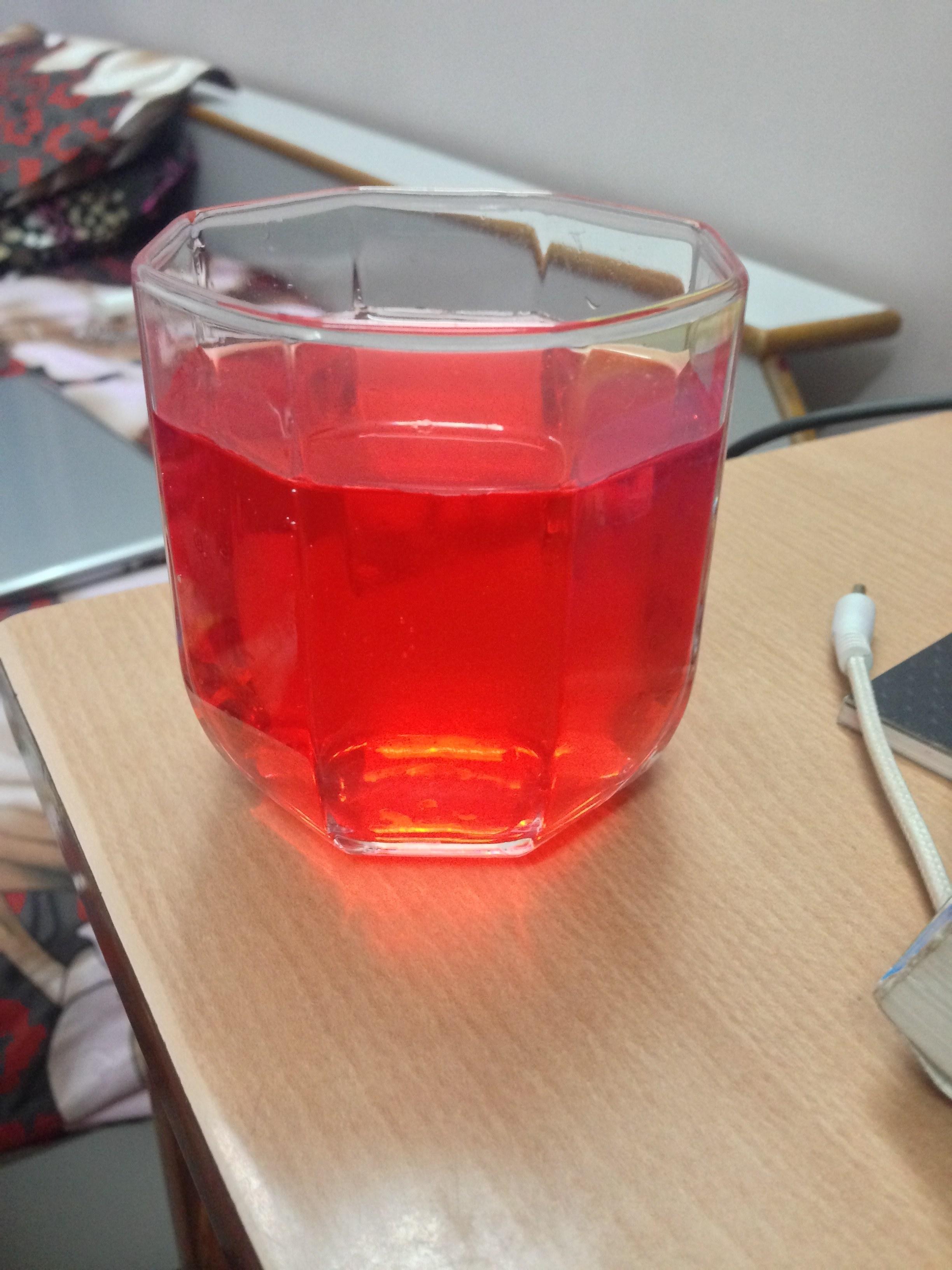
A standard glass of Rooh Afza with water carries about 90 calories, and almost all of it is sugar. Hamdard's own label puts one serving, 30 ml of syrup in 200 ml of water, at 90 calories and 23 grams of sugar. Pour it stronger, or mix it with milk instead of water, and the number climbs fast.
Rooh Afza is a concentrate, not a ready drink, so the calories in your glass depend entirely on how much syrup you pour. That is the whole story of this drink. The bottle is mostly sugar syrup with rose and kewra distillates and herbal extracts for flavour. There is no protein, no fat, and no fibre in it.
What one glass actually contains
The label numbers are consistent across markets. The UK listing gives 300 calories and 77 grams of sugar per 100 ml of concentrate, which works out to the same 90 calories per 30 ml serving. A tablespoon is about 15 ml, so most home pours land somewhere in this table.
| Drink | Portion | Calories | Protein | Carbs | Sugar | Fat |
|---|---|---|---|---|---|---|
| Light glass, with water | 1 tbsp syrup (15 ml) | 40 to 50 | 0 g | 11 to 12 g | 11 to 12 g | 0 g |
| Standard glass, with water | 2 tbsp syrup (30 ml) | 85 to 100 | 0 g | 22 to 24 g | 22 to 24 g | 0 g |
| Strong glass, with water | 3 tbsp syrup (45 to 50 ml) | 130 to 150 | 0 g | 35 to 38 g | 35 to 38 g | 0 g |
| Glass with milk | 30 ml syrup + 200 ml whole milk | 200 to 230 | 6 to 7 g | 33 to 35 g | 31 to 33 g | 6 to 7 g |
| Concentrate, undiluted | 100 ml | 280 to 320 | 0 g | 70 to 80 g | 70 to 80 g | 0 g |
Nobody drinks the concentrate straight, but the last row shows what you are actually pouring. A bottle of Rooh Afza is roughly three quarters sugar by weight. The colour and the floral smell make it feel light. The label says otherwise.
Why the pour changes everything
Nobody measures Rooh Afza with a tablespoon. You tilt the bottle over a glass and stop when the colour looks right. That is where the count goes wrong. A deep red glass has roughly double the syrup of a pale pink one, and the difference is 50 calories you never noticed.
The glass matters too. A small 200 ml glass with two spoons is the label serving. The tall glasses most homes use hold 300 ml or more, and people fill them to the same colour, which means three spoons instead of two. At iftar, when Rooh Afza appears at nearly every table in Pakistan, it is common to drink two or three glasses in an evening. Three standard glasses add up to around 270 calories and close to 70 grams of sugar, before a single date or samosa.
Rooh Afza with milk is the heavier version. Whole milk adds about 120 calories per 200 ml, plus a little protein and fat. The result is a 200 to 230 calorie drink that still carries over 30 grams of sugar. It tastes like a treat because it is one. The lassi calories post shows how milk based drinks compare, and Pakistani chai calories covers the other glass that usually sits next to it.
Rooh Afza also shows up in falooda, where it is one sweet layer among several. The falooda calories post breaks down what that glass carries in total.
Logging it in CalsFlow
Rooh Afza is a good test of honest logging because the number lives in the pour. Type something like "1 glass Rooh Afza with water, 2 spoons syrup" and CalsFlow starts from the standard 30 ml assumption, around 90 calories. Then adjust. Was the glass pale pink or deep red? One spoon or three? With milk or water?
That adjust step is the whole point. A fixed database entry that says "Rooh Afza, 1 glass" cannot know how heavy your hand was with the bottle. You do.
The sugar question
The WHO recommends keeping free sugars below 10% of total energy intake, with further benefits below 5%. On a 2,000 calorie diet, that works out to under 50 grams a day, and ideally under 25 grams. One standard glass of Rooh Afza carries 23 grams, nearly the full stricter target in a single drink.
That does not make it poison. It makes it a drink to count, especially in Ramadan when it is easy to have two or three glasses at iftar without thinking about it. People with diabetes should be particularly careful, since liquid sugar raises blood glucose fast, and it is worth checking with a doctor about whether it fits at all.
A few habits keep it in check. Pour one spoon instead of two and top up with cold water and ice, the flavour still comes through. Save the milk version for an occasional treat rather than the daily glass. And if you drink it at iftar, count it as part of the meal, not as free water. Hamdard also sells a sugar free variant, Rooh Afza Lite, which cuts the calories sharply, though the taste is different and worth trying before committing to a bottle.
Rooh Afza has been around since 1906, when Hakim Hafiz Abdul Majeed first formulated it as a cooling summer sharbat. It earned its place at the iftar table over a century of summers. Knowing what a glass costs does not take that away. It just lets you enjoy it on purpose.
If you are comparing drinks across the Pakistani table, the Pakistani food calorie chart puts Rooh Afza alongside the rest, how many calories should I eat per day helps you see where one glass fits in your budget, and calorie counting Pakistani desi food covers the method for everything else on the table.
Frequently asked questions
How many calories are in one glass of Rooh Afza? About 90 for a standard glass, 30 ml of syrup in water. A light pour is 40 to 50, a strong pour is 130 to 150, and with milk it is 200 to 230.
Is Rooh Afza good for weight loss? Not really. It is liquid sugar with no protein or fibre, so it adds calories without keeping you full. An occasional light glass fits most plans. Two or three strong glasses a day will quietly eat a large share of a calorie deficit.
Can diabetics drink Rooh Afza? Regular Rooh Afza is a poor choice for diabetes because 23 grams of sugar per glass raises blood glucose quickly. The sugar free Lite variant exists, but anyone with diabetes should check with their doctor first.
Does Rooh Afza with milk have more calories than with water? Yes, by about 120 calories per glass. The milk adds calories, protein, and fat on top of the syrup, taking a standard glass from around 90 to around 200 to 230.
If you poured a glass tonight, describe it in CalsFlow: water or milk, and how many spoons of syrup. Adjust from there and you will have a number you can actually trust.
Cover photo: A glass of Rooh Afza sharbat by Divas Grover via Wikimedia Commons (CC BY-SA 4.0). CalsFlow provides nutrition estimates, not medical advice.