

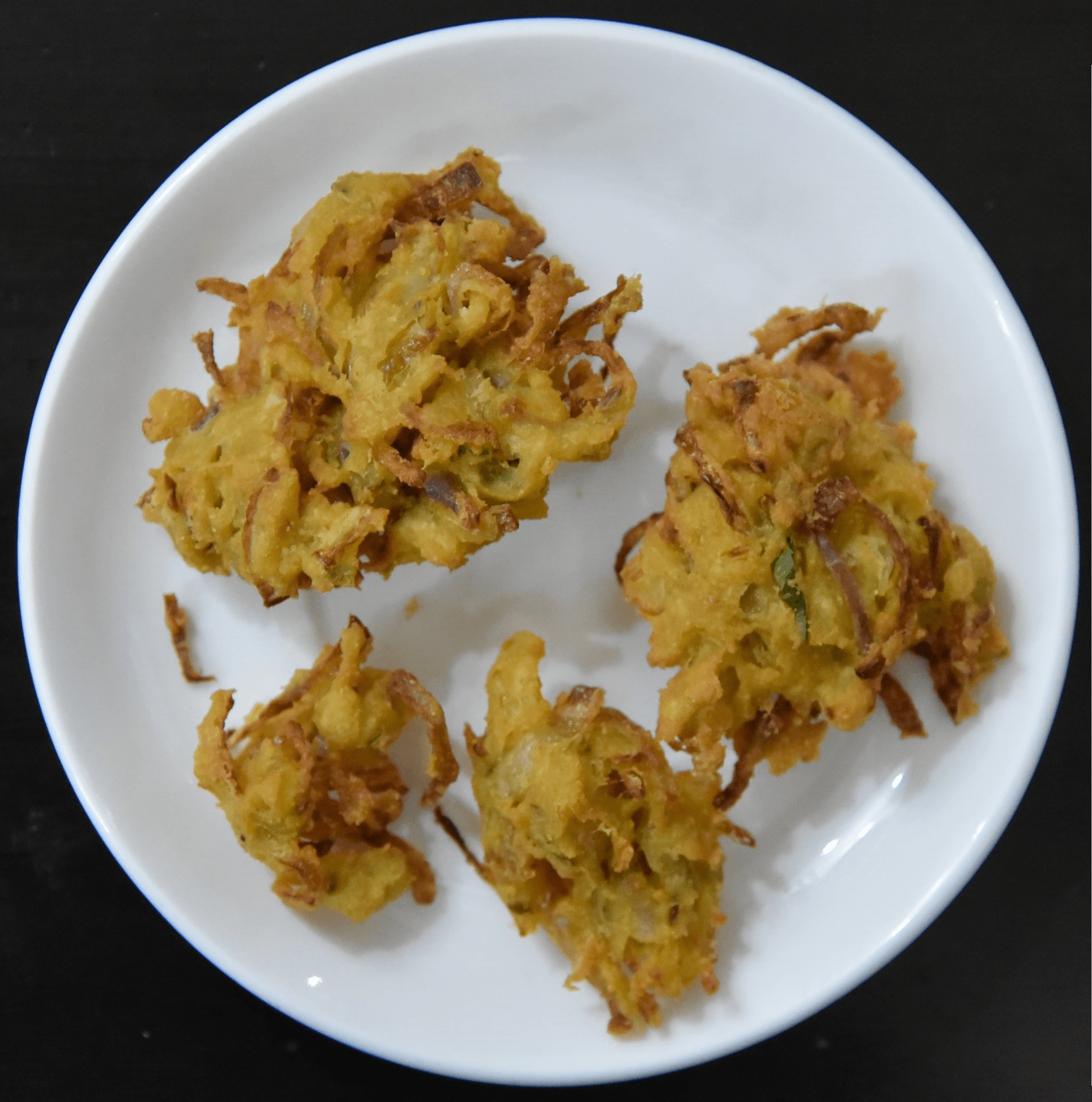
Four pakoras with evening chai feel like a small snack. Four medium ones carry 100 to 240 calories, and a greasy set from the tea stall can push past 300. One pakora on its own is 25 to 60 calories, depending on its size and how much oil it soaked up.
Nobody in Pakistan counts pakoras. They are the default evening food. The tea is brewing, someone brings out a plate, and the plate empties without anyone keeping score. During Ramadan they are practically mandatory at iftar, stacked next to the samosas. The tracking problem is that a pakora is not a standard unit. An aloo pakora the size of a walnut and a bazaar one the size of a small fist are both called one pakora, and they can be 40 calories apart.
A pakora is vegetables coated in besan, chickpea flour, and dropped into hot oil. The batter brings the protein and the fiber. The oil brings almost everything else. That split is why the same snack has such a wide honest range.
| Portion | Calories | Protein | Carbs | Fat |
|---|---|---|---|---|
| 1 small piece (~15 g) | 20 to 45 | 1 to 2 g | 3 to 4 g | 1 to 2 g |
| 1 medium piece (~25 g) | 30 to 75 | 1 to 2 g | 4 to 6 g | 2 to 5 g |
| 4 medium pieces (~100 g) | 125 to 300 | 5 to 8 g | 16 to 22 g | 5 to 20 g |
| Iftar plate, 6 pieces (~150 g) | 190 to 450 | 8 to 12 g | 24 to 33 g | 8 to 30 g |
These ranges come from two directions, and that is deliberate. The USDA's food survey lists pakoras at 125 calories per 100 grams, with 5 grams of protein, 16 grams of carbs, and 5 grams of fat (FoodData Central entry for pakoras). That is the light end of the real world. Detailed recipe based estimates for home deep fried pakoras land at 260 to 320 calories per 100 grams, because the batter ends up holding 17 to 20 grams of fat per 100 grams. Real plates fall somewhere between the two, so the table spans both instead of pretending one number fits.
Why one pakora is never like the next
Oil absorption is the whole story. A pakora pulled from hot oil and drained on paper holds far less oil than one that sat in a tray at the stall all evening, going soft and shiny. Fryers that run the same dark oil all day, the standard setup at a lot of bazaar stalls, produce greasier results than fresh oil at home. There is a simple visual test: if the pakora leaves a grease ring on the plate, or your fingers shine after picking one up, you are holding the top of the range. That check matters more than whether it was aloo or palak.
Size does the rest. Street pakoras are irregular by nature, and one heavy handful of batter can weigh twice what a small lacy piece weighs. When you are estimating, count by weight in your head rather than by pieces. Four small homemade pieces and four big stall ones are not the same snack.
The filling moves the numbers a little. Onion and palak pakoras stay light, mostly batter and vegetable. Aloo pakoras sit in the middle. Chicken pakoras cost more and add protein, but they also carry more fat from the meat. Thick batter means more besan, which means more carbs and a bit more protein. Thin lacy ones look light and are mostly crunch and oil, so do not assume the delicate ones are the safe choice.
Logging pakoras in CalsFlow the right way
Pakoras are a good example of why describing the food beats picking a fixed database number. Type in something like "4 aloo pakoras from the tea stall, medium, a bit greasy". CalsFlow starts with a middle assumption, around 240 calories for that description. Then you adjust. The two answers that matter are size and greasiness. Get those right and the estimate lands close to reality. Skip them and you could be off by 150 calories either way.
This is also where most people undercount. The pieces look small and the batter looks innocent. The calories are in the oil you cannot see, and the honest way to log a street snack is to assume a little more oil than you think.
The oil math, quickly
One tablespoon of cooking oil is about 120 calories (USDA). A hundred grams of pakoras can hold anywhere from 5 to 20 grams of absorbed fat, which is 45 to 180 calories from oil alone. That is why two plates of the same size can differ by 150 calories: the vegetables and batter are nearly identical, and the oil is not.
It also means draining and oil temperature are doing real work in your kitchen. Hot oil seals the surface fast and lets less in. Cool oil soaks. A batch that comes out crisp and pale holds less oil than one fried low and slow until dark brown. None of this makes fried food a health food. The WHO recommends keeping saturated fat below 10% of total energy intake, and a big greasy plate of pakoras spends a real chunk of that budget. But it does mean the home cook with a hot karahi and a paper lined plate is eating a meaningfully lighter snack than the bazaar version.
If you are comparing evening snacks, the Pakistani food calorie chart puts pakoras next to samosas and bun kebabs, and samosa calories covers the other iftar staple. For tracking methods that actually work on desi food, calorie counting Pakistani desi food is the practical starting point, and Pakistani chai calories covers what usually goes with the plate.
Frequently asked questions
How many calories are in one pakora? A medium piece, about 25 grams, carries 30 to 75 calories. Small homemade ones are 20 to 45. Big greasy stall pieces can reach 75 or more each.
Are pakoras good for weight loss? They are not a weight loss food, but three or four light homemade ones at 100 to 150 calories fit most plans without drama. The damage comes from the iftar style plate of eight with two cups of doodh patti, which quietly runs 400 to 600 calories before dinner.
Are homemade pakoras healthier than street pakoras? Generally yes, and it comes down to the oil. Fresh oil, proper temperature, and draining on paper put homemade ones at the bottom of every range above. Street ones fried in reused oil sit at the top. Same batter, different oil, very different snack.
Do baked or air fried pakoras actually taste close? They get crispy but they do not get the same. Air frying cuts the fat roughly in half, which is a real saving if pakoras are a daily habit. For a weekly evening plate, most people would rather have the real thing and count it honestly.
Having pakoras with chai tonight? Describe them in CalsFlow: how many, how big, and how greasy they looked. Adjust the oil level and you will have a number you can trust instead of a guess that pretends every pakora is the same.
Cover photo: Babu iyer via Wikimedia Commons (CC BY-SA 4.0). CalsFlow provides nutrition estimates, not medical advice.