

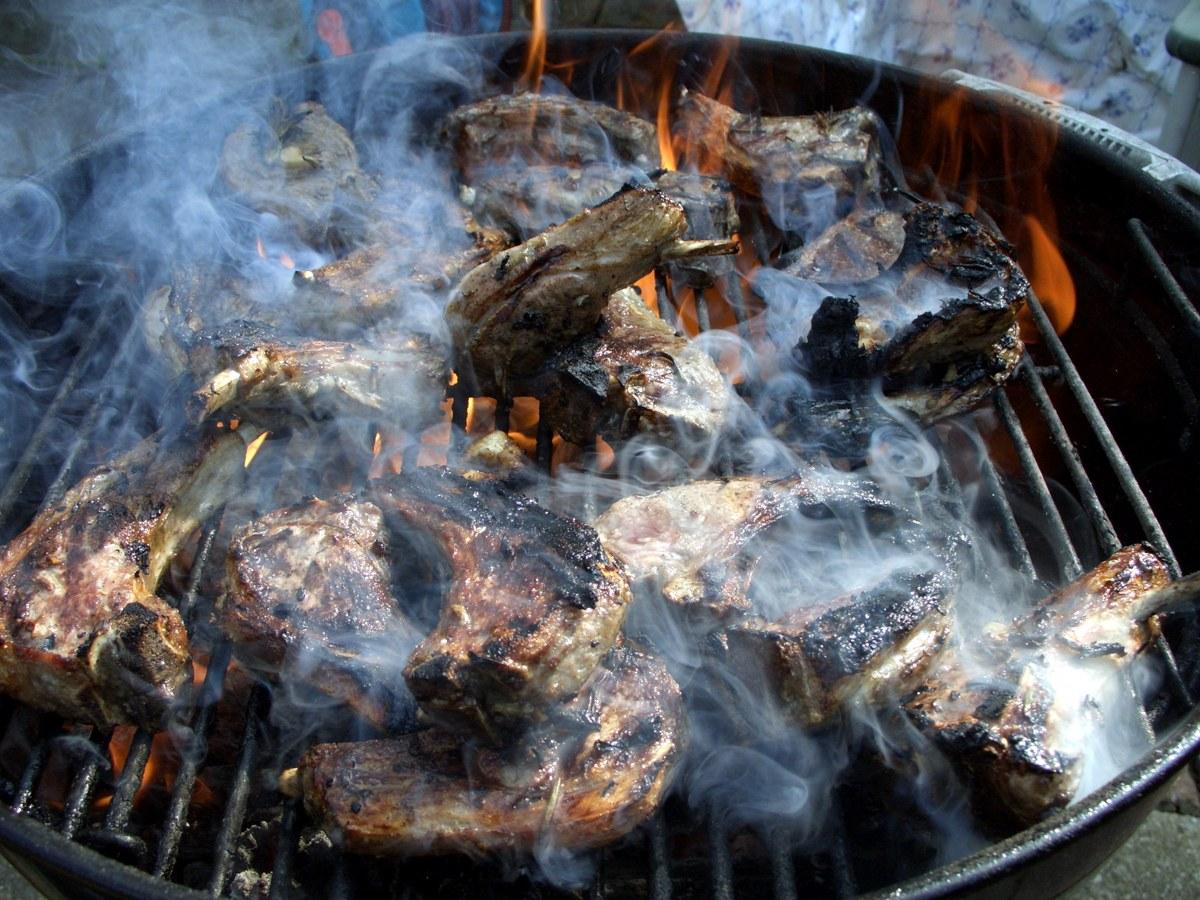
Short answer: one grilled mutton chop lands around 120 to 160 calories if it is goat, and 180 to 230 if it is lamb. Per 100 g of edible meat, goat chops sit near 170 to 220 kcal and lamb chops near 220 to 280. The animal, the fat left on the chop, and the oil in the marinade decide where your plate lands.
One clarification first, because it changes the number. In Pakistan, "mutton" at a barbecue shop or butcher usually means goat, not lamb. Goat meat is leaner than lamb by a clear margin. USDA FoodData Central puts cooked goat meat near 140 to 150 kcal per 100 g for lean cuts, while cooked lamb chops run well above 200 kcal per 100 g once the fat is counted. So when a menu says mutton chops, you are most likely eating goat chops, and the leaner end of the ranges below is the one that applies. If the shop is serving lamb, say so in your head and move to the higher range.
Mutton champain, the rib chops grilled over charcoal, are a barbecue staple across Pakistan. The meat is marinated in yogurt, ginger, garlic, green chili and garam masala, then cooked fast over high heat until the edges char. Grilling is kind to the calorie count. No gravy, no frying, and some fat drips into the coals. What remains is the meat, its fat cap, and whatever oil the marinade carried in.
What sets the number
Goat or lamb. This is the biggest fork in the road. Goat is a lean red meat. Lamb carries more intramuscular fat and a thicker fat cap. Two chops that look identical on the grill can sit 50 kcal apart per piece purely because of the animal. If you are unsure which one the shop uses, ask. Barbecue men usually know, and the answer is worth more than any table.
The fat cap. A chop with its white fat edge intact eats very differently from one that has been trimmed. That edge is nearly pure fat at about 9 kcal per gram, so a thick cap can add 40 to 70 kcal to a single chop. Trimming it after cooking, or asking for trimmed chops, is the easiest cut you can make without touching the flavour of the meat itself.
The marinade oil. Yogurt, lemon and spices cost almost nothing. Oil is the quiet passenger. A marinade heavy with mustard oil or ghee leaves a film on every chop, and that film survives the grill. Home cooks who marinate in yogurt alone land at the bottom of every range here. Shops that brush the chops with oil or ghee while they cook land at the top.
The cut. Rib chops, the classic champain, are fattier than loin chops. Shoulder chops sit somewhere in between and tend to be chewier. A plate of rib chops will always run higher than the same weight of loin chops, even from the same animal.
Restaurant versus homemade. A home grilled goat chop, trimmed, yogurt marinated, no oil brushing, is the lightest version of this dish. Restaurant and dhaba chops trend higher for two reasons: the fat is usually left on, and the chops are brushed with ghee or oil on the grill to keep them glossy. Same dish, different handling, different number.
Mutton chops calories and macros
| Food | Portion | Calories | Protein | Carbs | Fat |
|---|---|---|---|---|---|
| Grilled goat chop | 100 g edible meat | 170 to 220 | 24 to 28 g | 1 to 2 g | 7 to 12 g |
| Grilled lamb chop | 100 g edible meat | 220 to 280 | 22 to 26 g | 1 to 2 g | 14 to 21 g |
| One goat chop | About 70 g edible meat | 120 to 160 | 17 to 20 g | 0 to 1 g | 5 to 8 g |
| One lamb chop | About 80 g edible meat | 180 to 230 | 18 to 21 g | 0 to 1 g | 11 to 17 g |
| Three goat chops | About 210 g edible meat | 360 to 470 | 50 to 59 g | 1 to 3 g | 15 to 25 g |
| Three lamb chops | About 240 g edible meat | 530 to 670 | 53 to 62 g | 1 to 3 g | 34 to 50 g |
| Mint raita | 2 tablespoons | 20 to 35 | 1 to 2 g | 2 to 4 g | 1 to 2 g |
Portion weights are edible meat, bone excluded. A chop on the bone weighs more at the counter than the meat you actually eat, and the bone itself can be a quarter of the chop's weight, which is why counting pieces beats guessing from the plate's total weight.
The bread on the side changes the meal more than the chops do. A naan adds 280 to 400 kcal (naan calories), two rotis roughly 200 to 300 (roti calories). Three goat chops with salad and raita stay near 400 to 500 kcal. The same chops with a naan pass 700. Nothing about the meat changed. The company it keeps did.
Mutton chops vs seekh kebab
Seekh kebab is the closest comparison on a barbecue menu, and the difference comes down to fat and portion control. Seekh kebabs are minced meat shaped onto skewers, and the mince in most shops is a fattier mix than a trimmed chop, often with added fat to keep it from drying out. A seekh kebab plate can therefore run higher per 100 g than a grilled goat chop. The chop has one advantage: it is a countable unit. You know you ate three chops. A plate of seekh kebabs is harder to count once the pieces are broken up with onions and chutney. For tracking, chops are the more honest barbecue order, as long as you note goat or lamb and whether the fat cap stayed on.
A lighter plate that still tastes like a barbecue
Keep the marinade exactly as it is. Yogurt, ginger, garlic, green chili and garam masala carry the flavour and cost almost nothing. Then change three things. Pick goat chops over lamb when you have the choice, and trim the fat cap after cooking if the shop left it on. Skip the ghee brushing on the grill, or brush with lemon juice instead while the chops rest. Serve them with mint raita, onions and salad instead of naan, and a three chop plate drops from roughly 750 kcal to roughly 450 without losing the smoky, charred character that makes champain worth ordering in the first place.
How to track mutton chops in seconds
Describe them the way they look on the plate:
"3 grilled goat chops, fat trimmed + salad + raita"
In CalsFlow, that gives you the calorie and macro estimate plus the assumptions behind it: the animal it priced in, the piece size, and whether it counted the fat cap. Ate lamb instead, or kept the fat on? Say so and the estimate moves with it. The same describe what you see approach sits at the heart of our guide to counting calories in Pakistani and desi food. After a few barbecue nights logged this way, you will know whether your usual order is a 450 kcal dinner or a 900 kcal one, which is the only number that actually matters for your tracking.
FAQs
Are mutton chops good for weight loss?
Goat chops can be. They are high in protein, grilled rather than fried, and three trimmed goat chops with salad make a filling meal near 450 kcal. Lamb chops are a harder fit: the same plate runs 150 to 200 kcal higher, and with naan and ghee brushing it can pass 900 kcal. Same grill, different animal, different diet.
How many mutton chops should I eat in one meal?
Three chops is a normal barbecue portion, roughly 200 to 240 g of edible meat. That gives 50 g of protein or more, which is plenty for one meal. If the chops are lamb or the fat is left on, two chops with extra salad is the smarter version of the same plate.
Is mutton healthier than chicken tikka?
Not on calories. Chicken tikka is boneless breast meat, usually skinless, near 170 to 210 kcal per 100 g. Goat chops sit in a similar range per 100 g, but lamb chops run clearly higher. Tikka wins on leanness. Chops win on richness and on being easier to count piece by piece.
Does charring add calories?
No. The char is flavour, not fat. What adds calories is the fat cap and any oil or ghee brushed on during cooking. A deeply charred, trimmed goat chop is lighter than a pale, glossy, fat covered one.
If you eat champain often, the habit that pays off is a small one: ask whether it is goat or lamb, and decide about the fat cap before the plate arrives. The grill will take care of the rest. For a broader picture of where desi dishes sit, see the Pakistani food calorie chart, and if mutton karahi is more your style, see mutton karahi calories.
Try logging your next barbecue order in CalsFlow and see where your usual plate lands: CalsFlow on Google Play
Photo: Salimfadhley, CC BY-SA 3.0, via Wikimedia Commons.
CalsFlow provides nutrition estimates, not medical advice.