

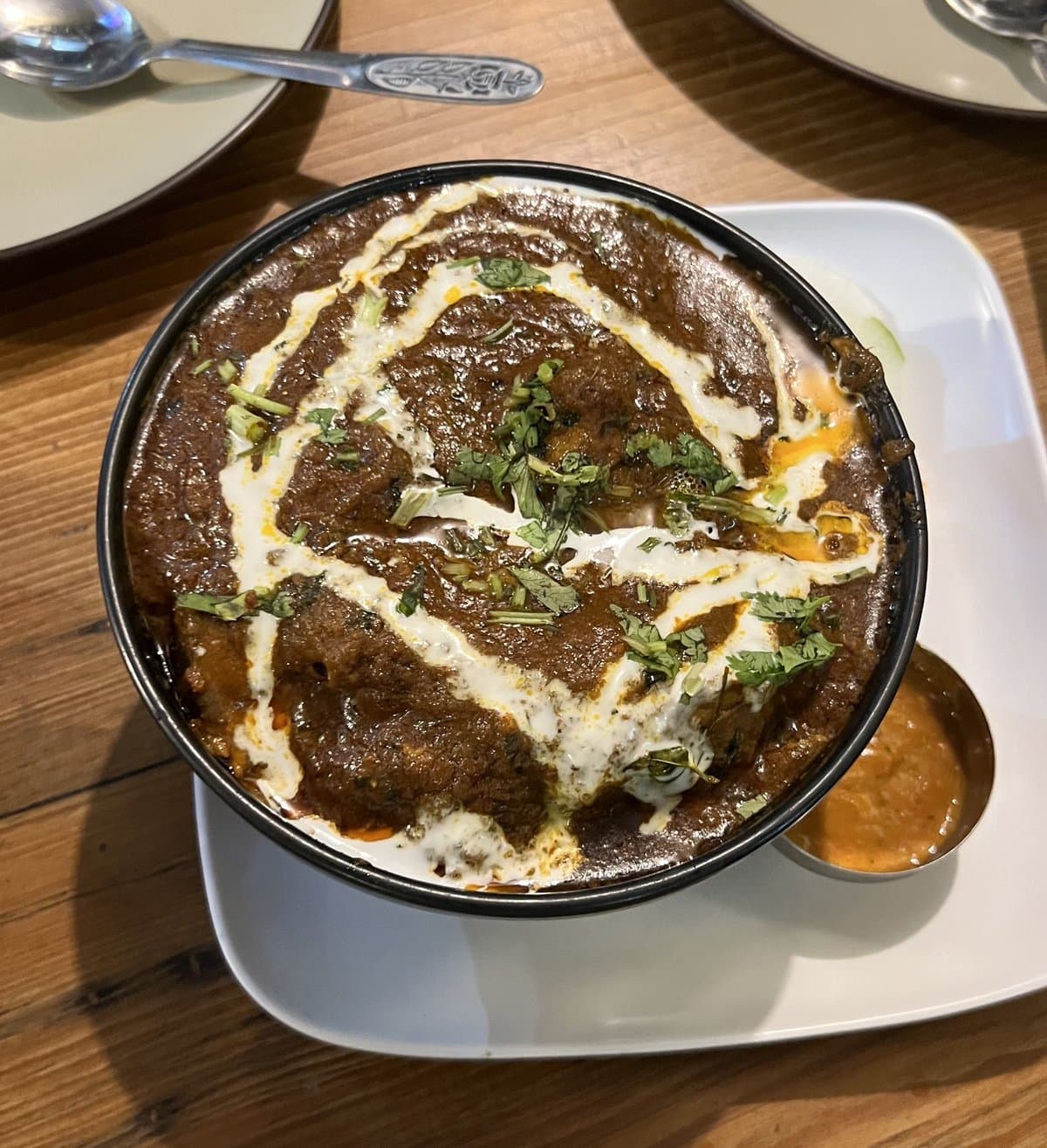
Short answer: one restaurant plate of mutton karahi (about 350 g) runs roughly 850–1,100 calories. A homemade version with leaner meat and a lighter hand on the oil lands closer to 600–800 for the same weight. Per 100 g, expect roughly 250–320 kcal. Mutton karahi is not a light dish, and the gap between a home karahi and a dhaba karahi is bigger than most people think.
Why mutton karahi is heavier than chicken karahi
Chicken karahi sits around 150–200 kcal per 100 g. Mutton karahi sits well above that, and the reason is the meat itself. USDA data for cooked lamb puts lean meat at about 206 kcal per 100 g and lean meat with fat at about 294 kcal per 100 g. Karahi meat is rarely trimmed lean, and it cooks in its own fat plus added oil or ghee. That combination is what pushes the number up.
There is one wrinkle worth knowing. In Pakistan, "mutton" usually means goat, not sheep. Goat is generally leaner than sheep, so a goat karahi usually sits at the lower end of the ranges above, while a sheep karahi sits at the higher end. Most restaurants will not tell you which one you are getting, which is one more reason to treat these as ranges, not exact counts.
Then there is the oil. A karahi starts with meat, tomatoes, ginger and green chilies, all low calorie. The calories arrive with the cooking fat. A home cook might use a tablespoon or two for the whole karahi. A restaurant can use several times that, and the oil that pools at the edges of the plate is not decoration. It is part of what you eat, especially if you scoop up the gravy with bread.
Bone weight matters too. Karahi is traditionally bone-in, and a 350 g plate includes bone. The edible portion is less than the served weight, but the gravy clinging to it adds calories back. The ranges below already account for that messiness.
Calories and macros
| Food | Portion | Calories | Protein | Carbs | Fat |
|---|---|---|---|---|---|
| Mutton karahi | 100 g | 250–320 kcal | 20–25 g | 4–6 g | 18–25 g |
| Mutton karahi | 1 cup (about 240 g) | 600–770 kcal | 48–60 g | 10–14 g | 43–60 g |
| Mutton karahi | Small plate (about 250 g) | 625–800 kcal | 50–62 g | 10–15 g | 45–62 g |
| Mutton karahi | Full restaurant plate (about 350 g) | 850–1,100 kcal | 70–88 g | 14–21 g | 63–88 g |
| Mutton karahi, homemade light oil | Full plate (about 350 g) | 600–800 kcal | 70–85 g | 12–18 g | 40–60 g |
| Mutton karahi + 1 roti | Plate plus bread | Add 100–140 kcal | Add 3–4 g | Add 20–25 g | Add 1–2 g |
| Mutton karahi + 1 naan | Plate plus bread | Add 250–350 kcal | Add 7–9 g | Add 45–55 g | Add 5–8 g |
Protein is the bright spot. A full plate delivers 70 g or more, which covers most of a day's protein target in a single meal (see how much protein you need per day). The trade is fat: mutton karahi is a high fat dish, and a good share of that fat is saturated. That does not make it a dish to avoid. It makes it a dish to portion deliberately.
Restaurant vs homemade
The gap between restaurant and homemade mutton karahi is mostly oil, and it is large. A restaurant karahi can carry 30–50% more calories than the same weight cooked at home, for the same reason chicken karahi does. If you are tracking, always log a restaurant karahi at the higher end of the range.
At home you control three things that matter most. Trim visible fat before cooking. Measure the oil instead of pouring from the bottle. And serve yourself from the karahi rather than eating straight from the shared dish, where portions quietly grow.
Is mutton karahi good for weight loss?
It can fit, but it takes more care than chicken karahi does. Two adjustments do most of the work.
First, control the oil, not the meat. Ask for less oil at a restaurant, or cook with less at home, and you can cut 200 or more calories without losing any protein. Skipping the extra ghee tarka on top helps too (see desi ghee calories for what that spoonful actually costs).
Second, watch the bread. The karahi itself is already a big meal. Two naans alongside a full plate can add 500–700 calories, which turns dinner into something closer to 1,500 calories before you count the raita or the lassi. One roti instead of two naans keeps the meal recognisable and much lighter. Our Pakistani food calorie guide covers this pattern across the full menu.
How to track mutton karahi without guessing
Here is where it gets practical. In CalsFlow, you would type:
"1 plate restaurant mutton karahi + 1 roti"
CalsFlow estimates the calories and macros, and shows its assumptions: the portion size it guessed and how much oil it allowed for. Eating a homemade version with light oil? Dial the oil assumption down and watch the estimate drop by 150–250 calories. That editable assumption step is what turns a guess into a usable number.
Log a few karahi nights this way and you will know your usual plate's numbers by heart. The point is not to stop eating karahi. The point is to stop being surprised by it.
FAQs
How many calories are in 1 plate of mutton karahi? About 850–1,100 kcal for a 350 g restaurant plate, depending on the meat and the oil. Homemade with light oil: closer to 600–800 for the same weight.
Does mutton karahi have more calories than chicken karahi? Yes, clearly. Chicken karahi runs about 150–200 kcal per 100 g; mutton karahi runs about 250–320. The difference is the fattier meat, not the spices or the cooking method.
How much protein is in mutton karahi? Roughly 20–25 g per 100 g as served. A full restaurant plate gives you 70 g or more, which is excellent for hitting a daily protein target.
Is goat karahi lighter than sheep karahi? Usually, yes. Goat meat is generally leaner than sheep meat, so a goat karahi tends to sit at the lower end of the ranges above. The difference is modest next to the oil, which still matters more.
Mutton karahi vs naan: what should I watch more? The karahi. A naan is 250–350 kcal, but the karahi is 850–1,100. If you only fix one thing, fix the oil in the karahi.
The bottom line
Mutton karahi: 250–320 kcal per 100 g, 850–1,100 per restaurant plate, with serious protein and serious fat. The meat sets the floor and the oil sets the ceiling. Eating karahi tonight? Describe it in CalsFlow, adjust the oil assumption to match your plate, and get your real number in seconds.
Sources: calorie and protein ranges are estimated from USDA FoodData Central values for cooked lamb (lean only about 206 kcal per 100 g; lean with fat about 294 kcal per 100 g), adjusted for typical karahi cooking fat and gravy.
CalsFlow provides nutrition estimates, not medical advice.