

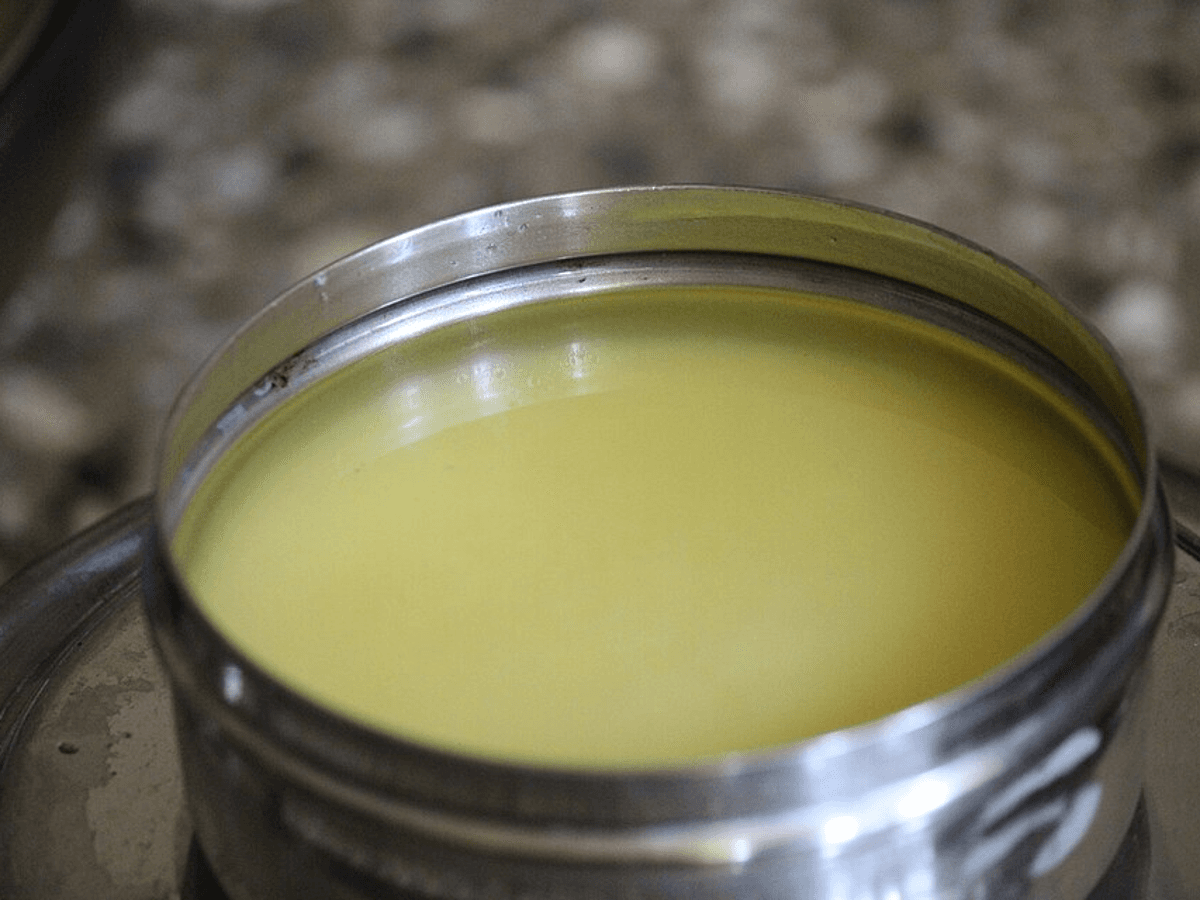
Short answer: one tablespoon of desi ghee, about 14 grams, carries 115-130 calories, and almost all of it is fat. Per 100 grams it runs 870-880, which makes ghee one of the most calorie-dense ingredients in a Pakistani kitchen. The number that actually matters is how much lands in your food, because nobody eats ghee by the spoon.
Desi ghee is butter simmered until the water and milk solids cook out, leaving pure butterfat behind. USDA data puts it at about 99.5 grams of fat per 100 grams, with roughly 62 of those saturated, which is why it stays semi-solid at room temperature and handles the heat of a karahi or tawa without smoking. Pakistani cooks reach for it as much for flavor as for function: a paratha finished in ghee tastes like nothing else, and that taste is why the spoon gets heavy.
Desi ghee calories and macros
| Portion | Calories | Fat |
|---|---|---|
| 1 teaspoon, about 5 g | 40-45 | 4.5-5 g |
| 1 tablespoon, about 14 g | 115-130 | 13-14 g |
| 2 tablespoons | 230-260 | 26-28 g |
| 100 g | 870-880 | 99-100 g |
Protein and carbs barely register, a fraction of a gram per 100 grams, so there is no macro table worth building beyond fat.
Ghee vs butter vs cooking oil
| Fat, per 100 g | Calories | Saturated fat |
|---|---|---|
| Desi ghee | 870-880 | about 62 g |
| Butter | 715-720 | about 51 g |
| Vegetable oil | 880-885 | about 14-16 g |
Ghee beats butter per 100 grams because butter carries water and milk solids that ghee has cooked off, but spoon for spoon the gap narrows. The honest surprise is oil: ghee and vegetable oil carry essentially the same calories. Swapping oil for ghee does not lighten anything. It changes the flavor and the saturated fat profile, not the calorie count. Calorie figures from USDA FoodData Central.
Where the ghee actually goes
Nobody logs "ghee" as a dish. They log the paratha, the halwa, the daal. The ghee is hiding inside.
A paratha brushed lightly on a hot tawa picks up about a teaspoon, 40-45 calories. The same paratha fried in a visible spoonful of ghee, the dhaba style, absorbs a full tablespoon, 115-130. Same dough, same size, and the difference is a small meal by itself. The paratha breakdown runs those numbers.
Suji ka halwa is the heaviest hitter. The classic ratio runs close to equal parts sooji, sugar and ghee, so one katori of halwa can carry two to three tablespoons, 230-390 calories of ghee alone. The halwa puri breakdown puts the full plate together.
A daal tarka, the baghaar poured over the top, uses a teaspoon or two for the whole pot, so one bowl picks up 15-40 calories. That is modest, but it is also why a plain daal bowl at home and one at a dhaba can sit 100 calories apart. Puris soak up frying fat at roughly a teaspoon each, and karahi houses finish the dish with a spoon of ghee glossed over the top, the part that makes restaurant chicken karahi shine.
Logging ghee without weighing it
Type "2 ghee parathas, home, 1 bowl daal" into CalsFlow and it spells out the assumptions: a teaspoon of ghee per paratha, a light tarka on the daal, landing somewhere near 500-620 for the meal. Tell it the parathas came from the dhaba instead, and the estimate jumps, because the app stops assuming a teaspoon and starts assuming a tablespoon. That single line, the ghee line, is where home and restaurant versions of the same meal split. The guide to counting calories in desi food covers this estimating habit in more detail.
The practical takeaway is unglamorous: the dough, the daal and the vegetables are mostly decided, and the ghee is the lever. Weighing it every time is overkill. Measuring with spoons for a week teaches the eye what a teaspoon actually looks like, and after that the estimates stay honest.
The saturated fat question
Ghee sits in two opposite stories. Some corners of the internet sell it as a health food, and the NHS lists it plainly among foods high in saturated fat, alongside butter and lard (source). Both can be true at once: the flavor is real, and so is the saturated fat, about 8-9 grams in a single tablespoon, against UK guidance of no more than 30 grams a day for men and 20 for women. WHO's 2023 guideline suggests keeping saturated fat below 10% of total energy intake (source).
None of that makes ghee an enemy. It makes it an ingredient to measure. Two tablespoons in a shared pot of halwa split four ways is a different thing from a tablespoon melted over every roti. The detail worth knowing: fat carries flavor and keeps food satisfying, which is why a little ghee goes further than a lot of oil. The calorie math, though, is identical. Nine calories a gram, whatever the source.
FAQs
How many calories in 1 tablespoon of desi ghee? About 115-130, with 13-14 grams of fat and almost no protein or carbs.
Is desi ghee better than oil for weight loss? No. Ghee and vegetable oil carry essentially the same calories per 100 grams. The only swap that changes the math is using less of either. Ghee does carry more saturated fat per spoon, which is worth knowing if heart health is on your mind.
How many calories in 1 teaspoon of desi ghee? About 40-45, with roughly 5 grams of fat.
Cooking with ghee tonight? Describe the dish in CalsFlow, say how many spoons went in, and you will get the range instead of one suspiciously exact number.
Cover photo: Phadke09 via Wikimedia Commons (CC BY-SA 4.0).
CalsFlow provides nutrition estimates, not medical advice.