

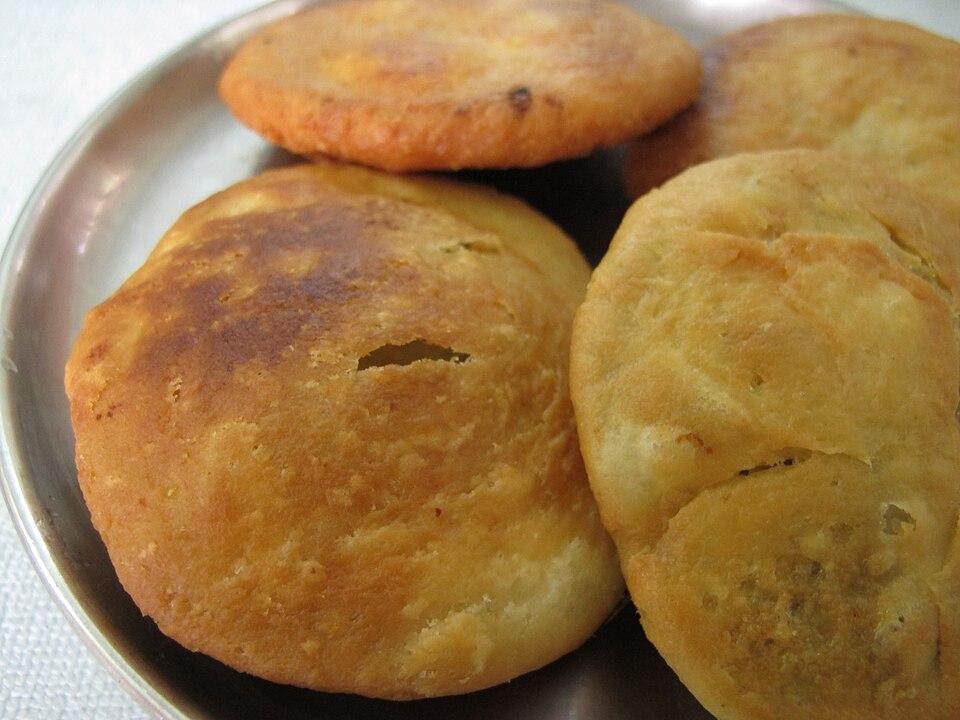
Short answer: one regular daal kachori, about 65 grams, carries roughly 170 to 220 calories. Per 100 grams the number sits near 250 to 300, which makes it one of the denser fried snacks on a Pakistani tea table. A small bakery piece can land closer to 130, and a big dhaba one stuffed with extra filling can pass 250.
A kachori is a round of maida dough, rubbed with ghee so the crust turns flaky, wrapped around a spiced moong daal filling and deep fried until it puffs. In Pakistan it shows up at breakfast with aloo ki sabzi, at tea time with doodh patti, and at chaat stalls where it gets broken open and loaded with dahi, imli chutney and sev. The filling itself is the lightest part of the whole thing. Moong daal brings protein and fibre. Almost everything else about the snack works against the calorie count: refined flour, ghee in the dough, and a frying step that soaks the shell in oil.
Why the number moves so much
Size first. There is no standard kachori. A small bakery piece weighs about 50 grams. A street stall piece is usually 60 to 70. A fat one from a dhaba can reach 90. Since the whole snack is roughly 250 to 300 calories per 100 grams, every extra 10 grams adds about 25 to 30 calories. Guessing the piece without weighing it is the single biggest source of error.
The oil it drinks. Frying is not a fixed cost. A kachori fried in fresh hot oil at the right temperature absorbs less than one left too long in oil that has cooled between batches. Two recipe analyses of the same dish show the gap: Tarla Dalal puts one moong daal kachori at 195 calories with 11.5 grams of fat (tarladalal.com), while a Clearcals breakdown lands near 300 calories per 100 grams (clearcals.com). Both can be right. The difference is almost entirely how much oil the pastry took in.
The filling. Moong daal is the common filling in Pakistan, and it is the friendlier choice. Pyaaz kachori, the onion filled version, runs similar. A filling heavy on potato or khoya pushes the carbs and the total up, and a cheese filled version pushes the fat up. The shell dominates the count either way, so swapping the filling changes the number less than people expect.
Baked changes everything. A baked kachori skips the frying step, which is where most of the fat comes from. Expect roughly 130 to 170 calories for a similar sized piece, about a third less than the fried version. The texture is different, drier and less flaky, but for a daily snack the saving is real.
Kachori calories and macros
| Portion | Calories | Protein | Carbs | Fat |
|---|---|---|---|---|
| 1 small kachori, about 50 g | 130 to 170 | 3 to 4 g | 14 to 18 g | 7 to 9 g |
| 1 regular kachori, about 65 g | 170 to 220 | 4 to 5 g | 19 to 24 g | 9 to 12 g |
| 100 g kachori | 250 to 300 | 5 to 6 g | 28 to 32 g | 13 to 16 g |
| 2 kachoris with aloo sabzi, about 350 g | 480 to 620 | 9 to 13 g | 60 to 75 g | 24 to 32 g |
| 1 baked kachori, about 60 g | 130 to 170 | 4 to 5 g | 19 to 23 g | 5 to 7 g |
Kachori vs samosa
People ask this at every bakery counter. Per piece they are close: a street aloo samosa runs 130 to 220 calories, almost the same band as a kachori. Per 100 grams the kachori is usually a touch denser, because its round sealed shape soaks up oil from every side while a samosa has flat faces and a crimped edge. Our samosa calories breakdown puts a 100 gram samosa near 260 calories, so the two sit within a few dozen of each other. In practice the difference is small. Both are fried maida. The one you eat two of is the one that matters.
Kachori chaat is a different meal
A plain kachori is one thing. A kachori chaat, the shell cracked open and filled with dahi, imli chutney, chopped onion and sev, is another. The toppings add 100 to 150 calories, mostly from the sev and the sweet chutney, and the dahi adds a little protein. A raj kachori from a chaat stall can reach 350 to 450 calories before you have had anything else. Our gol gappay calories page covers the same chaat logic: the shell is only the start, the toppings decide the total.
Logging it in CalsFlow
I typed "2 daal kachori with doodh patti from a bakery" into CalsFlow to see what it does. It assumed about 65 grams per piece, deep fried, moong daal filling, and returned a 340 to 440 range for the kachoris with the assumptions shown. The chai added its own 80 to 120. Then I changed one detail, that the kachoris were baked, and the estimate dropped by about a third. That is the right way to use it. Start with the base estimate, then adjust the one detail that actually moves the number, which is how the thing was cooked. Our guide to counting calories in desi food covers the same describe and adjust approach for everything from daal to biryani.
FAQs
How many calories are in 1 kachori? About 170 to 220 for a regular fried daal kachori of 60 to 70 grams. A small one is closer to 130 to 170, and a baked one lands in the same band as a small fried one.
Is kachori good for weight loss? Not really. It is refined flour deep fried in oil, so it packs a lot of calories into a small piece and does not keep you full for long. One piece with chai fits into most days. Two pieces with aloo sabzi is a 500 plus calorie breakfast, which is fine occasionally but hard to repeat daily inside a deficit. If you are tracking a target, how many calories you should eat per day sets the frame.
Which has more calories, kachori or samosa? Per piece they are about the same. Per 100 grams a kachori is usually a little denser because the sealed round shell absorbs more oil. Either way the difference is smaller than the difference between one piece and two.
How many calories in kachori chaat? A kachori broken open with dahi, chutneys and sev runs about 300 to 400 calories, and a loaded raj kachori can reach 450. The toppings, not the shell, are what push it there.
Having kachori with chai? Describe the plate in CalsFlow, mark it fried or baked, and count the pieces honestly. The app will give you the range, not one suspiciously exact number.
Cover photo: Vashisthapathak2015 via Wikimedia Commons (CC BY-SA 4.0).
CalsFlow provides nutrition estimates, not medical advice.