

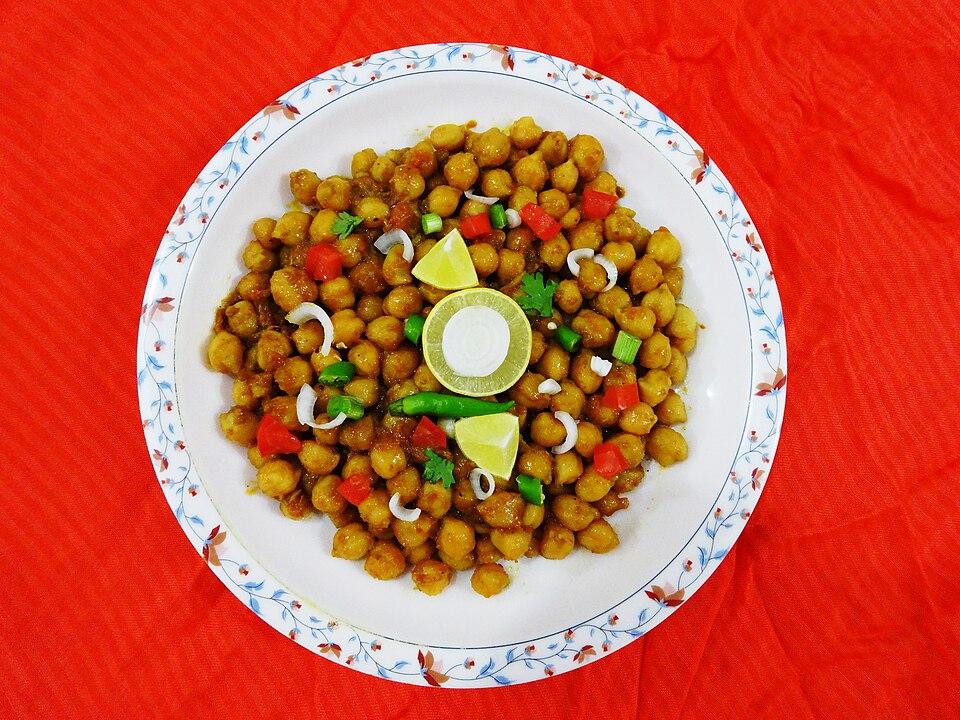
Short answer: one bowl of homemade chana chaat, about 200 g, runs 250 to 320 calories. Add boiled potato and it climbs to 300 to 380. Add dahi and sweet chutney and you are looking at 350 to 450. A street plate loaded with sev and papri can reach 450 to 600. The chickpeas are the same in every version. Everything piled on top of them decides the total.
Chana chaat is the snack that shows up everywhere in Pakistan. School canteens, street carts, iftar tables in Ramadan, the bowl someone puts out when guests arrive unannounced. Boiled chickpeas tossed with chopped onion, tomato, green chillies, lemon juice and chaat masala. Simple at its core, and that simplicity is why the calorie range is so wide. Nobody serves the same version twice.
What actually goes in the bowl
The base is boiled chickpeas, white kabuli chana in most homes, kala chana in others. USDA FoodData Central puts cooked chickpeas near 164 kcal per 100 g, with about 9 g of protein and 27 g of carbs. That is a solid base for a snack. Chickpeas bring protein and fibre, which is why a bowl of chaat keeps you full in a way that a packet of chips never will.
Then come the additions, and each one pulls the number in a different direction. Chopped onion, tomato, cucumber and coriander add almost nothing, maybe 15 to 25 kcal for a generous handful. Lemon juice and chaat masala add flavour for effectively zero calories. Boiled potato is the first real jump, around 75 kcal per 100 g, and a chaat bowl often hides 50 g of it or more.
Dahi changes the character of the bowl. Two or three tablespoons of low fat yogurt add 30 to 50 kcal and a little protein, and they cool the spice down. Full fat dahi adds roughly double that. Tamarind chutney is the quiet one. It tastes light and tangy, but it is mostly sugar, so a tablespoon carries 25 to 35 kcal. Green chutney, by contrast, is mostly herbs and chillies and stays near 10 kcal a tablespoon.
The street version adds the heavyweights. Sev, those thin fried chickpea noodles scattered on top, and papri, the crisp fried discs, are both fried. A small handful of sev is 80 to 120 kcal on its own. That is how a plate that started as a healthy chickpea salad ends up rivalling a small meal.
| Food | Portion | Calories | Protein | Carbs | Fat |
|---|---|---|---|---|---|
| Plain chana chaat | 1 bowl, about 200 g | 250 to 320 kcal | 11 to 14 g | 35 to 42 g | 4 to 7 g |
| Chana chaat with potato | 1 bowl, about 250 g | 300 to 380 kcal | 12 to 15 g | 45 to 55 g | 5 to 8 g |
| Chana chaat with dahi and chutneys | 1 bowl, about 280 g | 350 to 450 kcal | 13 to 16 g | 50 to 62 g | 7 to 11 g |
| Street style with sev and papri | 1 plate, about 300 g | 450 to 600 kcal | 13 to 17 g | 55 to 70 g | 15 to 22 g |
| Plain chana chaat | 100 g | 130 to 160 kcal | 6 to 8 g | 20 to 24 g | 2 to 4 g |
Logging it without guessing
This is where most people go wrong with chaat. They log "chana chaat" as one generic entry and move on, but a plain homemade bowl and a street plate can sit 300 kcal apart. The fix is to log the bowl by its parts, not its name.
A CalsFlow entry for a homemade bowl might read "1 bowl chana chaat with potato, dahi and imli chutney". The app estimates from the chickpeas first, then adjusts for the potato, yogurt and chutney. If the bowl in front of you had no potato, take it out and watch the estimate drop. If the vendor went heavy on the sev, add a line for it. The point is not precision to the single calorie. It is knowing if you ate a 300 kcal snack or a 550 kcal one, because that difference matters when it shows up three or four times a week.
For context on where chaat sits among other street snacks, see samosa calories and gol gappay calories. Chickpeas on their own are covered in chana calories, and the broader picture is in the Pakistani food calorie chart.
Questions people actually ask
Is chana chaat good for weight loss?
The homemade version, yes, genuinely. Chickpeas give you protein and fibre for relatively few calories, and a bowl with vegetables and lemon is filling without being heavy. The version that works against you is the street plate with fried toppings and sweet chutney poured over it. Same name, different food. If weight loss is the goal, keep the potato modest, skip the sev, and let green chutney do the work that tamarind chutney was doing.
Kala chana or white chana, does it matter?
Barely, for calories. Kala chana, the smaller black chickpea, is a little higher in fibre and slightly firmer after boiling, and it lands in the same calorie range per 100 g. Pick the one you like. The toppings matter far more than the colour of the chickpea.
Does adding dahi make it unhealthy?
No. Dahi adds protein and makes the bowl more filling, and low fat yogurt adds very few calories. What makes a dahi chaat heavy is not the yogurt, it is the sweet chutney and fried toppings that usually come with it. A bowl with dahi and green chutney is one of the better snacks in the whole chaat family.
Next time a bowl of chaat lands in front of you, notice what is actually in it before you eat it. Chickpeas and vegetables, a light snack. Potato, dahi, sweet chutney and a handful of sev, a meal in disguise. Try logging your usual version in CalsFlow and see which one yours is: CalsFlow on Google Play
Cover photo: Miansari66, CC0, via Wikimedia Commons.
CalsFlow provides nutrition estimates, not medical advice.