

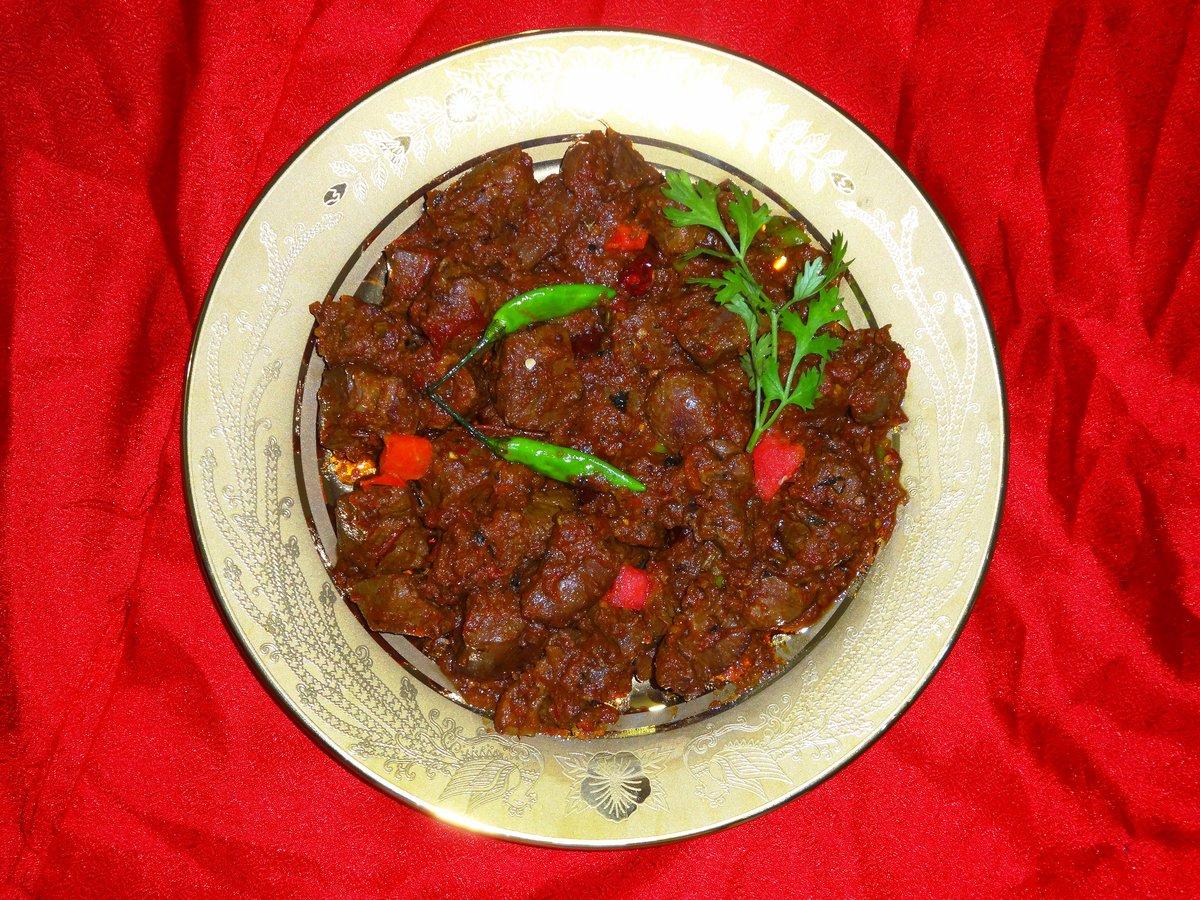
Short answer: a restaurant plate of Lahori kata kat, about 250 g of the chopped offal mix, carries 450 to 575 calories. Per 100 g, that is 180 to 230 kcal, with roughly 18 to 22 g of protein and 10 to 16 g of fat. The range is wide because kata kat is not one fixed recipe. The mix of organs changes from stall to stall, and the amount of ghee or butter on the tawa changes even more.
Kata kat, also called taka tak, is Lahore street food in its purest form. The name comes from the sound of the cook's blades chopping on the tawa, kat kat kat, while the meat cooks. The dish started on Gawalmandi Food Street and is still a late night dhaba order across Lahore and Karachi. What goes on the tawa is a mix of offal: brain (maghaz), kidney (gurda), liver (kaleji), heart (dil), and sometimes testicles (kapoora), often with a little mince or chopped chops thrown in. Tomatoes, green chillies, ginger, and garam masala go in as it fries, and it is scooped up with naan or roti.
What each part brings to the count
No published calorie database lists kata kat as a dish, so the numbers here are built from its parts. USDA FoodData Central gives raw values per 100 g for each organ: lamb liver runs about 139 kcal with 20.4 g of protein, lamb kidney about 84 to 97 kcal with around 16 g of protein, heart about 112 kcal, brain about 125 to 145 kcal, and goat mince about 143 kcal. Cooking drives off water, which concentrates those numbers, and then the tawa adds fat. Some dhaba recipes finish with a serious amount of butter. That is how a plate of mostly lean organs still lands at 180 to 230 kcal per 100 g.
The organ mix matters too. A plate heavy on brain and liver carries more fat than one heavy on kidney and heart. A chicken version, made with chicken offal and mince instead of mutton, runs leaner, around 150 to 190 kcal per 100 g. And the homemade version, where you control the oil, sits at the bottom of the range.
Kata kat calories and macros
| Kata kat | Portion | Calories | Protein | Carbs | Fat |
|---|---|---|---|---|---|
| Mutton kata kat, restaurant | 100 g | 180 to 230 | 18 to 22 g | 2 to 4 g | 10 to 16 g |
| Mutton kata kat, restaurant | 1 plate (~250 g) | 450 to 575 | 45 to 55 g | 5 to 10 g | 25 to 40 g |
| Mutton kata kat, large dhaba plate | 1 plate (~350 g) | 600 to 800 | 60 to 75 g | 7 to 14 g | 35 to 55 g |
| Chicken kata kat | 100 g | 150 to 190 | 16 to 20 g | 2 to 4 g | 8 to 12 g |
| Chicken kata kat | 1 plate (~250 g) | 375 to 475 | 40 to 50 g | 5 to 10 g | 20 to 30 g |
| Kata kat, lean homemade | 100 g | 150 to 190 | 18 to 22 g | 2 to 4 g | 7 to 11 g |
Add the bread on top of these numbers. A roti adds about 100 to 120 kcal and a naan about 250 to 300, so a dhaba plate with naan can pass 900 kcal before you have touched the raita. Our roti calories guide and naan calories have the bread math.
How to track kata kat in seconds
In CalsFlow, type:
"1 plate mutton kata kat, oily, with 1 naan"
You get the calorie and macro estimate plus the assumptions: the plate weight it guessed, how much of the fat it allowed for, the protein from the offal. Had the chicken version, or a home cooked plate with less oil? Say so, and the number drops with it. With kata kat, the fat on the tawa decides more than the animal. Oily versus lean moves the number more than mutton versus chicken.
This is the same honest entry approach as our guide to counting calories in Pakistani and desi food: describe what is actually in front of you, check the assumptions, fix what is wrong.
The cholesterol question
Kata kat deserves an honest word here. Organ meats are among the highest cholesterol foods there are, and brain is near the top of that list. They are also rich in saturated fat, especially once ghee or butter joins in. The NHS advises that eating too much saturated fat can raise blood cholesterol (NHS), which is the main reason kata kat works better as an occasional food than a weekly habit.
There is a genuine upside too. Liver is one of the richest natural sources of iron and vitamin B12. USDA data puts lamb liver at about 7.4 mg of iron and 90 µg of B12 per 100 g, which is a real nutritional payoff for a dish most people eat for the flavour. If you already eat paya, you know the pattern: offal gives you nutrients muscle meat does not, and fat you have to budget for.
Kata kat in a weight loss diet
A plate of kata kat is not a diet food, but it is not the worst dhaba order either. The protein is the saving grace: 45 to 55 g in a standard plate keeps you full for hours, which is more than most takeaway meals manage. The problem is the floor is high and the bread is mandatory. One modest plate with a roti fits a cutting day if the rest of the day is light. A large buttery plate with naan usually does not, and our daily calorie guide shows how to fit a meal like this into a budget instead of fighting it.
If kata kat is your weekend treat, keep it and shrink the damage. Ask for the chicken version, or the plate with less oil. Eat it with one roti instead of naan. Skip the second helping, because a dhaba plate is already generous. Then eat lighter for the rest of the day.
FAQs
How many calories are in one plate of kata kat? A restaurant plate of about 250 g carries 450 to 575 kcal for the mutton version and 375 to 475 for chicken. A large dhaba plate of about 350 g runs 600 to 800. Then add the bread.
What is kata kat made of? Chopped mutton offal, usually brain, kidney, liver, heart, and sometimes testicles, with mince or chops, fried on a tawa with tomatoes, green chillies, ginger, and spices. The name comes from the chopping sound.
Is kata kat good for weight loss? It is rich in protein and filling, which helps, but it is also fatty and usually eaten with bread. One modest plate can fit a cutting day. A large oily plate with naan usually cannot.
Is kata kat healthy? It is a mixed bag. The organs bring iron, B12, and a lot of protein, but also a lot of cholesterol and saturated fat. Fine as an occasional meal, expensive as a daily habit. If you track protein, our protein guide walks through how much you actually need.
Mutton kata kat vs chicken kata kat: which has fewer calories? Chicken, by about 75 to 100 kcal per plate, because chicken offal and mince are leaner and the tawa usually gets less butter. The gap closes fast if the chicken version is cooked just as oily.
The bottom line
Kata kat: 450 to 575 kcal per restaurant plate, 180 to 230 per 100 g, with the fat on the tawa and the organ mix deciding almost everything. Describe the oil when you log it and your numbers stay honest. Eating kata kat this weekend? Describe it in CalsFlow with the plate size and oil spelled out and get your real number. For the full picture of Pakistani food calories, see our Pakistani food calorie chart.
Cover photo: Miansari66 via Wikimedia Commons (CC0).
CalsFlow provides nutrition estimates, not medical advice.