

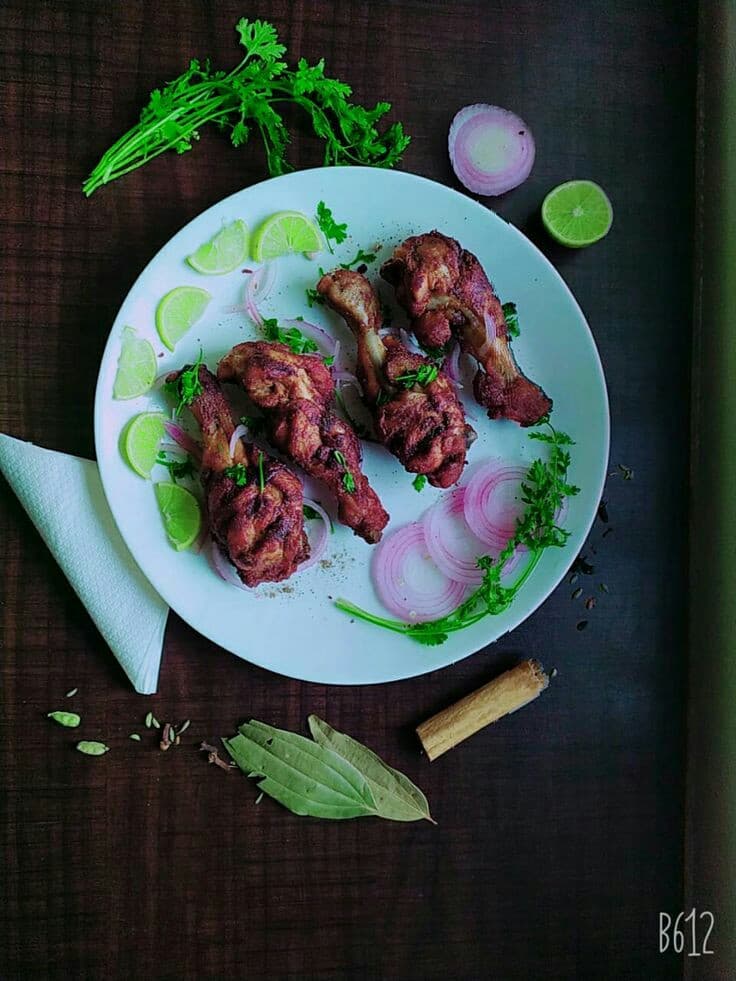
Short answer: one leg piece of chicken chargha carries roughly 330 to 420 kcal, and a quarter chicken runs about 550 to 700. A whole chargha is a sharing dish, not a single serving, and that is where most people misjudge it. Per 100 g of edible meat, fried chargha lands around 220 to 280 kcal.
Chargha, also spelled charga, is Lahore's steam then fry chicken. A whole chicken is scored deep, marinated in yogurt, lemon and spices, steamed until tender, then fried until the outside turns crisp and dark gold. It arrives at the table whole, dusted with chaat masala, usually with naan, salad and mint chutney, and everyone pulls pieces off it. That shared, help yourself style of eating is exactly why it is hard to log from memory later.
Why the number moves so much
The chicken itself is the smaller part of the story. USDA data puts cooked skinless chicken breast at about 165 kcal per 100 g, with leg meat higher on fat (fdc.nal.usda.gov). Chargha mixes both, since a whole bird gives you lean breast and fattier leg in the same dish. A breast piece and a leg piece of the same weight are not equal, and the leg usually wins on calories.
Frying is the bigger variable. Chargha has no thick batter, so it does not soak up oil the way battered fried chicken does, but the steamed skin and scored cuts still take in oil in the fryer. A longer fry at lower heat, or a bird left sitting in oil, pushes the number up. A quick fry in properly hot oil, drained well, keeps it nearer the bottom of the range. Restaurants rarely tell you which one you got, so the range is honest and the single number would not be.
Skin matters too. Many Lahore shops fry chargha with the skin removed, which is one reason it eats lighter than it looks. If yours arrives with crisp skin still on, add roughly 50 to 100 kcal per piece for the skin and the oil clinging to it.
Then there is the piece problem. Nobody eats "one chargha." A leg, a breast, a wing and a bit of back meat are all different sizes, and bone weight hides in every piece. Weighing the meat you actually eat, or at least counting pieces honestly, beats guessing at a whole bird.
| Food | Portion | Calories | Protein | Carbs | Fat |
|---|---|---|---|---|---|
| Chargha, edible meat | 100 g | 220 to 280 kcal | 26 to 30 g | 1 to 3 g | 11 to 16 g |
| Chargha leg piece | about 150 g edible | 330 to 420 kcal | 38 to 44 g | 2 to 4 g | 17 to 24 g |
| Chargha breast piece | about 170 g edible | 370 to 470 kcal | 46 to 52 g | 2 to 4 g | 18 to 24 g |
| Quarter chargha | about 250 g edible | 550 to 700 kcal | 65 to 75 g | 3 to 6 g | 28 to 40 g |
| Half chargha | about 500 g edible | 1100 to 1400 kcal | 130 to 150 g | 6 to 12 g | 55 to 80 g |
| Quarter chargha with 1 naan | about 250 g meat plus naan | 810 to 1000 kcal | 70 to 80 g | 48 to 56 g | 30 to 43 g |
The naan row uses our naan calories figure of 260 to 300 kcal. Mint chutney barely registers at roughly 10 to 30 kcal for a couple of spoonfuls, so it is the naan and any fries on the side that change the meal, not the chutney.
Chargha against its neighbours
Next to chicken tikka, chargha is the heavier order. Tikka is grilled over dry heat with no fry step, so the same 100 g of chicken runs roughly 150 to 190 kcal there against 220 to 280 here. Against chicken karahi, the comparison flips by portion, since karahi adds oil and tomatoes to the pan while chargha keeps its fat mostly in the fry. Sajji is the closest cousin, a whole chicken cooked slowly over heat rather than fried, and it usually lands lighter than chargha for the same piece.
The lighter version still tastes like chargha
Most of the flavour lives in the marinade and the steam, not the fryer. Steaming the marinated bird, then finishing it in a very hot oven or air fryer with a light brush of oil, keeps the chaat masala crust and the juicy meat while dropping the meat to roughly 170 to 210 kcal per 100 g. A leg piece made that way runs about 260 to 320 kcal. You lose some of the deep fried crunch, but the dish still reads as chargha on the plate, especially with lemon and chaat masala over the top.
Logging it in CalsFlow
I typed "quarter chicken chargha with 1 naan from a Lahore restaurant" into CalsFlow to see what it does. It assumed mixed breast and leg meat, skin removed, deep fried, and returned 810 to 1000 kcal for the quarter plus naan, with the assumptions shown. That transparency is what you want, because the fry assumption is where the uncertainty lives.
Then I changed one detail: skin on instead of skin off. The estimate rose by about 50 to 100 kcal across the quarter and the app flagged the skin as the reason. The lesson is the same as our guide to counting calories in desi food gives: describe the meal the way you would to a friend, then adjust the one or two details that actually move the number. Here those are the piece you ate and how it was finished, fried or oven crisped.
FAQs
How many calories are in half a chargha? About 1100 to 1400 kcal for the meat alone, before naan or fries. It is a two person portion at least, and logged as one meal it will swallow a whole day's deficit on its own.
Is chargha good for weight loss? One piece can fit fine. It is high protein, which helps, and our protein requirements article explains why that matters. A whole bird eaten solo is a different story. Keep it to a leg or breast piece, skip the second naan, and the meal stays reasonable.
Does chargha have more calories than tikka? Yes, piece for piece, because of the fry step. Tikka is the leaner BBQ order. Chargha wins on crunch and on the shared table experience, and you pay for both in oil.
How many calories in chargha with naan? A quarter chargha with one naan runs roughly 810 to 1000 kcal. Two naans push it past 1100, before any fries or sweet drink.
Chargha is a celebration dish, and it eats like one: generous, shared, and heavier than it looks once the frying is counted. A piece or two with salad and a single naan is a perfectly normal meal. The whole bird to yourself is a weekend story. Ate chargha at a dawat and unsure how much ended up on your plate? Describe the pieces in CalsFlow and adjust the skin and fry details until it matches what you ate. You can grab it on Google Play.
Sources: calorie and macro ranges are estimated from USDA FoodData Central values for cooked chicken breast and leg meat, adjusted for oil absorbed during frying and for typical chargha portion sizes. See the full spread in our Pakistani food calorie chart.
Cover photo: spiced fried chicken by Sowmiyashree24 via Wikimedia Commons (CC BY-SA 4.0).
CalsFlow provides nutrition estimates, not medical advice.