

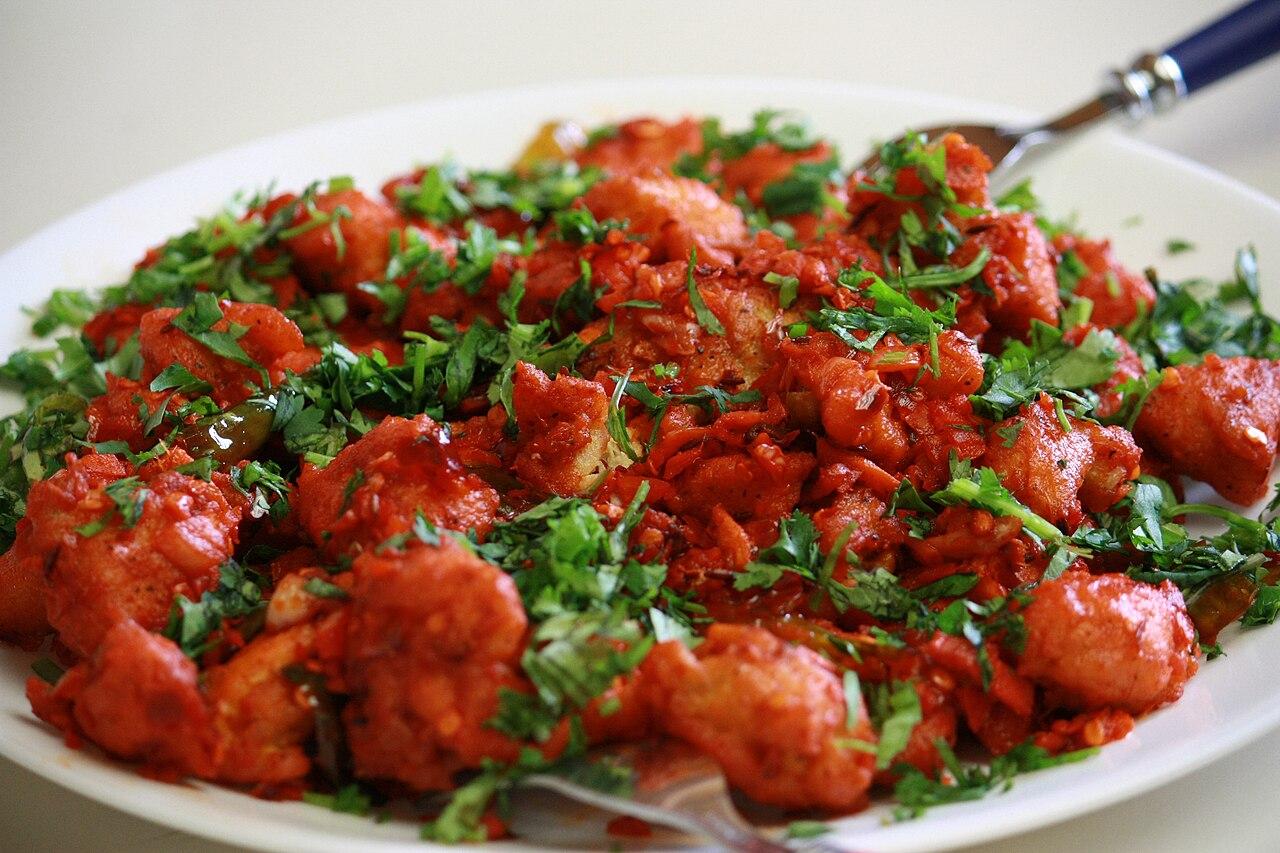
Short answer: a 100 g serving of restaurant chicken 65 has roughly 230-280 calories. A full plate, about 200 g, lands at 460-560. The chicken itself is lean protein. The calories come from the batter and the oil it soaks up in the fryer, which is why the same dish can be a light starter at home and a heavy one at a restaurant.
What chicken 65 actually is
Boneless chicken pieces go into a marinade of yogurt, red chillies, ginger, garlic and curry leaves, get a thin coating of rice flour batter, and are deep fried until crisp. The pieces come back out tossed with fried curry leaves and green chillies, which is where the dish gets its colour and its heat. It started in South India and is now a fixture on Pakistani menus, usually as a starter, sometimes as a main with roti or rice.
Two details matter for counting. First, it is boneless, so 100 g on your plate is 100 g of meat and coating, with no bone weight hiding in the number. Second, the batter is thin. That keeps chicken 65 lighter than heavily breaded fried chicken, but the fryer still does most of the damage.
The numbers
USDA FoodData Central puts fried chicken breast, with skin and breading, at 230 kcal per 100 g, with 24 g of protein, 12 g of fat and 6 g of carbs. The same breast roasted is 165 kcal per 100 g with 31 g of protein. The gap between those two numbers is the coating plus the oil it absorbs, and chicken 65 sits in that same territory. Published estimates for the dish run from about 180 to 265 kcal per 100 g depending on batter and oil, which is why the ranges below are wide on purpose.
| Chicken 65 | Portion | Calories | Protein | Carbs | Fat |
|---|---|---|---|---|---|
| Restaurant, deep fried | 100 g (4-5 pieces) | 230-280 | 20-24 g | 6-10 g | 12-16 g |
| Restaurant serving | About 200 g | 460-560 | 40-48 g | 12-20 g | 24-32 g |
| Starter plate | About 150 g | 350-420 | 30-36 g | 9-15 g | 18-24 g |
| Homemade, light batter | 100 g | 180-230 | 21-25 g | 5-9 g | 8-12 g |
| Air fried or baked | 100 g | 150-190 | 22-26 g | 4-8 g | 5-8 g |
A 100 g serving also carries around 650 mg of sodium, from the marinade salt and the frying. That is worth knowing if you eat it often, since a plate plus rice and raita can push a single meal past 1,500 mg without tasting especially salty.
Why the number swings
Batter thickness is the first variable. Some kitchens use a whisper of rice flour, others a thick coat that drinks oil. Oil temperature is the second. A fryer running hot seals the coating fast; cooler oil lets the pieces sit and soak. Draining matters too. Pieces pulled onto a rack lose oil that pieces left sitting in the tray keep.
Portion size does the rest. A restaurant plate is usually 200-250 g, while a home serving is often half that. Then there is what goes with it. One medium roti adds about 100-130 kcal, a cup of cooked basmati rice adds 190-210, and a spoonful of raita adds 30-50. A 200 g plate with two rotis passes 700 kcal before you have touched a drink.
Chicken 65 and weight loss
The protein is the good news. At 20-24 g per 100 g, a serving keeps you full in a way most starters do not. The frying is the problem, not the chicken. If you like the dish and want it in a weight loss plan, the air fried version is the easy win: same marinade, same heat, roughly a third fewer calories. Keep the plate to about 150 g, pair it with salad and raita instead of naan, and it fits without much fuss. The grilled cousin, tandoori chicken, runs closer to 150-170 kcal per 100 g with no batter at all, so it is the better pick on days when the numbers matter most. Our protein guide has the daily targets if you want to see where a plate like this lands.
How to track it in CalsFlow
In CalsFlow, type:
"150g chicken 65 + 1 roti"
You get the calorie and macro estimate plus the assumptions behind it: restaurant style, deep fried, medium roti. Change one line to "air fried, homemade" and watch the number drop by roughly 100 kcal. The useful habit is naming the cooking method, because fried and air fried are two different foods as far as your log is concerned. Same approach as our guide to counting calories in Pakistani and desi food.
FAQs
How many calories are in 1 plate of chicken 65?
A full restaurant plate, about 200 g, is roughly 460-560 kcal. A smaller starter plate of about 150 g is 350-420. Add roti or rice on top of that.
Is chicken 65 good for weight loss?
It can be. The protein is high and the dish is filling, which helps. The deep fried version is the catch, so the air fried or baked version, a 150 g portion, and salad instead of naan make it work.
Chicken 65 vs tandoori chicken, which is lighter?
Tandoori chicken, grilled without batter. It sits around 150-170 kcal per 100 g against 230-280 for deep fried chicken 65. If you eat fried chicken often, our chicken broast guide shows the same batter and oil pattern at work.
How many pieces is 100 g?
About 4-5 bite sized pieces, depending on how the kitchen cuts them. Restaurant pieces run bigger, so three large ones can already be 100 g.
Ordering chicken 65 tonight? Describe the plate in CalsFlow, name the cooking method, and adjust the portion to what is actually in front of you. Get the app on the Google Play Store.
Cover photo: Chicken 65 by Amiyashrivastava, licensed CC BY-SA 3.0, via Wikimedia Commons.
CalsFlow provides nutrition estimates, not medical advice.