

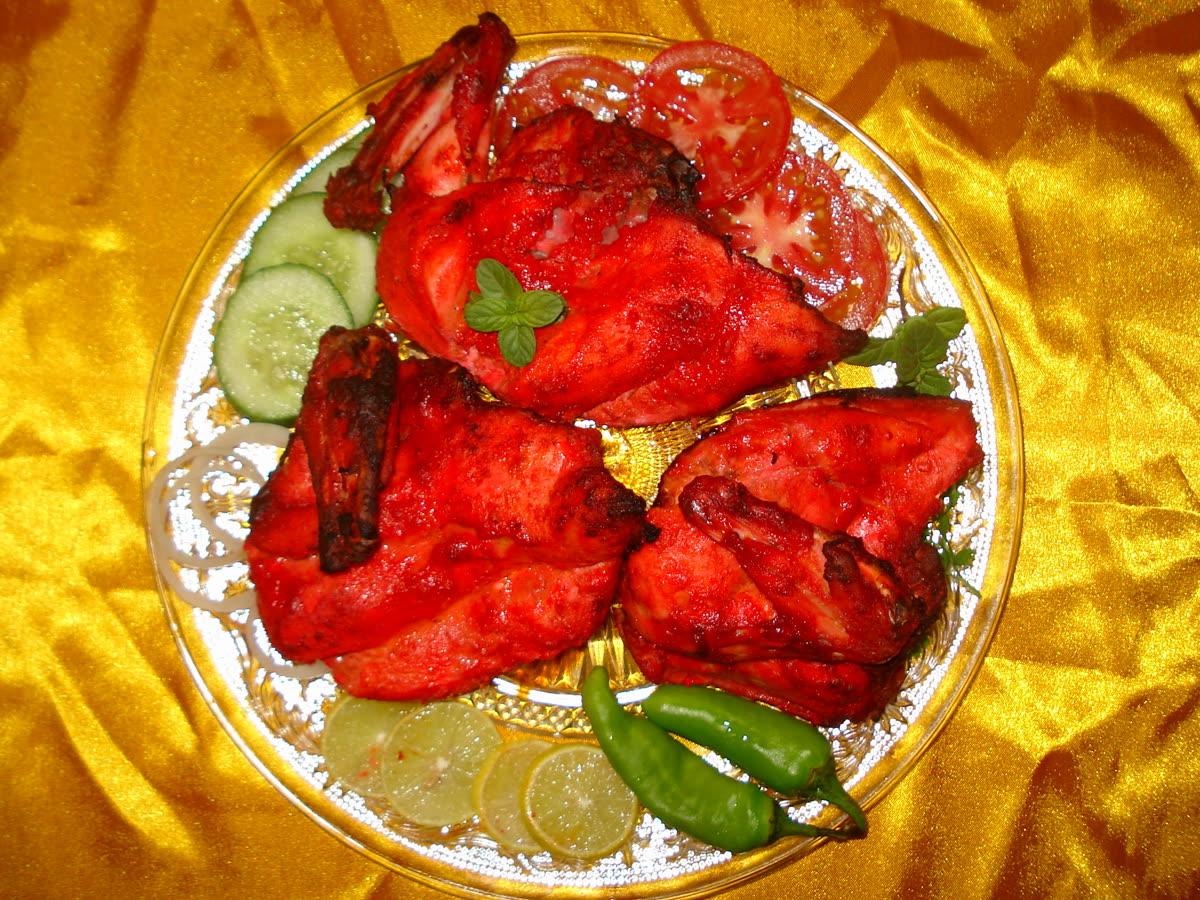
Short answer: one tandoori leg piece with the skin on lands around 330 to 410 calories, and 100 g of the same chicken sits at 200 to 240 kcal. Pull the skin off and 100 g drops to 170 to 210. The chicken itself is lean protein. Skin, butter brushed on at the end, and the size of the piece decide where in the range your plate lands.
Tandoori chicken is the red, smoky bird in the window of nearly every desi barbecue shop in Pakistan. The chicken is marinated in yogurt, lemon, ginger, garlic and red chili, then roasted in a clay tandoor at fierce heat until the outside chars at the edges and the inside stays juicy. That cooking method is a gift for calorie counting. No batter, no deep frying, no gravy swimming in oil. The calories that do show up come from a short list of suspects, and all of them are visible on the plate.
What sets the number
The skin. This is the single biggest lever. Chicken skin is almost pure fat, and a leg piece keeps a generous flap of it. USDA FoodData Central puts roasted chicken leg meat with skin at roughly 200 to 215 kcal per 100 g, while skinless roasted breast sits near 165 kcal per 100 g with about 31 g of protein. Tandoori chicken runs a little above plain roasted chicken because of the marinade and the finishing fat, which is how the ranges in this article are built. Eating the skin is not a crime. It just costs about 30 to 40 kcal per 100 g, and across a full leg piece that is real money.
The butter at the end. Most barbecue shops brush the chicken with melted butter or ghee as it comes off the skewer. It gives the shine you see in the window and keeps the meat from drying out while it waits. One brushing adds roughly 30 to 50 kcal per piece. Shops that skip it, or home cooks who leave it out, land at the bottom of every range here.
The cut. A leg piece, drumstick plus thigh, carries more fat than a breast piece of the same weight, and it usually comes with skin attached. Breast meat is the leanest cut on the bird. If a shop sells by the piece rather than by weight, the leg piece will almost always be the heavier calorie choice, even before the butter.
Restaurant versus homemade. A home tandoori chicken, marinated in low fat yogurt and cooked without a butter finish, is the lightest version of this dish. Restaurant versions trend higher for two reasons: the butter brushing, and portion size. A restaurant leg piece is often a large bird's leg, while a home cook's bird might be smaller. Same dish, different bird, different number.
The marinade itself. Yogurt, lemon juice and spices add very little. A full cup of low fat yogurt spread across a whole chicken contributes only a few dozen calories total, and much of the marinade drips off before cooking. The red colour comes from chili and food colour, which add nothing. If a recipe adds a lot of oil or cream to the marinade, that is a different dish, closer to a malai boti, and it will run higher.
Tandoori chicken calories and macros
| Food | Portion | Calories | Protein | Carbs | Fat |
|---|---|---|---|---|---|
| Tandoori chicken, skin off | 100 g | 170 to 210 | 26 to 30 g | 1 to 3 g | 5 to 9 g |
| Tandoori chicken, with skin | 100 g | 200 to 240 | 24 to 28 g | 1 to 3 g | 10 to 14 g |
| Tandoori leg piece, with skin | About 170 g edible meat | 330 to 410 | 40 to 47 g | 2 to 5 g | 17 to 24 g |
| Tandoori leg piece, skin off | About 150 g edible meat | 260 to 320 | 39 to 45 g | 2 to 5 g | 8 to 13 g |
| Tandoori breast piece, with skin | About 150 g edible meat | 300 to 360 | 36 to 42 g | 2 to 4 g | 15 to 20 g |
| Tandoori breast piece, skin off | About 140 g edible meat | 240 to 290 | 37 to 43 g | 1 to 3 g | 7 to 11 g |
| Half tandoori chicken, with skin | About 350 g edible meat | 700 to 840 | 84 to 98 g | 4 to 10 g | 35 to 49 g |
| Mint raita | 2 tablespoons | 20 to 35 | 1 to 2 g | 2 to 4 g | 1 to 2 g |
Portion weights are edible meat, bone excluded. A leg piece on the bone weighs more at the counter than the meat you actually eat, which is why weighing the meat, or counting pieces, beats guessing from the whole piece.
The bread on the side changes the meal more than the chicken does. A naan adds 280 to 400 kcal (naan calories), a roti roughly 100 to 150 (roti calories). A leg piece with a naan and raita is a 650 to 850 kcal meal. The same leg piece with a salad and raita, no bread, stays near 400. Nothing about the chicken changed. The company it keeps did.
Tandoori chicken vs chicken tikka
People mix these two up, and the calorie difference is smaller than the menu suggests. Chicken tikka is boneless, usually breast, cut into small pieces and grilled on skewers. Because tikka is normally served without skin, it lands near the skinless end of the tandoori range, roughly 170 to 210 kcal per 100 g. A tandoori leg piece with skin runs higher per 100 g because of the skin and the darker meat. Take the skin off a tandoori piece and the two dishes are nearly twins. The practical difference is portion control: tikka pieces are small and easy to count, while a tandoori leg piece is one large unit that people tend to log as "one piece" without asking how big it was.
A lighter plate that still tastes like tandoori
Keep the marinade exactly as it is. Yogurt, lemon, ginger, garlic, green chili and salt carry the flavour and cost almost nothing. Then change three things. Use breast pieces or pull the skin off leg pieces before eating. Skip the butter finish, or brush the chicken with lemon juice instead while it rests. Cook it on a grill or in a hot oven at home rather than ordering the shop version, since that alone removes the butter and the oversized portions. Serve it with mint raita and salad instead of naan, and the plate drops from roughly 750 kcal to roughly 400 without losing the smoky, charred character that makes tandoori chicken worth eating in the first place.
How to track tandoori chicken in seconds
Describe it the way it looks on the plate:
"1 tandoori leg piece with skin + 1 naan + raita"
In CalsFlow, that gives you the calorie and macro estimate plus the assumptions behind it: the piece size it priced in, whether it counted the skin, and whether it allowed for a butter finish. Ate the leg without skin, or skipped the naan? Say so and the estimate moves with it. The same describe what you see approach sits at the heart of our guide to counting calories in Pakistani and desi food. After a few barbecue nights logged this way, you will know whether your usual order is a 400 kcal dinner or an 850 kcal one, which is the only number that actually matters for your tracking.
FAQs
Is tandoori chicken good for weight loss?
It is one of the better restaurant choices in the Pakistani menu. It is high in protein, cooked without batter or frying, and a skinless breast piece with salad is a genuinely filling meal near 300 kcal. The version that hurts a diet is the one with skin, butter and two naans, which can pass 900 kcal before you notice. Same chicken, different plate.
How many calories in a full tandoori chicken?
A whole bird, skin on, with roughly 700 g of edible meat, runs about 1,400 to 1,700 kcal. Skin off, it falls to roughly 1,200 to 1,450. Nobody eats a whole chicken alone in one sitting, but the number is useful when a family shares one and you want your share: a quarter chicken with skin is roughly 350 to 425 kcal.
Is tandoori chicken healthier than chicken karahi?
Yes, in most comparisons. Chicken karahi is cooked in oil and often finished with ghee, so a restaurant plate can pass 800 kcal before bread. Tandoori chicken skips the oil bath entirely. Karahi wins on richness. Tandoori wins on the calorie count.
Does the red colour add calories?
No. The colour comes from red chili and food colouring, neither of which carries meaningful calories. What adds calories is the butter brushed on top to make that red skin shine.
If you eat tandoori chicken often, the habit that pays off is a small one: decide about the skin before the plate arrives, and log the piece size honestly. The chicken will take care of the rest. For a broader picture of where desi dishes sit, see the Pakistani food calorie chart, and if you want to check how much protein you actually need in a day, see how much protein you need per day.
Try logging your next barbecue order in CalsFlow and see where your usual plate lands: CalsFlow on Google Play
CalsFlow provides nutrition estimates, not medical advice.