

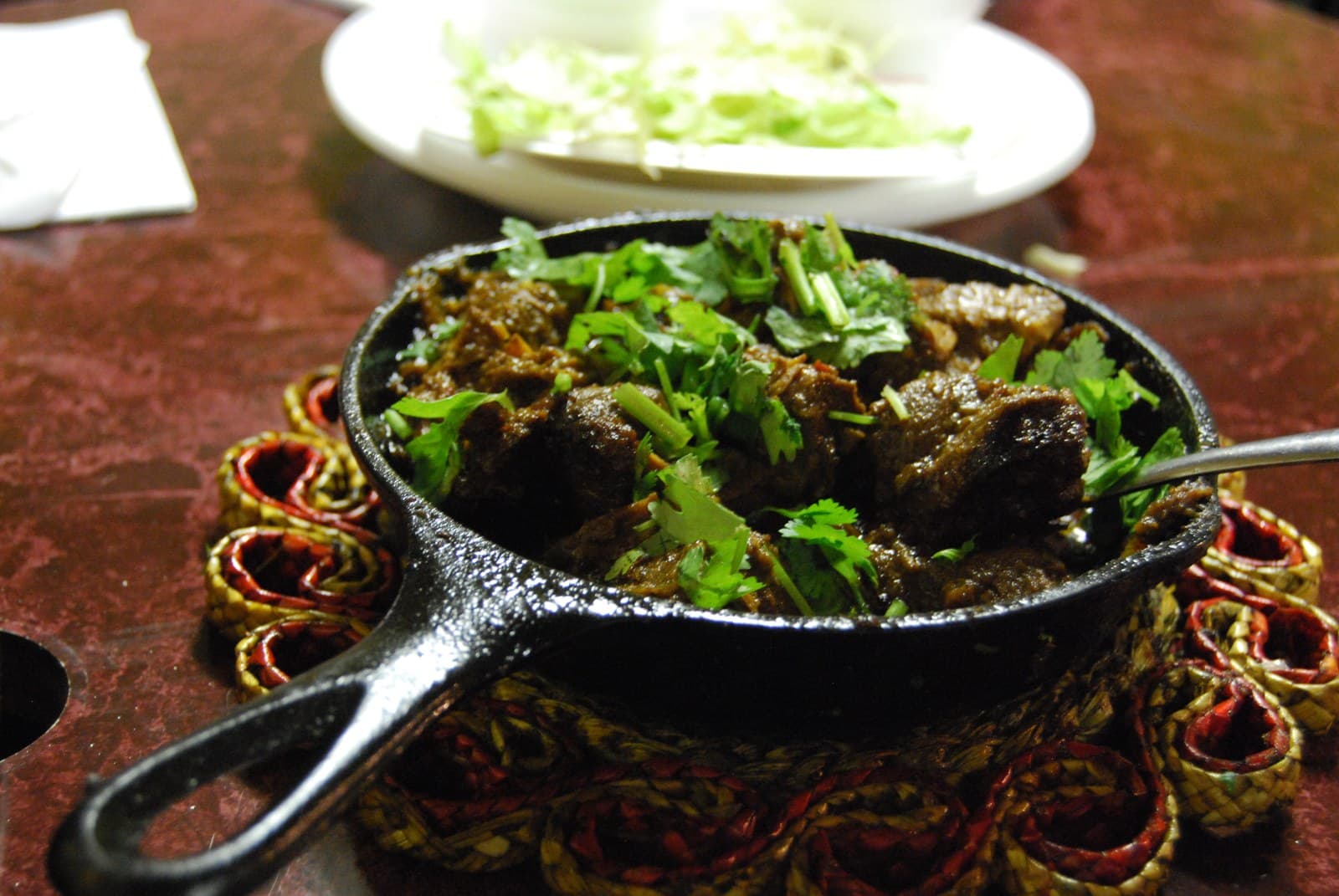
A restaurant plate of beef karahi, roughly 300 grams, usually lands between 600 and 850 calories. A homemade plate of about 250 grams with lighter oil sits lower, around 425 to 550. Per 100 grams, expect roughly 170 to 220 at home and 220 to 280 at a restaurant or dhaba.
Beef karahi starts heavier than chicken karahi for a simple reason. Beef carries more fat than chicken before any oil goes in the pan. The USDA FoodData Central lists cooked lean beef composite at about 211 calories and 30 grams of protein per 100 grams, and fattier cuts run higher than that. Karahi cooking then adds oil on top of the meat, so the cut and the cooking fat together decide where a plate lands.
Beef karahi calories and macros
These are estimates for karahi as served, meat plus masala, not for plain boiled beef. Bone in pieces weigh more for the same amount of meat, so a plate that looks generous can contain less edible meat than it seems.
| Food | Portion | Calories | Protein | Carbs | Fat |
|---|---|---|---|---|---|
| Beef karahi, homemade light oil | 100 g | 170 to 220 | 20 to 24 g | 3 to 6 g | 9 to 14 g |
| Beef karahi, restaurant or dhaba | 100 g | 220 to 280 | 19 to 23 g | 3 to 6 g | 15 to 21 g |
| Beef karahi, homemade | 1 cup, about 200 g | 340 to 440 | 40 to 48 g | 6 to 12 g | 18 to 28 g |
| Beef karahi, restaurant | 1 plate, about 300 g | 600 to 850 | 57 to 69 g | 9 to 18 g | 45 to 63 g |
| Beef karahi, restaurant | Half plate, about 150 g | 330 to 420 | 29 to 35 g | 5 to 9 g | 23 to 32 g |
Protein is the strong point here. Even a half plate delivers roughly 30 grams, and a full restaurant plate can cover more than half a day's protein for many people. The protein page on how much protein you need per day puts that in context. The calories are not coming from the protein. They are coming from fat, in the meat and in the oil.
Why one karahi is never like the next
Cut comes first. Lean boneless beef, the kind sold as undercut or boti from a lean cut, keeps the plate near the bottom of the range. Beef from fattier cuts, or a mix with visible fat left on, starts higher and stays there no matter how careful the cooking is. Karachi and Lahore dhabas often use bone in beef, which adds flavour and cooking time but also means the plate weight includes bone. Two plates can weigh the same and contain quite different amounts of meat.
Cooking time is the second factor, and it is easy to miss. Beef takes far longer to turn tender than chicken, so it spends more time in the pan. A home cook who pressure cooks the beef first and then fries it briefly in the tomato masala uses less oil than a karahi that simmers in oil for an hour. Peshawari style karahi, which skips onion and leans on tomato, ginger and green chilli, is not automatically lighter. It still depends on how much oil the cook used to fry the masala.
Oil is still the biggest lever, just as it is with chicken. One extra tablespoon of oil or ghee across a shared karahi adds about 120 calories to the whole dish, and restaurant karahis are famous for the layer of oil on top. That layer is not decoration. It is calories that end up on the roti when the bread soaks it up. A karahi served dry, with the masala clinging to the meat, will almost always be lighter than one swimming in oil, even if both came from the same cut.
How to log beef karahi in CalsFlow
Describe the plate the way it arrived. Entering "1 plate restaurant beef karahi" gives an estimate built on a restaurant portion with restaurant oil. Then adjust it to match reality. Ate at home with a measured spoon of oil? Bring the estimate down. Ordered a half plate? Log the half plate, not a full one. Ate mostly meat and left the oily masala? That is worth a small downward adjustment too, since the oil sits in the masala.
The adjustment matters more with beef karahi than with most dishes because the range is so wide. A fixed single number would be wrong for half the plates served in Pakistan. A range adjusted to the cut, the oil and the portion gets close enough to be useful, which is the whole point of tracking in the first place.
Frequently asked questions
Is beef karahi good for weight loss? It can fit, but it needs more care than chicken karahi. Keep the portion to a half plate or a cup, pick a lean cut at home, and watch the bread. A full restaurant plate plus two naans can pass 1,200 calories before anything else is counted. The same karahi with one roti and a salad is a different meal.
How does beef karahi compare with chicken karahi? Beef runs roughly 50 to 100 calories higher per 100 grams, mostly from fat. Chicken karahi sits around 150 to 200 calories per 100 grams at home, while beef sits around 170 to 220. Protein is similar, and beef brings more iron and zinc, but the calorie cost per bite is higher.
How does it compare with mutton karahi? Mutton is usually the richest of the three. Mutton karahi uses a fattier meat, so beef sits between chicken and mutton on calories in most kitchens. The order holds in most restaurants too, though a very oily beef karahi can overtake a lean mutton one.
How many calories are in a half plate of beef karahi? Roughly 330 to 420 for about 150 grams at a restaurant. At home with light oil, the same weight lands closer to 260 to 330. Half plates are common at dhabas, and they are the easiest way to enjoy the dish without committing to a full plate.
For the wider picture, the Pakistani food calorie chart puts beef karahi alongside chicken karahi, mutton karahi and the rest of the menu, and the guide to counting calories in Pakistani food covers the oil and bread problem across dishes.
Eating beef karahi tonight? Describe it in CalsFlow: restaurant or homemade, full plate or half, and how oily it looked. Adjust from there and the number will actually reflect the plate in front of you.
Cover photo: Karahi Beef by Jess Lander via Wikimedia Commons (CC BY 2.0).
CalsFlow provides nutrition estimates, not medical advice.