

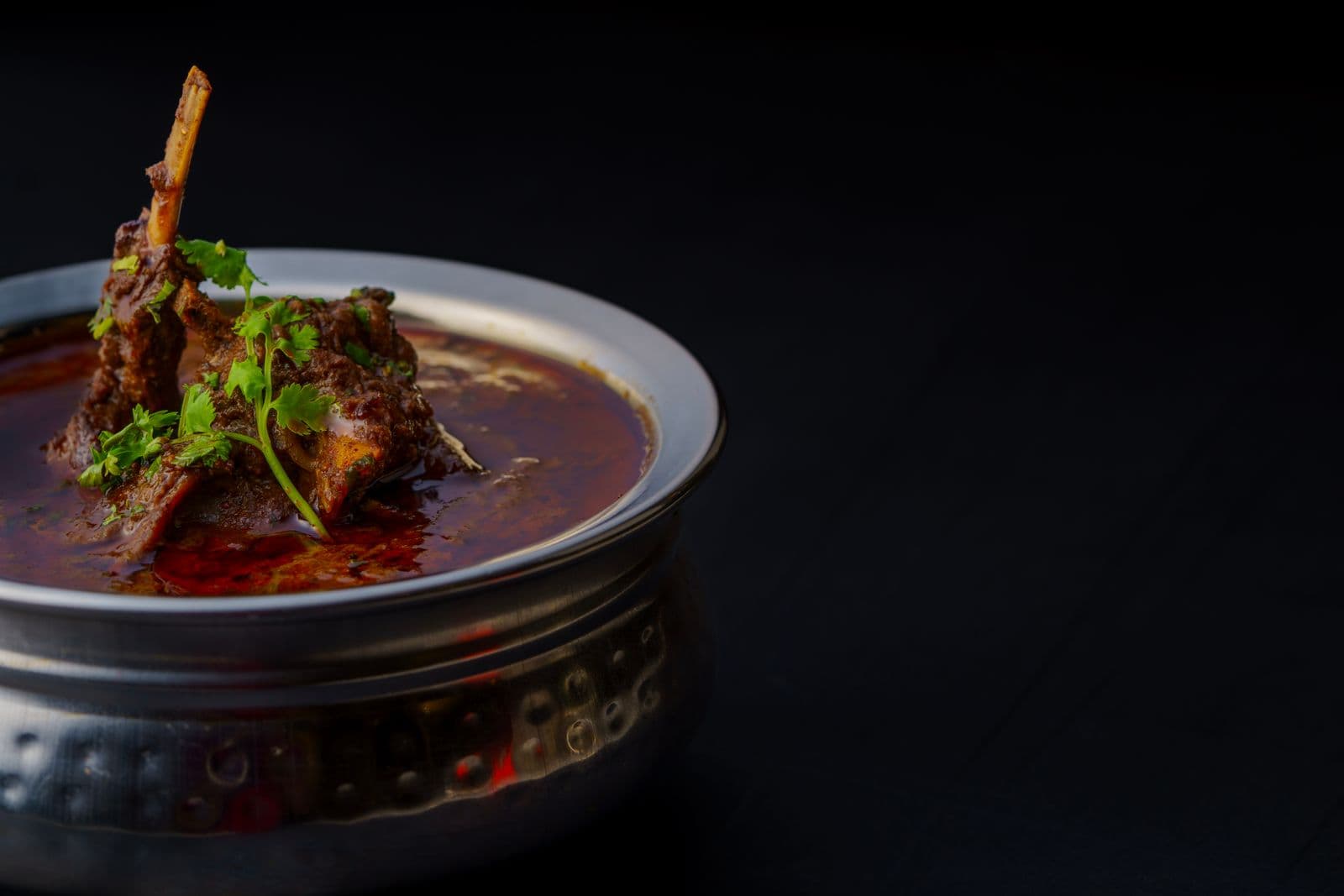
Short answer: a typical plate of mutton achar gosht (about 300 g with gravy) has 650 to 900 calories. Chicken achar gosht is lighter, roughly 500 to 700 kcal for the same size plate. The pickle spices that give the dish its name add almost no calories. The oil does almost all the damage.
What makes achar gosht different
Achar gosht is gosht cooked with achari masala, the spice mix used for South Asian pickles: fennel, nigella, fenugreek, mustard seed and cumin, usually with lemon juice or imli for tang. The signature move is green chilies stuffed with that masala and laid on top of the curry near the end of cooking.
The name promises something sharp and tangy, and the dish delivers, but nutritionally it is close family to chicken qorma and chicken karahi: meat braised in oil, onion, tomato and yogurt until the oil separates. The achari spices change the flavor completely and the calorie count barely at all.
One thing worth knowing: achar gosht is not a low oil dish by tradition. Recipes routinely call for three quarters of a cup to a full cup of oil per kilo of meat. Even a careful home cook uses more oil here than in a weeknight chicken curry, because the dish is built around bhunai, frying the masala until the oil rises to the surface.
Achar gosht calories and macros
| Portion | Calories | Protein | Carbs | Fat |
|---|---|---|---|---|
| 100 g, chicken achar gosht (homemade) | 180 to 240 | 14 to 18 g | 4 to 7 g | 11 to 17 g |
| 100 g, mutton achar gosht (homemade) | 230 to 300 | 13 to 17 g | 4 to 7 g | 17 to 25 g |
| 100 g, restaurant or dhaba style | 280 to 350 | 13 to 17 g | 5 to 8 g | 22 to 30 g |
| 1 plate chicken achar gosht (~300 g) | 500 to 700 | 40 to 50 g | 12 to 20 g | 32 to 48 g |
| 1 plate mutton achar gosht (~300 g) | 650 to 900 | 38 to 48 g | 12 to 20 g | 50 to 72 g |
| Plus 2 rotis | add 200 to 280 | add 6 to 8 g | add 40 to 50 g | add 2 to 4 g |
| Plus 1 naan | add 280 to 350 | add 8 to 10 g | add 50 to 60 g | add 5 to 8 g |
For reference, the meat itself is not the problem. Cooked chicken breast is about 165 kcal and 31 g protein per 100 g, and cooked lamb is roughly 250 kcal per 100 g, according to USDA FoodData Central. Everything above those numbers in achar gosht is gravy, and gravy here means oil. One tablespoon of cooking oil alone is around 120 kcal.
Mutton achar gosht with two rotis is easily a 900 to 1,150 calorie meal. With naan instead of roti, it can pass 1,200. That is not a judgment, it is just the math of a rich salan plus bread. See roti calories and naan calories for the bread side of the plate.
Why one plate can be so different from another
Mutton vs chicken. This is the single biggest fork in the road. Mutton carries more fat between the muscle fibers, and that fat renders into the gravy. Chicken achar gosht made the same way runs about 150 to 200 kcal lighter per plate.
How much oil you eat, not just how much was used. A kilo of mutton achar gosht might be cooked in a full cup of oil, but not all of it ends up on your plate. If you take mostly meat with a spoon of gravy, you dodge a lot of it. If you mop up the salan with naan, you eat most of it. The roghan floating on top is pure fat, and it is delicious, which is exactly why it is hard to leave behind.
Bone-in pieces. Pakistani achar gosht is usually bone-in, which means 100 g on your plate includes bone weight. Two mutton pieces with gravy might weigh 250 g while giving you closer to 150 g of actual meat. Counting pieces instead of weighing the plate gives a steadier estimate.
The stuffed chilies. Good news here. The achari masala stuffed green chilies add flavor, heat and tang for almost nothing, a few calories each. Eat them freely. They are the one part of the dish that tastes indulgent and costs nothing.
Homemade vs restaurant. Home cooking lets you measure the oil. Restaurant and dhaba versions are cooked in larger quantities with oil added by feel, and they land 20 to 40 percent higher per 100 g, the same pattern as karahi and qorma.
Chicken vs mutton vs beef achar gosht
Chicken is the lightest option and the easiest to fit into a regular week. Mutton is the classic version, richer and heavier, and the one most people mean when they say achar gosht. Beef sits between the two, closer to mutton than chicken. If a recipe just says gosht without specifying, assume mutton in a Pakistani household and estimate at the higher end.
The honest way to log achar gosht
Achar gosht is tricky to track because the gravy hides the oil, so count what you can actually see:
- Count the pieces. Log "3 mutton pieces with gravy" instead of "1 plate achar gosht." Pieces are countable; gravy depth is not.
- Call the oil honestly. A thin sheen means moderate oil. A deep red pool of roghan means restaurant style, so log the higher range. Overestimating slightly beats the alternative.
- Separate the bread. Roti and naan are separate entries, and naan alone can add 300 or more calories to the meal.
In CalsFlow, type:
"mutton achar gosht, 3 pieces, lots of gravy, with 2 rotis"
CalsFlow will estimate a range from the meat, the gravy and the bread. If your plate was light on gravy, adjust the portion down. If you mopped up the oil with naan, adjust it up. The estimate is only as honest as the description.
FAQs
Is achar gosht good for weight loss?
Not in its traditional form. It is protein rich, which helps, but the oil load makes it a heavy meal. A chicken version with measured oil and roti instead of naan can fit into a weight loss plan occasionally. The everyday version with mutton and naan is a weekend meal, not a daily one. For the bigger picture on portions and deficits, see how many calories should I eat per day.
How many calories are in 1 plate of achar gosht?
About 500 to 700 kcal for chicken and 650 to 900 kcal for mutton, before bread. Add 200 to 280 for two rotis or 280 to 350 for a naan.
Does the achari masala add calories?
Barely. Fennel, nigella, fenugreek, mustard seed and cumin are used in spoonfuls across a whole pot, and the stuffed green chilies add only a few calories each. The flavor is free. The oil it is fried in is not.
Is achar gosht healthier than karahi or qorma?
Roughly the same league. All three are oil based meat curries, and the differences between them are smaller than the difference between a homemade and a restaurant version of any one of them. Compare with chicken karahi calories and chicken qorma calories if you eat all three regularly.
Achar gosht earns its place on the table with flavor, not lightness. The tangy achari masala and those stuffed chilies make it one of the most distinctive curries in Pakistani cooking. Knowing roughly where a plate lands lets you enjoy it properly and plan the rest of the day around it, instead of guessing. For more dishes in the same style, browse the Pakistani food calorie chart.
CalsFlow provides nutrition estimates, not medical advice.