

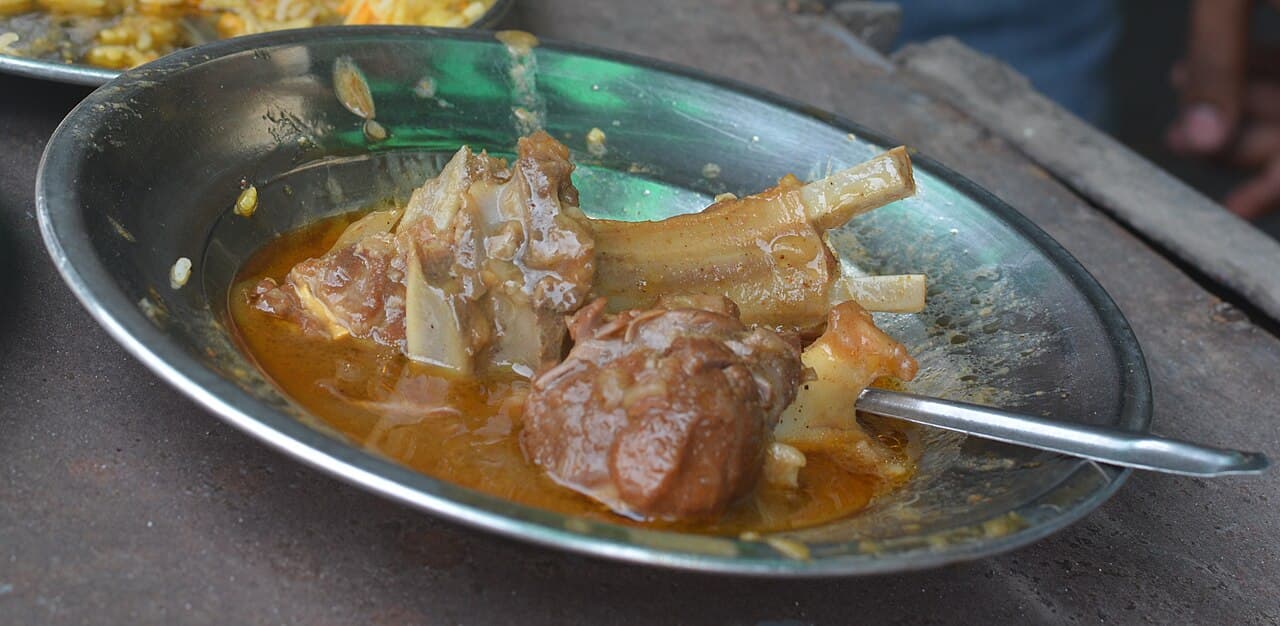
Short answer: a typical plate of mutton qorma (about 300 g with gravy) has 600 to 900 calories at home and 800 to 1,100 at a restaurant or shaadi. Per 100 g, expect 200 to 300 kcal for a homemade pot and 270 to 370 kcal for a degi or restaurant version. The meat itself is only part of the story. The gravy, and how much separated oil it carries, decides where in that range your plate lands.
Mutton qorma is the wedding table version of chicken qorma. Same base of yogurt and browned onion, same slow braise until the oil rises to the top, but the meat changes everything. Mutton brings more fat than chicken before a drop of oil goes in, and the cuts used for qorma are rarely the lean ones.
Why mutton qorma calories swing so much
The cut. In Pakistan, mutton usually means goat, and goat on its own is fairly lean. USDA FoodData Central puts cooked goat at roughly 143 kcal per 100 g. Sheep mutton and fattier goat cuts run much higher, closer to cooked lamb at around 294 kcal per 100 g. Qorma pots also use bone in pieces with fat and charbi attached, so the meat in your bowl is a mix of lean muscle and fat, not a trimmed fillet.
The roghan. That glossy layer of oil on top of a proper qorma is the giveaway. It is cooked out of the masala until it separates, and it tastes like the whole point of the dish. It is also pure fat. One tablespoon of cooking oil adds around 120 kcal, and a generous serving of gravy can easily carry two or three tablespoons of it.
Homemade vs degi. A home cook measures oil for one pot, usually 2 to 3 tablespoons for the whole degchi. A wedding deg gets oil by the ladleful, and the gravy is expected to shine. Restaurant and degi qorma lands 25 to 40 percent higher per 100 g than the home version, the same pattern as chicken karahi.
Bone weight. Pakistani qorma is almost always bone in. A piece that weighs 150 g on the plate might hold only 90 to 100 g of edible meat once the bone is out. Weighing the piece as served overstates the meat, while counting only the meat understates the gravy clinging to it. Counting pieces plus gravy, rather than weighing the plate, works better in practice.
Nuts and cream. Some cooks finish qorma with ground almonds, cashew paste, or cream. Each one pushes the gravy richer. A plain yogurt and onion qorma sits at the lower end of the range. A shahi style qorma with nuts and cream sits at the top.
Mutton qorma calories and macros
| Portion | Calories | Protein | Carbs | Fat |
|---|---|---|---|---|
| 100 g, homemade (moderate oil) | 200 to 300 | 15 to 20 g | 5 to 8 g | 13 to 20 g |
| 100 g, restaurant or degi | 270 to 370 | 14 to 19 g | 6 to 10 g | 21 to 30 g |
| 1 piece with gravy (about 150 g) | 300 to 500 | 20 to 28 g | 7 to 12 g | 20 to 35 g |
| 1 plate, homemade (about 300 g) | 600 to 900 | 40 to 55 g | 15 to 25 g | 40 to 60 g |
| 1 plate, restaurant (about 300 g) | 800 to 1,100 | 40 to 55 g | 18 to 30 g | 60 to 90 g |
| Plus 2 rotis | add 200 to 280 | add 6 to 8 g | add 40 to 50 g | add 2 to 4 g |
| Plus 1 restaurant naan | add 300 to 450 | add 8 to 10 g | add 55 to 70 g | add 5 to 10 g |
A plate of mutton qorma with naan is a 900 to 1,500 calorie meal, which is worth knowing before the second naan arrives. With two rotis instead, the same plate lands around 800 to 1,200 (see roti calories and naan calories).
Qorma vs karahi vs nihari
These three get mixed up, and for tracking it matters:
- Karahi is tomato and ginger, cooked fast. Less gravy than qorma, so per 100 g it usually lands a little lower.
- Qorma is yogurt and browned onion, slow braised. Thicker gravy, more separated oil, and with mutton the meat itself adds fat.
- Nihari is the overnight stew, usually beef, and the richest of the three. See nihari calories.
Same idea, three different calorie profiles. The gravy and the cut decide.
The honest way to log mutton qorma
Count pieces, then judge the gravy. Two pieces with a spoon of salan is a different meal from two pieces drowned in it, even though the meat is the same. Log the bread separately, because a naan can add as much as an extra piece.
In CalsFlow, type:
"degi mutton qorma, 2 pieces, lots of gravy, with 1 naan"
You get the estimate with the assumptions spelled out: piece count, oil level, gravy amount. Eating the homemade version tonight? Dial the oil down and watch the number move. Two weeks of this and you will know your usual order by heart.
Is mutton qorma healthy?
It is protein rich and built on yogurt, onion, and spices, which is a fine base. The problem is dose. Restaurant qorma can deliver most of a day's fat in one plate of gravy, and the saturated fat from fatty mutton adds up fast. At home, qorma is very fixable: trim visible fat, measure the oil, use low fat yogurt, and it drops 100 to 200 calories per serving without tasting like diet food. If protein is your target, how much protein you need per day is worth a read.
FAQs
Is mutton qorma the same as chicken qorma? Same dish, different meat. Mutton qorma runs higher in calories and fat because the meat is fattier and the cuts carry more charbi. The gravy rules still apply to both.
Can I eat mutton qorma while losing weight? Yes, with portion control. Keep the pieces, go light on the gravy, skip the second naan, and pair it with one roti and a salad. The broader pattern for Pakistani and desi food: measure the oil, not the dish.
How many calories are in mutton qorma with naan? Roughly 900 to 1,500: 600 to 1,100 for the qorma plate plus 300 to 450 for a restaurant naan. It is one of the heavier common combos, so log the naan honestly.
Does mutton qorma have more calories than chicken qorma? Usually yes, by about 100 to 200 calories per plate, because mutton is fattier than chicken. The gap between homemade and restaurant versions is bigger than the gap between the two meats.
The bottom line
Mutton qorma: 200 to 370 kcal per 100 g, 600 to 1,100 per plate, with 40 to 55 g of protein hiding under the gravy. Count the pieces, read the oil, log the bread separately. Having qorma this weekend? Describe it in CalsFlow and get your real number, assumptions included.
CalsFlow provides nutrition estimates, not medical advice.