

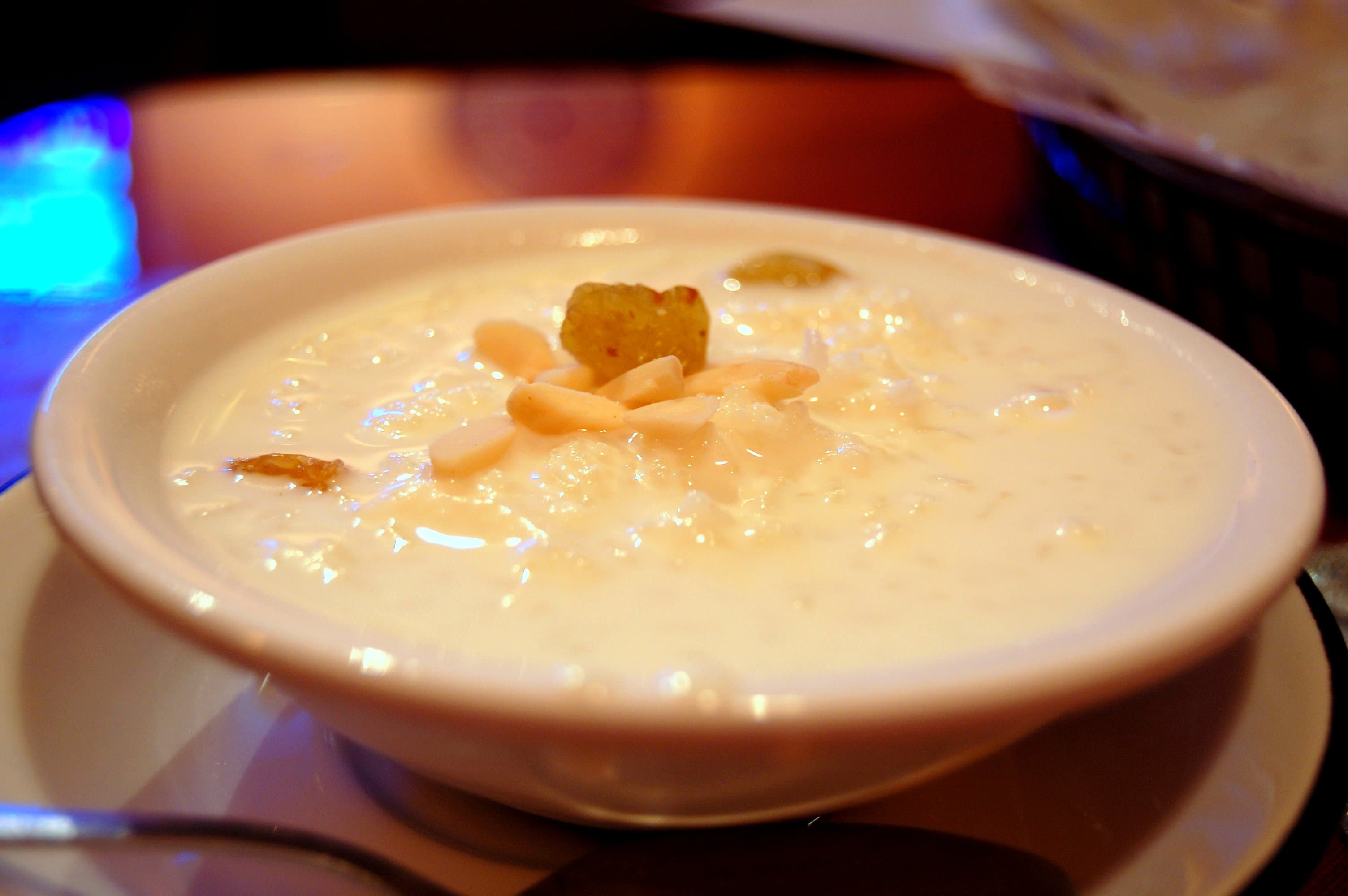
A regular bowl of kheer, about 150 grams, usually lands between 170 and 270 calories. Per 100 grams it sits somewhere around 110 to 180. The spread comes from the two things that make kheer kheer: how rich the milk is and how much sugar went into the pot.
Kheer is the quiet dessert. It arrives at the end of a dawat or on Eid in a big deg, everyone gets a refill, and nobody treats it like a serious calorie event because it is just rice and milk. That is the trap. Two large bowls of a rich version can quietly add 500 to 700 calories after a full dinner.
What a bowl of kheer actually contains
Rice simmered low and slow in milk until it thickens, sugar, a pinch of cardamom, and usually a handful of almonds, pistachios, or raisins on top. Some families finish with saffron, some add a spoon of khoya for body, and restaurant versions often use condensed milk. Every one of those choices moves the number.
Milk fat is the first lever. Kheer made with toned or low-fat milk sits at the bottom of the range. Whole milk moves it up. Condensed milk, added cream, or khoya push it to the top. Sugar is the second lever: a lightly sweet homemade kheer and a mithai-shop-sweet one can differ by 8 to 10 grams of sugar per bowl, which is 30 to 40 calories of pure carbohydrate.
Here are realistic ranges, built from published nutrition estimates across several food databases.
| Portion | Calories | Protein | Carbs | Fat |
|---|---|---|---|---|
| 100 g (small bowl) | 110 to 180 | 3 to 5 g | 16 to 26 g | 3 to 6 g |
| 150 g (regular bowl) | 170 to 270 | 5 to 7 g | 24 to 40 g | 5 to 9 g |
| 200 g (large bowl) | 220 to 360 | 6 to 10 g | 32 to 52 g | 7 to 12 g |
| Restaurant shahi kheer, 150 g | 260 to 340 | 6 to 8 g | 38 to 48 g | 9 to 14 g |
| Sheer khurma, 150 g | 250 to 350 | 5 to 8 g | 36 to 50 g | 8 to 13 g |
Sugar is doing most of the work in the carbohydrate column. A sweet bowl can carry 20 grams of sugar or more, which is the number to watch if you track your intake closely.
Why one bowl is never like the next
Thickness is the sneakiest variable. Kheer reduces as it cooks, so a thick, spoon-standing kheer packs more milk solids into every spoonful than a thin, milky one. Two bowls can look the same size and differ by a third.
Then there is the version problem. Rice kheer is the everyday kind. Sheer khurma, the vermicelli kheer that shows up on Eid ul Fitr mornings, usually starts with seviyan toasted in ghee and often gets condensed milk and dates, so it almost always sits higher. And wedding or restaurant kheer is built for richness: full-cream milk, khoya, a generous hand with the sugar. Homemade kheer where someone watched the pot and the sugar is almost always lighter.
This is why fixed database entries fail on kheer. A single line that says "kheer: 125 calories per serving" describes one specific pot, not yours. Ranges are the honest answer.
Logging it in CalsFlow the right way
Kheer is a good example of where describing your meal properly matters. Type in something like "a bowl of rice kheer, homemade, medium sweet". CalsFlow starts with an average assumption, roughly 220 calories for a regular bowl. Then you adjust. Was it thin and lightly sweet, or thick and rich? Did it have a handful of nuts on top? Was it the second bowl at a dawat?
That refill question is the one most people skip. At home or at a dinner, the bowl comes back around and nobody counts it as a second serving. If you had two, log two. The adjust step takes five seconds and it is the difference between a useful number and a guess you will not believe.
A note on sugar
The WHO recommends keeping free sugars below 10% of total energy intake, because added sugar adds calories without making you feel full. A large sweet bowl of kheer can eat up a big share of that budget on its own.
That does not mean kheer is off limits. It means the dessert at the end of the meal deserves the same honest count as the meal itself. People with diabetes should be careful here: kheer is a high sugar, high GI dessert, and it is worth talking to a doctor or dietitian about portion sizes that work.
Making it lighter without ruining it
A few things that actually work. Use low-fat or half-and-half milk instead of full cream; you keep the creaminess and drop a meaningful amount of fat. Cut the sugar by a third and lean on cardamom and saffron so it does not taste flat. Skip the condensed milk. Toast the nuts dry instead of frying them in ghee for the garnish. And serve it in a small katori: kheer is rich enough that a small bowl satisfies, which is the whole point of portioning.
If you are comparing across the dessert table, the Pakistani food calorie chart puts kheer next to gulab jamun, halwa puri, and the rest of the usual suspects, and gulab jamun calories covers the heavier mithai end. If you are new to macros, what are macros explains where the protein, carbs, and fat in that bowl actually come from.
Frequently asked questions
Is kheer good for weight loss? It is not a weight loss food, but it fits fine occasionally in a small bowl. The sugar is the issue, not the rice or the milk. One small bowl is a very different thing from two large ones.
How many calories are in one bowl of kheer? Roughly 170 to 270 for a regular 150-gram bowl, depending on the milk and the sugar. A thick restaurant version with condensed milk can push a bowl past 300.
Is sheer khurma higher in calories than rice kheer? Usually yes. The vermicelli is often toasted in ghee, and sheer khurma commonly gets dates, condensed milk, and more nuts, so it sits about 80 to 100 calories higher per bowl.
Can diabetics eat kheer? It is a high sugar dessert, so the safe answer is: rarely, in small portions, and ideally with your doctor's guidance. A homemade version with less sugar is a better occasional option than the restaurant kind.
Had kheer tonight? Describe it in CalsFlow: rice or seviyan, how sweet, how thick, and how many bowls. Adjust from there and you will have a number you can actually trust.
Cover photo: Kheer by stu spivack via Wikimedia Commons (CC BY-SA 2.0). CalsFlow provides nutrition estimates, not medical advice.