

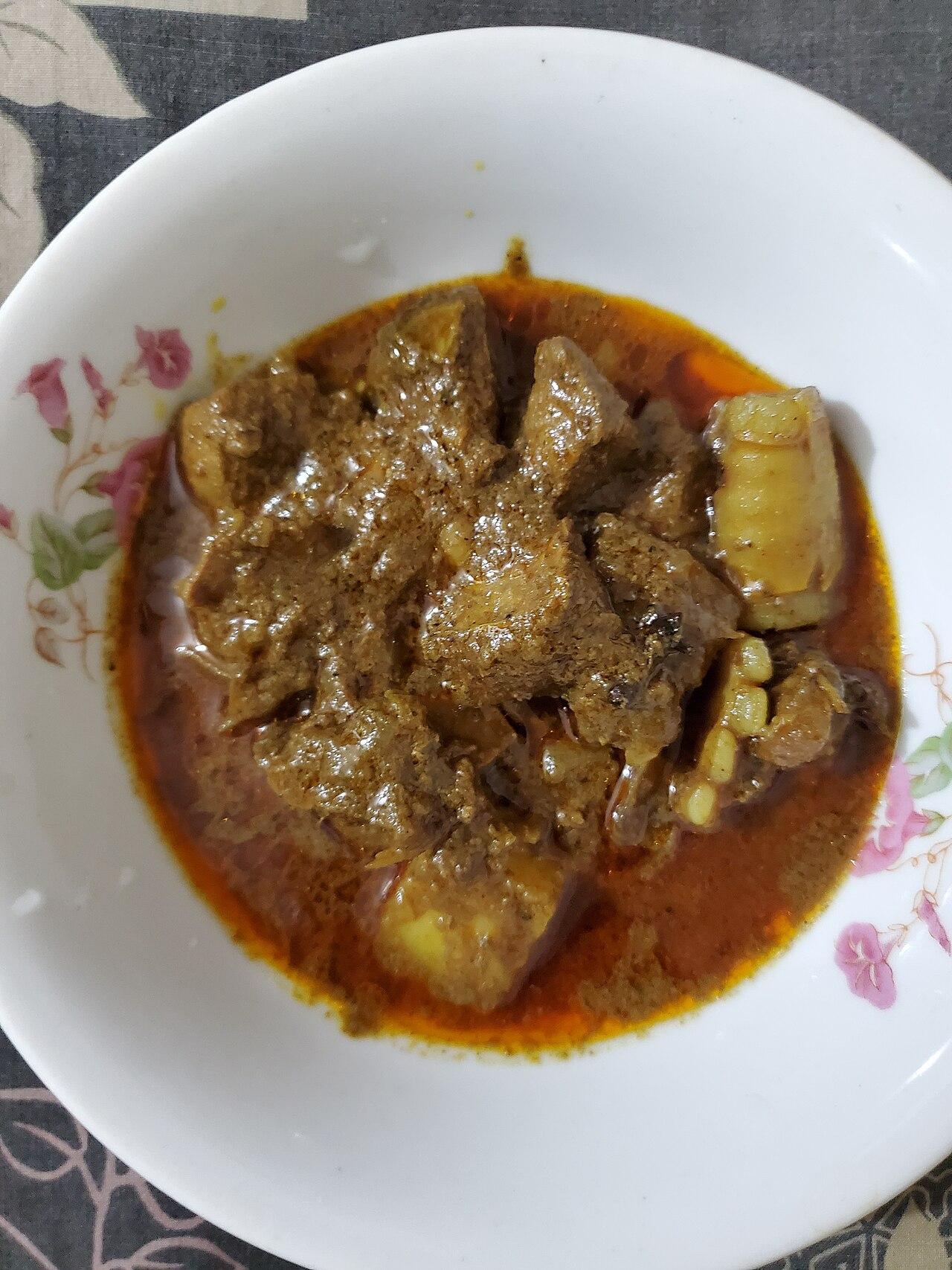
Short answer: 100 g of homemade mutton kaleji masala has about 180 to 230 calories, and chicken kaleji lands a little lower at 150 to 200. The liver itself is lean and packed with protein. Almost all the variation comes from how much oil or ghee goes into the masala, and whether it is cooked dry on a tawa or simmered in a curry.
Kaleji is mutton or chicken liver cooked desi style, usually with onion, tomato, green chilli and garam masala, finished with ginger and fresh coriander. On Eid ul Adha it is often the first thing cooked after qurbani, while the rest of the meat is still being divided. The rest of the year it shows up as a breakfast dish, a dhaba tawa fry, or a quick curry with roti. It is one of the cheapest protein sources in a Pakistani kitchen and one of the most nutrient dense foods anywhere, which is a combination worth understanding before deciding how often to eat it.
Why one plate can vary by 100 calories
The liver type. Mutton liver and chicken liver are not the same food once cooked. Plain simmered chicken liver has about 167 kcal per 100 g with 24 g of protein, according to USDA FoodData Central. Pan fried lamb liver is richer, about 238 kcal per 100 g, because frying drives off water and adds fat. Raw goat liver, the closest match to the mutton kaleji sold in Pakistani markets, starts at about 126 kcal per 100 g before cooking, with 20 g of protein (Indian Food Composition Tables, 2017).
The oil. This is the bigger lever. A home cook who uses a tablespoon of oil for the whole pot spreads that fat across four servings. A dhaba cook frying kaleji on a tawa in ghee can double the fat in a single portion. The liver does not change. The spoon does.
Dry fry or curry. Tawa kaleji is cooked dry, so the liver stays concentrated and every 100 g carries more of it. A kaleji curry with onion and tomato adds water and bulk, which pulls the per 100 g number down even though the plate as a whole can be just as filling. Compare by weight and the curry looks lighter. Compare by plate and the difference mostly disappears.
Kaleji calories and macros
| Food | Portion | Calories | Protein | Carbs | Fat |
|---|---|---|---|---|---|
| Mutton liver, raw | 100 g | 126 | 20 g | 2 g | 5 g |
| Mutton liver, pan fried | 100 g | 238 | 26 g | 4 g | 13 g |
| Chicken liver, simmered | 100 g | 167 | 24 g | 1 g | 7 g |
| Mutton kaleji masala, home | 100 g | 180 to 230 | 22 to 26 g | 4 to 6 g | 9 to 13 g |
| Chicken kaleji masala, home | 100 g | 150 to 200 | 20 to 24 g | 3 to 5 g | 7 to 10 g |
| Mutton kaleji masala, 1 serving | 150 g | 270 to 345 | 33 to 39 g | 6 to 9 g | 14 to 20 g |
| 1 serving kaleji + 2 rotis | ~230 g | 470 to 600 | 39 to 45 g | 56 to 59 g | 16 to 24 g |
The raw and plain cooked rows use USDA FoodData Central and the Indian Food Composition Tables. The masala rows are estimates built from those anchors: the masala dilutes the liver with onion and tomato, then the cooking oil pushes the number back up. Dhaba tawa kaleji, fried in extra ghee, lands at the top end, around 230 to 280 kcal per 100 g. For the full picture across desi dishes, see our Pakistani food calorie chart.
The iron and vitamin A story
Kaleji earns its reputation here. 100 g of pan fried lamb liver carries about 10 mg of iron and 86 mcg of vitamin B12, plus more vitamin A than most people get in a week. Chicken liver is close behind on iron at about 12 mg per 100 g, with 17 mcg of B12 and a good dose of folate. No ordinary cut of meat comes near those numbers, which is why kaleji turns up whenever someone is told to eat more iron.
Vitamin A is where the story gets a limit. 100 g of mutton liver carries about 7,800 mcg of vitamin A, and chicken liver about 4,000 mcg. The NIH Office of Dietary Supplements sets the tolerable upper intake level for preformed vitamin A at 3,000 mcg a day for adults, so one normal serving already passes it (NIH Office of Dietary Supplements). That limit is about regular daily intake, not a single meal, and the body handles an occasional high day far better than a daily habit. Still, it is the honest reason liver works best as a once or twice a week food rather than an everyday one. Anyone pregnant, or already taking vitamin A supplements, should keep portions modest and ask their doctor.
Liver is also high in cholesterol, roughly 500 mg per 100 g. That matters less than it used to in dietary guidance, but anyone actively managing blood cholesterol usually keeps portions modest anyway.
The honest way to log kaleji
Weigh the liver, then count the oil separately. "Kaleji with roti" is not one number. 150 g of mutton kaleji masala is about 270 to 345 kcal. Two rotis add roughly 200 to 260. Put them together and the plate is 470 to 600 kcal, which is a normal lunch, not a light one and not a heavy one.
In CalsFlow, type:
"150g mutton kaleji masala with 2 roti"
You get the estimate with the assumptions spelled out: liver type, masala style, roti count. Eating the tawa version fried in ghee? Say so in the entry and watch the number move. Two weeks of logging your usual plate and you will know it by heart.
Is kaleji good for weight loss?
It can be, with a condition. The protein is high, the calories per 100 g are moderate, and a small portion is genuinely filling, which is exactly what a weight loss meal needs. The condition is frequency and fat. A 150 g serving of home kaleji with two plain rotis fits a deficit without a struggle. A ghee heavy tawa fry eaten daily, with three rotis to mop up the oil, does not. For more on keeping desi meals inside a target, see how to count calories in Pakistani food.
FAQs
How many calories are in 100 g of kaleji? About 180 to 230 for mutton kaleji masala and 150 to 200 for chicken kaleji masala, both homemade. Plain cooked liver without masala is 167 kcal per 100 g for chicken and about 238 for pan fried lamb liver.
Is kaleji high in protein? Yes. 100 g of kaleji masala gives about 22 to 26 g of protein, which is more than the same weight of most curries. It is one of the highest protein per calorie foods in Pakistani cooking. For how much protein you actually need in a day, see how much protein do you need per day.
Can I eat kaleji every day? Better not to. The vitamin A in liver is so concentrated that a single 100 g serving passes the daily upper intake level, so once or twice a week is the sensible rhythm. Daily liver also adds up on cholesterol.
Is chicken kaleji healthier than mutton kaleji? Chicken kaleji is a little lighter in calories and fat, and still rich in iron and B12. Mutton liver carries more vitamin A and a little more protein. The cooking oil matters more than the choice between them.
How many calories are in kaleji with roti? A typical plate of 150 g mutton kaleji masala with two rotis is about 470 to 600 kcal. The rotis are roughly half of it, so the bread and the oil decide the total as much as the liver does.
Cover photo: a home cooked liver bhuna by AshiqJB007, Wikimedia Commons, CC BY-SA 4.0.
CalsFlow provides nutrition estimates, not medical advice.