

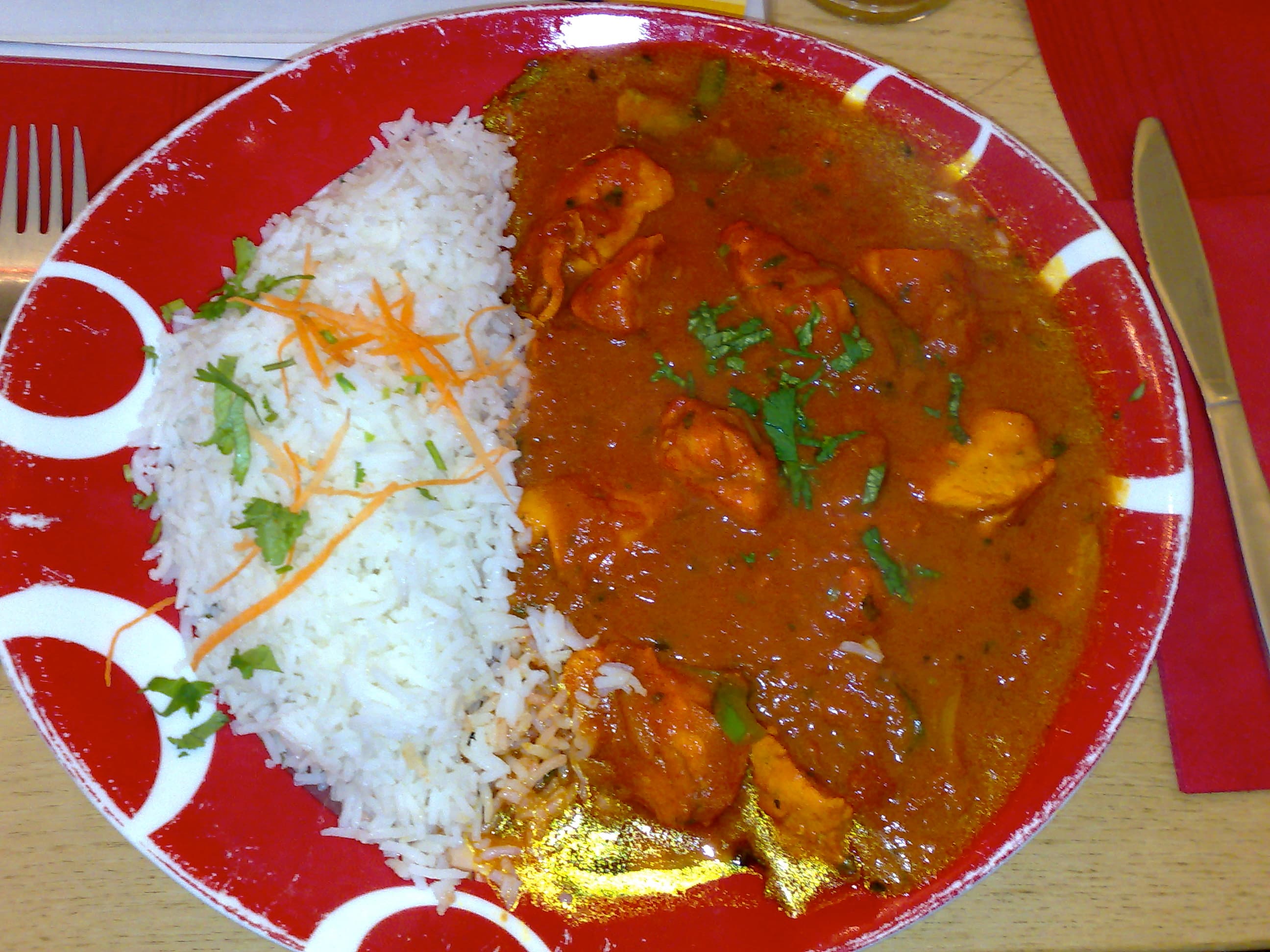
Short answer: a typical restaurant plate of chicken jalfrezi (about 300 g) has 600 to 850 calories. The homemade version of the same plate lands lower, at 450 to 600 calories. Per 100 g, expect 150 to 280 kcal, and most of that spread comes down to one thing: how much oil the cook used.
Jalfrezi is the stir fry of the curry world. The name comes from Bengali words meaning hot fry, and the cooking matches it. Chicken, peppers, onions, and tomatoes get fried fast over high heat with green chillies and spices, instead of simmering for hours in a gravy. That is why jalfrezi tastes fresher and sharper than a karahi or a qorma, and why it can also be one of the lighter restaurant curries, if the oil stays under control.
What actually decides the number
The oil in the pan. Jalfrezi starts with a hot pan and oil, and restaurants are generous with both. One tablespoon of cooking oil is around 120 calories. A home cook measuring two tablespoons for a whole pot and a restaurant cook pouring freely can end up 200 calories apart before anything else changes. When a jalfrezi looks glossy and leaves oil around the edge of the plate, log the top of the range.
Dry or with gravy. Proper jalfrezi is fairly dry. The sauce clings to the chicken and peppers instead of pooling. Some restaurants serve a saucier version built on a base gravy, which adds oil and sometimes sugar from the base. The dry home style is the lightest version of this dish. The saucy restaurant version is the heaviest, and the difference can be 150 calories on the same plate.
What cut of chicken. Breast is the usual choice for jalfrezi, and cooked chicken breast is about 165 kcal and 31 g protein per 100 g (USDA FoodData Central). Thigh meat runs higher in fat, so a thigh based jalfrezi sits a little above the breast based numbers here. Most of the calories above the plain chicken number are oil and sauce, not the meat.
Cream or no cream. Traditional jalfrezi has no cream. Some restaurant versions add a swirl of it to soften the heat. If the menu or the taste suggests cream, treat it like the restaurant range on this page, not the homemade one.
Chicken jalfrezi calories and macros
| Portion | Calories | Protein | Carbs | Fat |
|---|---|---|---|---|
| 100 g, homemade, dry style | 150 to 200 | 13 to 16 g | 6 to 10 g | 7 to 12 g |
| 100 g, restaurant, with gravy | 200 to 280 | 13 to 16 g | 7 to 11 g | 13 to 20 g |
| 1 plate, homemade (~300 g) | 450 to 600 | 38 to 48 g | 18 to 30 g | 21 to 36 g |
| 1 plate, restaurant (~300 g) | 600 to 850 | 38 to 48 g | 21 to 33 g | 39 to 60 g |
| Plus 1 naan | add 300 to 450 | add 8 to 10 g | add 55 to 70 g | add 5 to 9 g |
| Plus 1 roti | add 100 to 140 | add 3 to 4 g | add 18 to 22 g | add 2 to 3 g |
| Plus 1 cup cooked basmati rice | add 200 to 250 | add 4 to 5 g | add 44 to 50 g | add 1 to 2 g |
A restaurant plate with one naan is a 900 to 1,300 calorie meal (see naan calories). The same jalfrezi with one roti instead is 700 to 990 (see roti calories). The peppers and onions earn their place here too: they bulk out the plate for very few calories, which is part of why jalfrezi fills you up without needing a second helping of bread.
Jalfrezi vs karahi vs handi
These three get mixed up on menus, and for tracking the differences matter:
- Jalfrezi is stir fried fast with peppers, onions, tomatoes, and green chillies. Drier, sharper, and usually the lightest of the three when made at home. Details on the wok cooked cousin are in chicken karahi calories.
- Karahi is also cooked fast, but with more tomato and ginger and less pepper crunch. Similar oil levels, a little more gravy.
- Handi is slow simmered in a pot with a tomato, yogurt, and cream gravy. Thicker and richer, so it runs higher per 100 g. See chicken handi calories.
Same chicken, three different plates. The cooking method decides, every time.
The honest way to log jalfrezi
Jalfrezi is easier to log than most curries because you can see what is in it. Use that.
- Count the chicken and the veg separately if you can. A plate that is half peppers and onions is not the same as a plate that is mostly chicken and sauce.
- Name the style. Dry homemade jalfrezi and saucy restaurant jalfrezi are different entries. Say which one you ate.
- Log the bread on its own line. Naan, roti, and rice each deserve their own entry, because a naan can add more calories than the difference between a homemade and a restaurant plate.
- Watch the oil shine. A dry, matte jalfrezi means a lighter log. A glossy plate with oil pooling at the edge means the top of the range.
In CalsFlow, type:
"restaurant chicken jalfrezi, 1 plate, saucy, with 1 roti"
You get the estimate with the assumptions spelled out: plate size, gravy level, bread choice. Eating the dry homemade version tonight? Dial the oil down and watch the number move. After a few orders you will know your usual jalfrezi by heart.
Is chicken jalfrezi healthy?
As restaurant curries go, jalfrezi starts from a good place. It is high in protein, packed with peppers, onions, and tomatoes, and it skips the cream that pushes other curries up. The UK National Health Service even publishes a chicken jalfrezi recipe as a lower fat option. The catch is the restaurant version, where extra oil can quietly double the fat. At home, jalfrezi is very fixable: measure the oil, keep the peppers generous, skip the cream, and it stays a genuinely light dinner. If protein is your target, how much protein you need per day is worth a read, and the broader pattern for Pakistani and desi food is the same: measure the fat, not the dish.
FAQs
Is chicken jalfrezi good for weight loss? It can be. The homemade dry version is high in protein and full of vegetables for 450 to 600 calories a plate. The restaurant version is heavier, so keep the portion to one plate, go easy on the bread, and skip the extra oil shine.
Is jalfrezi hotter than karahi? Usually, yes. Jalfrezi leans on green chillies and chilli heat, while karahi leans on ginger and black pepper. Heat varies a lot by cook, so ask for mild if you are unsure.
What is the difference between dry and gravy jalfrezi? Dry jalfrezi has a sauce that clings to the chicken and peppers. Gravy jalfrezi comes with a thicker, saucier base, usually from a restaurant, and it runs higher in calories because of the extra oil in that base.
What goes best with chicken jalfrezi? One roti keeps the meal lighter, naan makes it a bigger meal, and rice sits in between. A cucumber raita on the side cools the heat without adding much.
Cover photo: David Pursehouse, CC BY 2.0, via Wikimedia Commons.
CalsFlow provides nutrition estimates, not medical advice.