

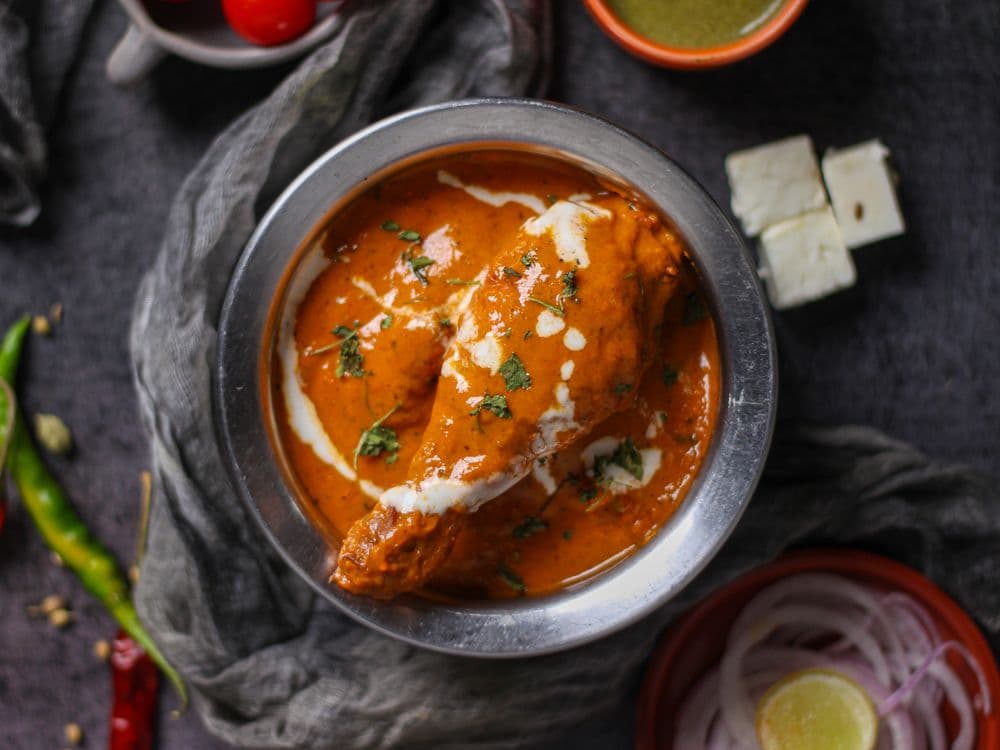
Short answer: a typical plate of chicken handi (about 300 g with gravy) has 500 to 850 calories. Homemade handi sits at the lower end, restaurant handi at the higher end. Per 100 g, expect 180 to 300 kcal, and almost all of that spread comes from cream, butter, and oil in the gravy.
Handi gets its name from the pot it is cooked in, a deep clay vessel that holds heat and lets the gravy simmer slowly. The dish itself is chicken in a thick tomato, yogurt, and cream gravy, finished with kasuri methi and often a knob of butter. It is richer than a karahi and smoother than a qorma, and that gravy is where the calories live.
Why handi calories swing so much
The cream and butter finish. This is the main difference between handi and its cousins. A home cook might add a few spoonfuls of cream. A restaurant finishes with cream plus butter, sometimes both, and the difference shows up directly in the fat column. A quarter cup of cream across a pot adds roughly 200 calories before anyone touches the oil.
How much oil went in first. Handi starts like most Pakistani salans, with onions fried in oil or ghee. Home cooks measure it, often 2 to 3 tablespoons for a whole pot. Restaurants cook by feel and by the ladle, and the gravy ends up glossier. One tablespoon of cooking oil alone is around 120 calories, so the gap between a careful home handi and a restaurant one can be 200 calories on oil alone.
Bone-in or boneless. Pakistani handi is usually bone-in pieces, which means 100 g on your plate includes bone weight. A bone-in leg with clinging gravy weighs roughly 150 g, of which maybe 90 g is edible meat. Boneless handi, the kind many restaurants serve as "boneless chicken handi," weighs in cleaner per bite and often runs slightly higher per 100 g because there is more meat and gravy and less bone.
Malai handi is a different dish, calorie wise. Malai means cream, and malai handi leans into it: extra cream, extra butter, sometimes a cheese or white gravy base instead of tomato. If the menu says malai handi, log it at the top of every range on this page, not the middle.
Gravy to meat ratio. Handi gravy is thick and clings to the chicken, which makes it easy to eat more of it than you realize. A plate of two pieces with a spoon of gravy can be 150 calories lighter than the same pieces swimming in salan.
Chicken handi calories and macros
| Portion | Calories | Protein | Carbs | Fat |
|---|---|---|---|---|
| 100 g, homemade (moderate oil, light cream) | 180 to 230 | 11 to 14 g | 4 to 7 g | 12 to 17 g |
| 100 g, restaurant | 230 to 300 | 11 to 14 g | 5 to 8 g | 17 to 26 g |
| 1 piece with gravy (~150 g) | 270 to 420 | 16 to 21 g | 6 to 10 g | 19 to 31 g |
| 1 plate, homemade (~300 g) | 500 to 650 | 30 to 40 g | 12 to 20 g | 35 to 50 g |
| 1 plate, restaurant (~300 g) | 650 to 850 | 30 to 40 g | 15 to 25 g | 50 to 75 g |
| 1 plate, malai handi, restaurant (~300 g) | 750 to 950 | 30 to 40 g | 12 to 20 g | 60 to 85 g |
| Plus 1 naan | add 300 to 450 | add 8 to 10 g | add 55 to 70 g | add 5 to 9 g |
For reference, the chicken itself is lean: cooked chicken breast is about 165 kcal and 31 g protein per 100 g (USDA FoodData Central). Everything above that number in handi is the gravy. Heavy cream runs about 340 kcal per 100 g and butter about 717 kcal per 100 g, so a creamy restaurant finish adds up fast.
Handi with naan is the standard pairing, and a restaurant naan adds roughly 300 to 450 calories (see naan calories). A plate of restaurant handi with one naan is a 950 to 1,300 calorie meal. With two rotis instead, add 200 to 280 (see roti calories).
Handi vs karahi vs qorma
People mix these up, and for tracking it matters:
- Karahi is cooked fast in a wok with tomatoes and ginger, and the gravy stays relatively dry. Similar oil levels, less cream, so per 100 g it usually lands a little below handi. Details in chicken karahi calories.
- Handi is slow-simmered in a pot with a tomato, yogurt, and cream gravy. Thicker and creamier than karahi, which is why it runs higher.
- Qorma is yogurt and browned onion, slow-braised until the oil separates. No cream in the traditional version, but the separated oil can push it past handi per 100 g. See chicken qorma calories.
Same chicken, three different calorie profiles. The gravy decides, every time.
The honest way to log handi
Handi is hard to track because the gravy hides everything. What works:
- Count the pieces, not the plate. Log "2 chicken leg pieces with gravy" instead of "1 plate handi." Pieces are countable; gravy depth is not.
- Read the cream. A pale orange gravy with a visible cream swirl means a restaurant finish; log the higher end. A deeper red, tomato-forward gravy means lighter cream; log the middle.
- Name the variant. Malai handi is not regular handi. If the menu says malai, say so in the log, or the estimate will come in low.
- Separate the bread. Naan, roti, and rice are separate entries. A naan can quietly add 300 or more calories to a handi meal.
In CalsFlow, type:
"restaurant chicken handi, 2 leg pieces, lots of gravy, with 1 butter naan"
You get the estimate with the assumptions spelled out: piece count, cream level, gravy amount. Eating the homemade version tonight? Dial the cream down and watch the number move. Two weeks of this and you will know your usual order by heart.
Is chicken handi healthy?
It is protein-rich and built on tomato, yogurt, onion, and spices, which is a fine base. The problem is dose: a restaurant handi can deliver a full meal's fat in the gravy alone. At home, handi is very fixable: measure the oil, use low-fat yogurt, skip the butter finish, and it drops 150 to 250 calories per serving without tasting like diet food. (If protein is your target, how much protein you need per day is worth a read.)
FAQs
Is chicken handi the same as chicken karahi? No. Karahi is wok-fried fast with tomatoes and ginger and stays drier. Handi is slow-simmered in a pot with a thicker tomato, yogurt, and cream gravy. Handi usually runs a little higher per 100 g because of the cream.
What is malai handi? Malai handi is the extra-creamy version: more cream, more butter, sometimes a white gravy instead of tomato. Expect 750 to 950 calories per restaurant plate, the top of the handi range.
Can I eat chicken handi while losing weight? Yes, with portion control. Keep the chicken pieces, go light on the gravy, skip the butter finish at home, and pair with one roti instead of a naan. The broader pattern for Pakistani and desi food: measure the fat, not the dish.
How many calories are in chicken handi with naan? Roughly 950 to 1,300: 650 to 850 for a restaurant handi plate plus 300 to 450 for the naan. It is one of the heavier common combos, so log the naan honestly.
Does handi have more calories than chicken qorma? Usually a little less per 100 g at home, because qorma gravy carries more separated oil, but a creamy restaurant handi can match or pass qorma. The gap between homemade and restaurant versions matters more than the gap between the two dishes.
The bottom line
Chicken handi: 180 to 300 kcal per 100 g, 500 to 850 per plate, with 30 to 40 g of protein under the gravy. Count the pieces, read the cream, name the variant, log the bread separately. Having handi this weekend? Describe it in CalsFlow and get your real number, assumptions included.
CalsFlow provides nutrition estimates, not medical advice.