

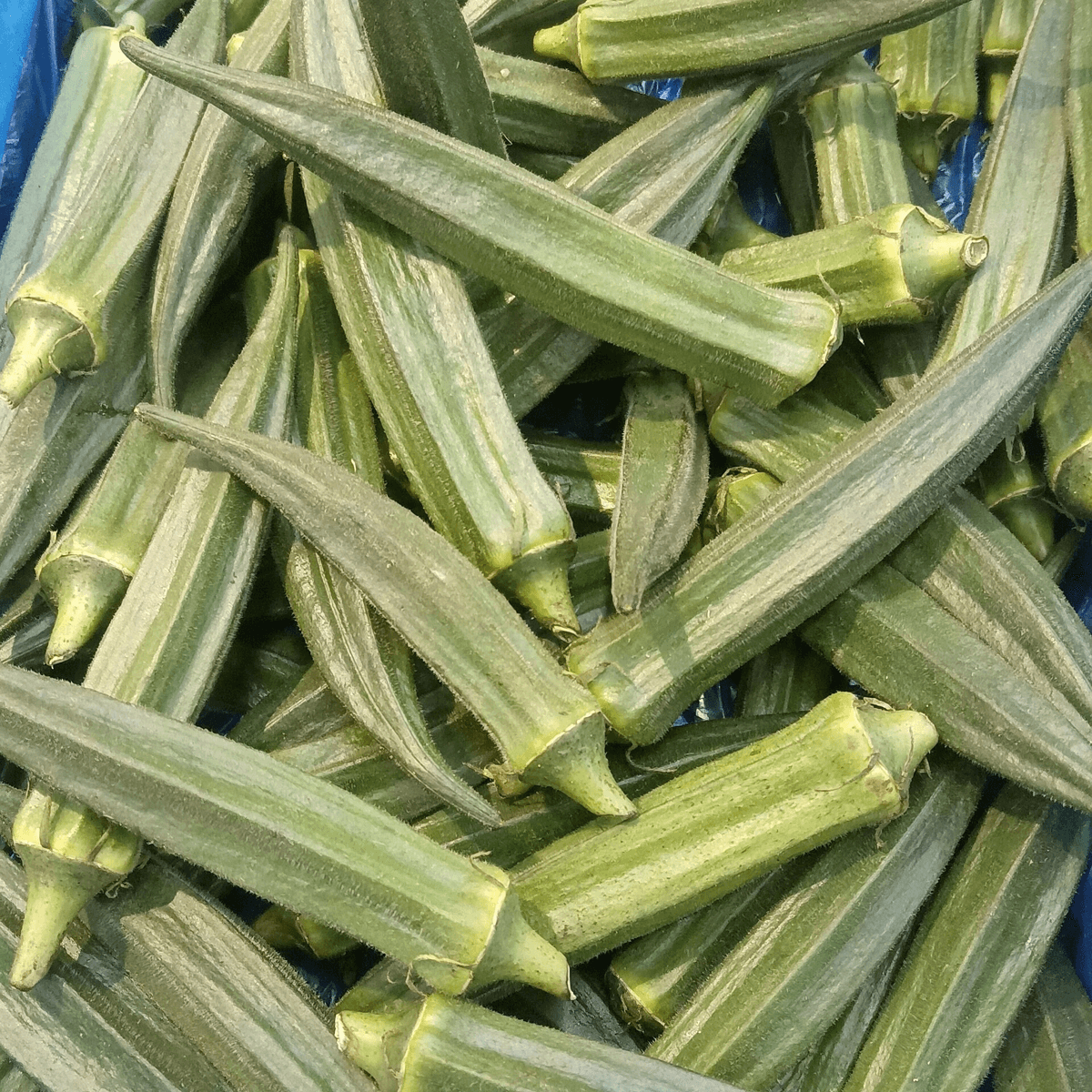
Short answer: a typical home style serving of bhindi masala, about 150 g or one small katori, has 135 to 195 calories. Raw bhindi itself is very light at 33 kcal per 100 g. Almost everything that pushes the cooked number up is oil, so a dry home fry and a glossy dhaba version can be two different dishes even when the bhindi is the same.
Bhindi, also called okra or lady finger, is one of the most common sabzis in Pakistani homes. It shows up with roti on a weekday, next to daal, or as the vegetable side next to a meat salan. It is cheap, it cooks fast, and it is one of the few desi dishes where the base ingredient barely costs any calories at all.
Why raw bhindi is so light
The USDA reference for raw okra puts 100 g at 33 kcal, with 1.9 g of protein, 7.5 g of carbs, 0.2 g of fat and 3.2 g of fibre (medindia.net). Boiled okra, drained and without salt, drops to about 22 kcal per 100 g in the same USDA based data, because cooking in water adds weight without adding calories.
That makes bhindi unusual on a Pakistani plate. Most of our famous dishes start from meat, ghee or fried bread, so the base ingredient already carries weight. With bhindi, the vegetable is almost a free carrier. What you cook it in decides the meal.
Bhindi calories and macros
| Bhindi | Portion | Calories | Protein | Carbs | Fat |
|---|---|---|---|---|---|
| Okra, raw | 100 g | 33 | 1.9 g | 7.5 g | 0.2 g |
| Okra, boiled, drained | 100 g | 22 to 30 | 1.9 g | 4.5 g | 0.2 g |
| Bhindi masala, home style | 100 g | 90 to 130 | 2 to 3 g | 8 to 11 g | 5 to 9 g |
| Bhindi masala, home style | 1 katori, about 150 g | 135 to 195 | 3 to 4 g | 12 to 17 g | 8 to 14 g |
| Bhindi fry, dry, home style | 100 g | 120 to 170 | 2 to 3 g | 9 to 12 g | 8 to 12 g |
| Besan wali bhindi | 100 g | 130 to 180 | 3 to 5 g | 13 to 17 g | 7 to 11 g |
| Bhindi masala, restaurant or dhaba | 100 g | 150 to 200 | 2 to 3 g | 9 to 12 g | 11 to 16 g |
The raw and boiled rows anchor on USDA based data. The cooked rows are estimates built from those base values plus the oil and masala in a normal recipe, which is why they are ranges. A recipe that fries bhindi in 1 tablespoon of oil for the whole karahi lands near the bottom of the home style range. One that starts with 3 or 4 tablespoons, then adds another tarka on top, lands near the restaurant range.
One tablespoon of cooking oil adds roughly 120 kcal to the whole pot. Spread across four servings that is 30 kcal per serving, which sounds small. In practice most home cooks pour freely rather than measuring, and the difference between 1 tablespoon and 4 tablespoons in one karahi is close to 360 kcal for the pot. That is the whole story of bhindi calories.
The versions that change the number
Bhindi masala, the everyday version. Onion, tomato, ginger, garlic, green chilli and dry spices, with bhindi folded in and cooked until tender. This is the version most Pakistani homes mean when they say bhindi. With a measured spoon or two of oil it stays in the 90 to 130 per 100 g range, which makes it one of the lightest cooked sabzis around.
Bhindi fry, dry and crisp. Bhindi cut into rounds or slit lengthwise, fried on high heat with onion and spices until the edges crisp. Less tomato, less water, more oil clinging to the surface. It tastes richer and it costs more, around 120 to 170 per 100 g at home. The crisp version is also the one people tend to eat more of, because it eats like a snack.
Besan wali bhindi. Bhindi coated or stuffed with a spiced gram flour mix, then pan fried. Besan adds carbs and a little protein, and it soaks up oil, so this version runs higher than plain masala at 130 to 180 per 100 g. It is still a vegetable dish, just a heavier one.
Restaurant and dhaba bhindi. Same idea as home masala, more oil, longer frying, sometimes a final tarka of ghee. Expect 150 to 200 per 100 g, and watch the portion, because dhaba servings of sabzi tend to be generous.
Bharwan bhindi, stuffed. Whole bhindi slit and filled with dry masala, then cooked slowly in a little oil. Nutritionally it sits close to home style masala, around 100 to 140 per 100 g, unless the stuffing includes a lot of besan or the pan is swimming in oil.
Bhindi with roti, the real meal
Nobody eats bhindi alone, so the plate matters more than the sabzi row. A home style bhindi masala serving with 2 medium rotis lands around 350 to 420 kcal in total, using the roti values in our roti calories guide. Swap the rotis for a paratha and the number jumps, because the paratha brings its own ghee, as shown in our paratha calories guide. Swap the masala for a dhaba version and add a second helping, and the same plate can pass 600 kcal without any meat on it.
That is worth knowing because bhindi has a reputation as a diet food. The vegetable earns that reputation. The plate decides whether it keeps it.
Why bhindi fills you up for so few calories
At 3.2 g of fibre per 100 g raw, bhindi carries more fibre than most vegetables on a Pakistani plate. Fibre slows digestion and stretches out fullness, which is one reason a katori of bhindi masala with roti can feel like a proper lunch at 350 to 420 kcal while a samosa based snack at the same calories leaves you hungry an hour later. Full numbers for that comparison are in our samosa calories guide.
Bhindi is not a protein food, and it should not be sold as one. At 2 to 3 g of protein per 100 g cooked, it needs a partner for a balanced plate. Daal, chana or a piece of chicken alongside it covers that gap, which is how most Pakistani meals already work. Our daal calories guide and chana calories guide give the numbers for the usual partners.
The sliminess problem, solved by cooking
The one complaint everyone has about bhindi is the slime. It comes from mucilage inside the pods, and it gets worse when wet bhindi hits a crowded pan on low heat. A few habits fix most of it: wash the bhindi and dry it completely before cutting, keep the heat high, do not crowd the pan, and add lemon juice or amchur near the end rather than water at the start. Salt added very early draws out moisture too, so many cooks season once the bhindi has started to crisp.
None of this changes the calories much. It changes whether people actually want to eat the dish, which matters more for a vegetable most families cook weekly.
How to track bhindi in seconds
In CalsFlow, type:
"1 katori home bhindi masala, 2 rotis"
You get the calorie and macro estimate plus the assumptions behind it: the weight it guessed for your katori, the oil it allowed for home cooking, the roti size it used. Had dhaba bhindi with oil visible on top? Say so in the entry, and the estimate moves up with the oil. The trick with bhindi is naming the cooking style, not the vegetable. "Bhindi" alone could mean boiled okra at 22 kcal per 100 g or restaurant masala at close to 200. "Home bhindi masala, light oil" narrows it to a useful number.
This is the same describe what you see approach from our guide to counting calories in Pakistani and desi food: plain wording, checked assumptions, adjusted portions.
FAQs
How many calories are in 100g of bhindi? Raw bhindi has 33 kcal per 100 g. Home style bhindi masala has 90 to 130 kcal per 100 g, depending on oil. Restaurant bhindi masala runs 150 to 200 per 100 g.
Is bhindi good for weight loss? Home cooked bhindi masala is a strong choice: low calorie, high fibre, genuinely filling, and it pairs naturally with roti and daal. The oily restaurant version and the fried version are less helpful, not because of the bhindi but because of the oil.
How many calories are in 1 cup of bhindi masala? About 135 to 195 kcal for a 150 g home style serving, which is roughly one small katori or a heaped cup. A restaurant cup runs closer to 225 to 300.
Does bhindi have protein? A little, about 2 to 3 g per 100 g cooked. Pair it with daal, chana or meat for a protein adequate meal. Our protein guide walks through the daily targets.
Is bhindi better than aloo or other sabzis for calories? Per 100 g cooked, bhindi masala usually beats potato based sabzis, because potato brings more carbs and soaks up more oil. The cooking method still matters more than the vegetable choice. A light bhindi masala beats an oily aloo sabzi, and an oily bhindi beats nothing.
The bottom line
Bhindi itself is almost free at 33 kcal per 100 g raw. Home bhindi masala at 90 to 130 kcal per 100 g, or 135 to 195 per katori, is one of the lightest proper desi dishes you can cook. Keep the oil measured and the bhindi dry in the pan, and it stays that way. Eating bhindi today? Describe it in CalsFlow with the cooking style and oil spelled out and get your real number.
CalsFlow provides nutrition estimates, not medical advice.