

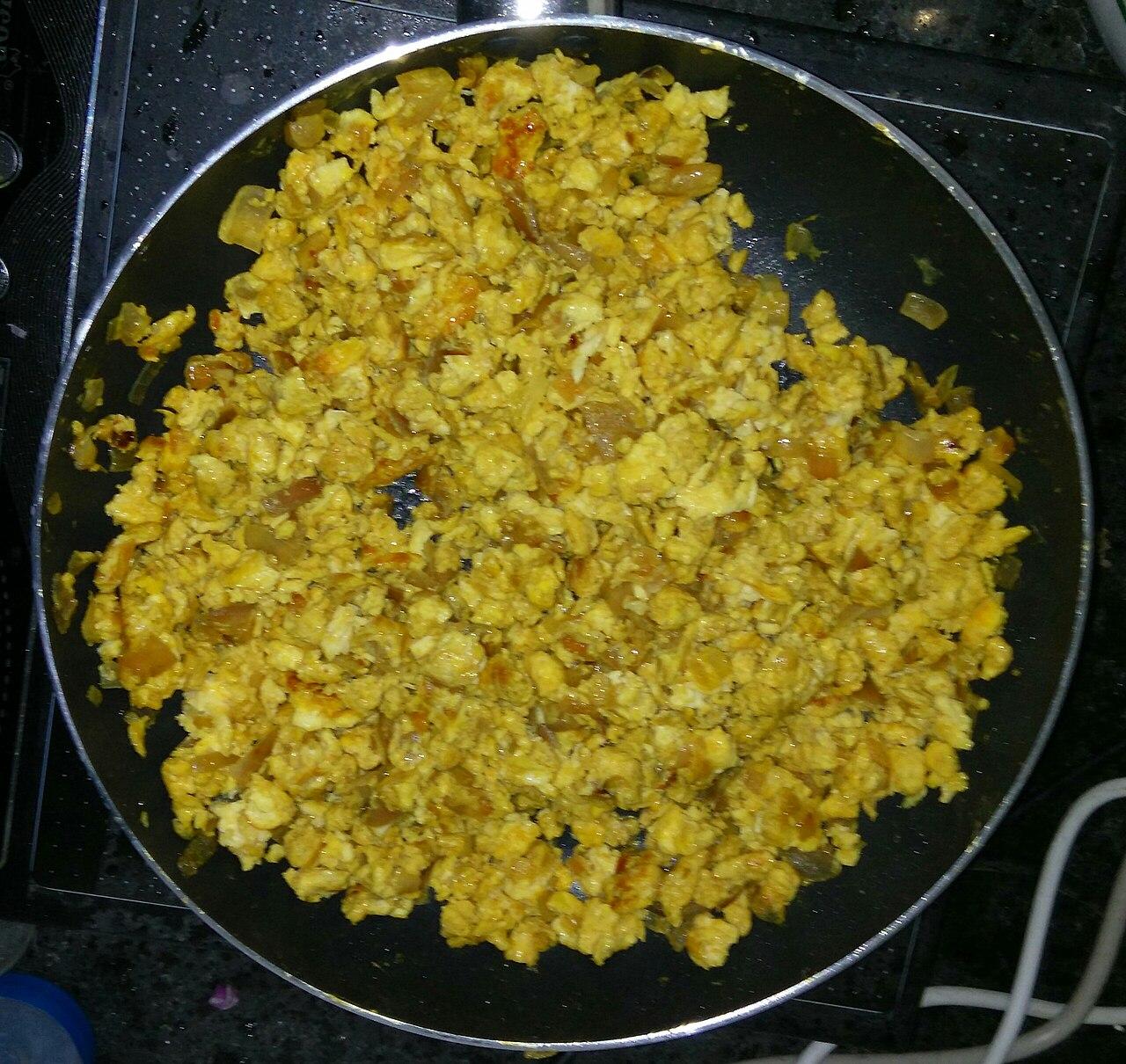
Short answer: a homemade anda bhurji made with 2 eggs has about 190 to 220 calories. The dhaba version, cooked in a generous spoon of ghee or oil, lands between 260 and 320. Eggs are the easy part. Two large eggs are about 143 calories on their own. The fat in the pan and the bread on the side decide the rest.
Anda bhurji is the desi answer to scrambled eggs. Eggs beaten with chopped onion, tomato, green chilli and spices, cooked soft in a karahi or frying pan. It is the breakfast on most Pakistani tables, eaten with roti, paratha, or bread, and usually with a cup of doodh pati or chai. It even made TasteAtlas's list of the 50 best egg dishes in the world in November 2026, which surprised nobody who grew up eating it.
Why one plate can vary by 100 calories
The eggs are the fixed part. USDA FoodData Central lists one large egg, about 50 g, at 72 calories with 6.3 g of protein, 4.8 g of fat and almost no carbs. Two eggs give you about 143 calories and 12.6 g of protein. Three eggs give you about 215 calories and 18.8 g of protein. That is the anchor, and it barely moves.
The cooking fat is where the numbers move. A teaspoon of oil adds about 40 calories. A tablespoon of oil or desi ghee adds about 120. Home cooks usually use a teaspoon or two. A dhaba cook, or a home cook in a generous mood, can use a full tablespoon without thinking about it. Same two eggs, same onion and tomato, and the plate is suddenly 100 calories heavier.
The onion, tomato and chilli barely count. A small onion and a tomato add roughly 10 to 15 calories to the whole pan, plus a few grams of carbs. They are there for flavour and texture, not for calories. The spices add nothing worth counting.
The bread is a second meal. A plain roti adds about 100 to 130 calories. A paratha adds 250 to 350. Two slices of bread add about 160. The bhurji itself is light. The plate is not, once the bread arrives.
Anda bhurji calories and macros
| Food | Portion | Calories | Protein | Carbs | Fat |
|---|---|---|---|---|---|
| 1 large egg, raw | 50 g | 72 | 6 g | 0 g | 5 g |
| 2 eggs, scrambled with no fat | 100 g | 145 | 13 g | 1 g | 10 g |
| Anda bhurji, 2 eggs, 1 tsp oil | 1 serving | 190 to 220 | 13 g | 4 to 6 g | 13 to 15 g |
| Anda bhurji, 2 eggs, 1 tbsp ghee, dhaba style | 1 serving | 260 to 320 | 13 g | 4 to 6 g | 22 to 26 g |
| Anda bhurji, 3 eggs, 1 tsp oil | 1 serving | 260 to 290 | 19 g | 5 to 7 g | 18 to 20 g |
| Anda bhurji, 2 eggs, per 100 g | 100 g | 150 to 190 | 11 to 13 g | 4 to 6 g | 11 to 16 g |
| Anda bhurji, 2 eggs + 1 roti | 1 plate | 290 to 350 | 16 g | 30 to 35 g | 14 to 17 g |
| Anda bhurji, 2 eggs + 2 rotis | 1 plate | 390 to 480 | 19 g | 55 to 65 g | 15 to 19 g |
| Anda bhurji, 2 eggs + 1 paratha | 1 plate | 450 to 550 | 16 g | 45 to 55 g | 28 to 35 g |
Egg figures come from USDA FoodData Central, entry "Egg, whole, raw, fresh" (FDC 171287). The bhurji rows are estimates built from those egg figures plus the oil and vegetables, which is why they are ranges and not single numbers. A home bhurji with a light hand on the oil sits at the low end. A dhaba bhurji swimming in ghee sits at the high end.
Bhurji vs a plain omelette
A plain two egg omelette cooked in a teaspoon of oil is about the same as a home bhurji, 180 to 210 calories. The bhurji adds onion and tomato, so a few extra carbs and a little more volume, but the difference is small. A masala omelette stuffed with cheese or cooked in a tablespoon of butter is a different story, closer to the dhaba bhurji numbers. The cooking fat matters far more than the shape the egg takes.
An anda paratha is heavier again, because the egg is cooked inside a paratha fried in ghee. If you want the egg flavour with fewer calories, bhurji with a plain roti beats anda paratha by a clear margin.
The honest way to log anda bhurji
Count the eggs first, then the fat, then the bread. "Bhurji with roti" is not one number. Two eggs with a teaspoon of oil and one roti is about 290 to 350 calories. The same two eggs dhaba style with a paratha is 450 to 550. Log the paratha as its own line and the estimate stops lying to you.
In CalsFlow, type:
"2 egg anda bhurji cooked in 1 tsp oil with 1 roti"
You get the estimate with the assumptions spelled out: egg count, oil amount, bread. Eating the dhaba version where the bhurji is cooked in ghee? Say so in the entry and watch the number move. A week of logging your usual breakfast and you will know it by heart. For more on keeping desi meals inside a target, see how to count calories in Pakistani food.
Is anda bhurji good for weight loss?
It can be. Two eggs give you about 13 g of complete protein for roughly 190 calories before the bread, which is a solid trade for breakfast. Eggs are filling, cheap, and quick to cook, and the protein helps you stay full until lunch. Pair the bhurji with one roti instead of two, or with bread instead of a paratha, and the plate lands around 300 to 350 calories, which fits comfortably inside most daily targets. For a rough sense of what your own target looks like, see how many calories you should eat per day.
The trouble is never the eggs. It is the second paratha, the extra spoon of ghee, and the habit of eating three rotis with a two egg bhurji. Keep the oil light and the bread to one piece and the meal works fine inside a deficit. If protein is the reason you eat eggs, how much protein you need per day puts the 13 g from two eggs in context.
FAQs
How many calories are in anda bhurji made with 2 eggs? About 190 to 220 calories at home with a teaspoon of oil, and 260 to 320 dhaba style with a tablespoon of ghee. Add 100 to 130 for a roti or 250 to 350 for a paratha.
How many calories are in 1 egg bhurji? One egg scrambled with onion, tomato and a little oil is about 100 to 120 calories. Two eggs is the usual serving, which is why most of the numbers here use two.
Is anda bhurji healthy? The eggs are a good food: complete protein, choline, vitamin B12 and vitamin D for few calories. The dish stays healthy when the oil stays light. Heavy ghee and a fried paratha turn it into a much heavier meal.
Is anda bhurji good for weight loss? Yes, with the bread kept in check. Two eggs with one roti is a filling breakfast for about 300 to 350 calories. The protein keeps you full, and the calories are easy to control by measuring the oil.
Cover photo: Surya3944, Wikimedia Commons, CC BY-SA 4.0.
CalsFlow provides nutrition estimates, not medical advice.