

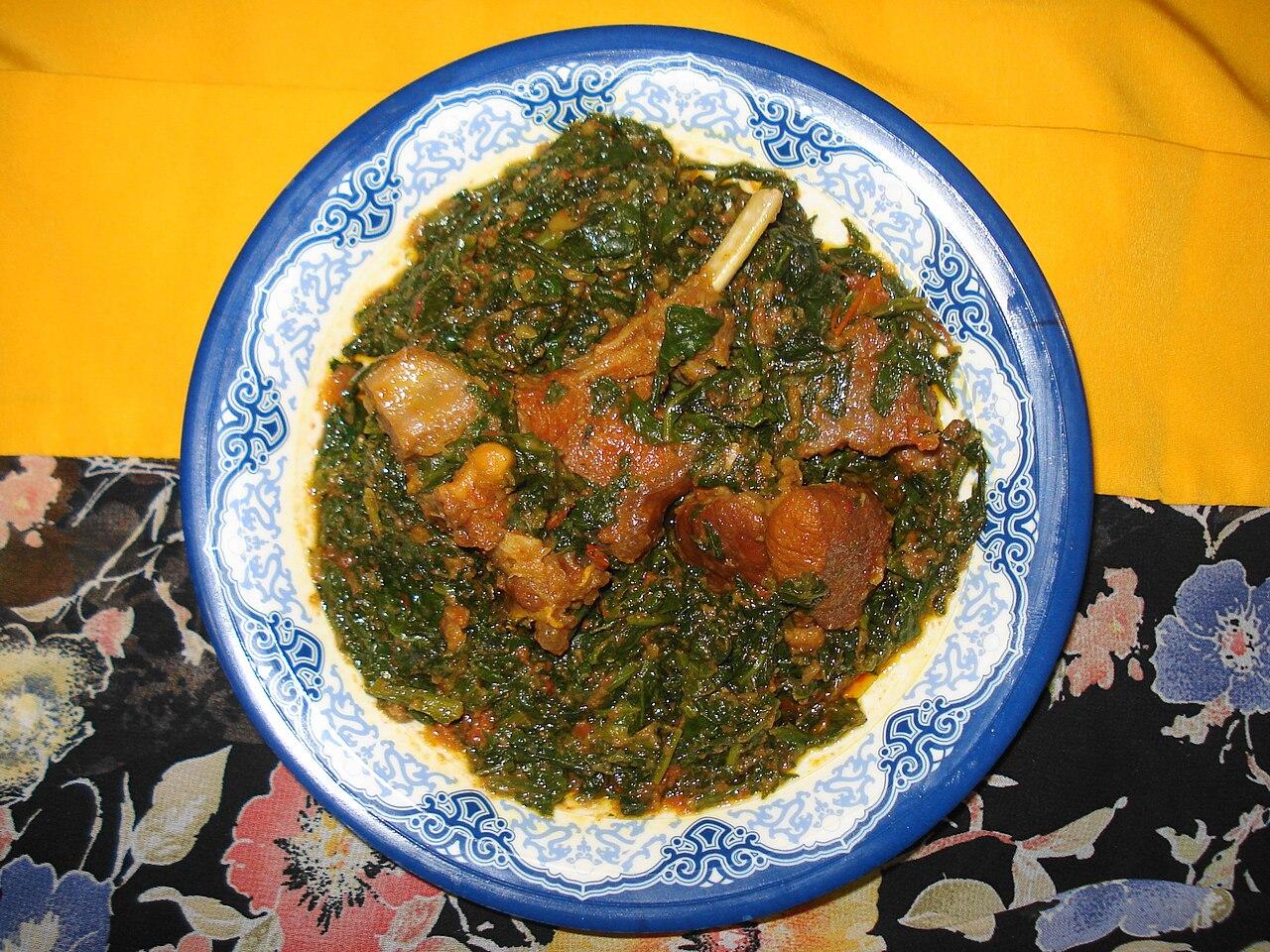
Short answer: a cup of palak gosht (about 240 g) has roughly 360 to 550 calories. A lighter homemade version with lean goat meat and a measured spoon of oil lands near 360 to 460, while a restaurant version with fattier meat and a generous hand on the ghee pushes toward 460 to 550. Per 100 g, expect 150 to 230 kcal. The spinach is almost free. The meat and the cooking fat decide the number.
Palak gosht is mutton simmered in a spinach gravy, spiced with garlic, ginger, green chilli and garam masala. It comes from Punjab, it is a winter staple in Pakistani homes, and it is usually eaten with roti or naan. It is one of the more forgiving meat dishes to track, because the spinach stretches the meat: a cup of it carries fewer calories than the same weight of karahi, while still giving you a proper serving of meat.
What decides the number
How much meat is in the cup. Mutton is the calorie engine here. USDA data for cooked lamb puts lean meat at about 206 kcal per 100 g and lean meat with fat at about 294 kcal per 100 g, and Pakistani mutton is usually goat, which is generally leaner than sheep. A home pot might use 300 g of meat for the whole degchi, so each serving gets a modest share. A restaurant pot is generous with it, and the meat is often cooked bone-in with the fat left on, which adds calories on top of an already rich meat.
How much spinach is in the gravy. Spinach barely registers. The USDA FoodData Central lists raw spinach at 23 kcal per 100 g, with 2.9 g of protein. A cook who doubles the spinach and keeps the meat the same makes a lighter pot without changing the flavour much. A cook who skimps on the spinach and loads the meat does the opposite.
The oil or ghee in the tarka. The onion, tomato and spice base is cooked in oil or ghee, and one tablespoon of cooking oil adds around 120 kcal. A measured tablespoon or two for the pot keeps things reasonable. A free pour from the bottle does not, and the oil that pools at the edges of the plate is part of what you eat, especially if you scoop up the gravy with bread.
Chicken instead of mutton. Some homes make palak gosht with chicken, and it is a different meal on paper. Chicken breast is far leaner than mutton, so a chicken palak gosht usually runs 120 to 160 kcal per 100 g. If you ate the chicken version, log it at the lower end of the table below, or check chicken karahi calories for a sense of how chicken compares with mutton in desi cooking.
Palak gosht calories and macros
| Portion | Calories | Protein | Carbs | Fat |
|---|---|---|---|---|
| 100 g, homemade (lean mutton, light oil) | 150 to 190 | 15 to 19 g | 4 to 6 g | 8 to 12 g |
| 100 g, restaurant (fattier meat, more oil) | 190 to 230 | 15 to 19 g | 4 to 7 g | 12 to 17 g |
| 100 g, chicken version | 120 to 160 | 16 to 20 g | 4 to 6 g | 4 to 7 g |
| 1 cup, homemade (about 240 g) | 360 to 460 | 36 to 46 g | 10 to 14 g | 19 to 29 g |
| 1 cup, restaurant (about 240 g) | 460 to 550 | 36 to 46 g | 10 to 17 g | 29 to 41 g |
| Half cup, homemade (about 120 g) | 180 to 230 | 18 to 23 g | 5 to 7 g | 10 to 14 g |
| Plus 1 roti | add 100 to 140 | add 3 to 4 g | add 20 to 25 g | add 1 to 2 g |
| Plus 1 restaurant naan | add 300 to 450 | add 8 to 10 g | add 55 to 70 g | add 5 to 10 g |
A cup of restaurant palak gosht with a naan is a 760 to 1,000 calorie meal. The same cup at home with two rotis lands around 560 to 740. The bread matters as much as the gravy, so log it separately (see roti calories and naan calories).
Palak gosht vs palak paneer
People mix these two up because both are green. Palak gosht is spinach plus mutton, hearty and savoury. Palak paneer is spinach plus paneer, smoother and milder, running 120 to 210 kcal per 100 g. Per 100 g the paneer version is usually a little lighter, but the gosht version gives you more protein per cup, around 36 to 46 g against 15 to 22 g. Which one fits your day depends on whether you need the protein or the lighter plate. Both beat sarson ka saag with makki ki roti on calories, since saag is usually finished with white butter.
The honest way to log palak gosht
Count the pieces of meat, then judge the richness. Four lean pieces in a light homemade gravy is a different meal from six fatty pieces swimming in oil, even though both are "one cup of palak gosht". If you ate out, assume the restaurant end of the range. If you cooked it, you know whether ghee went in and how much meat the pot held.
In CalsFlow, type:
"homemade palak gosht, 1 cup, with 2 rotis"
You get the estimate with the assumptions spelled out: meat share, oil level, mutton or chicken. Eating the dhaba version tonight? Switch the oil up and watch the number move. After a few logs you will know your usual serving by heart.
Is palak gosht good for weight loss?
It has a lot going for it. A cup gives 36 to 46 g of protein, which keeps you full, and the spinach base adds iron, folate and vitamin K for very few calories. The iron in spinach is the plant kind, which the body absorbs less easily than iron from meat, but the meat in the same pot supplies the kind it absorbs well, and the tomatoes and lemon in the gravy help with that. If protein is your target, how much protein you need per day is worth a read.
The watch points are the same ones as everywhere in desi cooking: the oil, the fattiness of the meat, and the bread. A light home version fits a calorie deficit comfortably. A restaurant version with naan can quietly use up half a day's deficit in one sitting. The fix is simple and does not ruin the dish: trim visible fat before cooking, measure the oil, keep the meat to a fist sized portion, and eat it with roti instead of naan.
FAQs
How many calories are in palak gosht? About 150 to 230 kcal per 100 g, or 360 to 550 per cup, depending on the meat and the oil. The homemade version sits at the lower end and the restaurant version at the higher end.
How much protein is in palak gosht? About 36 to 46 g per cup, mostly from the mutton. A cup with more pieces of meat pushes toward the top of that range. Pairing it with daal raises the protein of the whole meal further.
How many calories are in palak gosht with naan? Roughly 760 to 1,000 for a restaurant cup with one naan, and 660 to 910 for a homemade cup with one naan. Swap the naan for two rotis and the meal drops by about 100 to 300 calories.
Is palak gosht the same as saag gosht? Nearly, but not quite. Saag gosht is meat cooked with a mix of greens, usually spinach, fenugreek leaves and other greens, while palak gosht is made with spinach only. They look similar in a photo, but saag gosht tastes rounder and slightly more pungent. The calories are close enough that the same ranges work for both.
Does restaurant palak gosht have more calories than homemade? Usually yes, by about 100 calories per cup. Restaurants use fattier meat and more oil or ghee. Home cooks control both, which is why the homemade range sits lower.
Can I make palak gosht lighter without losing flavour? Yes. Use lean goat meat and trim the fat, cook the base in one measured tablespoon of oil, double the spinach, and skip any extra ghee on top. The spinach, garlic and garam masala carry the flavour anyway.
The bottom line
Palak gosht: 150 to 230 kcal per 100 g, 360 to 550 per cup, with 36 to 46 g of protein in a cup. Count the meat pieces, check the oil, log the bread separately. Having it tonight? Describe it in CalsFlow and get your real number, assumptions included.
Cover photo: Palak Gosht by Miansari66 via Wikimedia Commons (public domain).
CalsFlow provides nutrition estimates, not medical advice.