

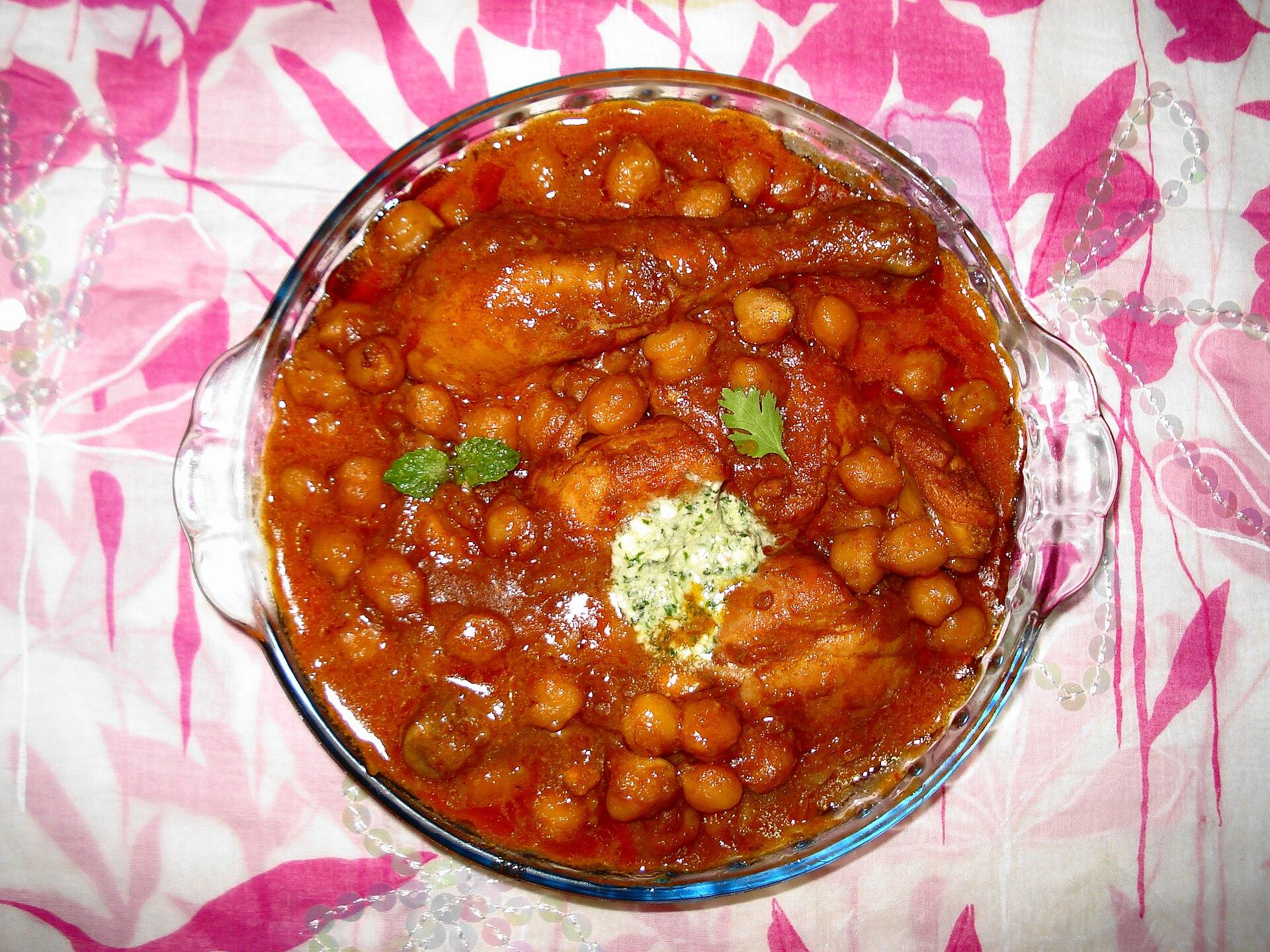
Short answer: one cup, about 250 g, of home style murgh cholay carries 320 to 450 kcal. A dhaba plate runs higher, roughly 540 to 780 kcal for a 300 g serving, before the naan. The chickpeas are the predictable part of the dish. Oil, the cut of chicken, and how big the serving is do most of the moving.
Murgh cholay is Lahore comfort food. Bone-in chicken and white chickpeas simmered together in a tomato and onion masala, finished with green chutney, ginger, and lemon. Dhabas serve it all day, and in Lahore it shows up at breakfast too, with naan and lassi. It is heartier than plain chana and lighter than a karahi drowned in ghee, which puts it in an interesting middle spot for anyone counting calories.
What moves the number
Oil. This is the big one. A tablespoon of oil adds about 120 kcal, and a dhaba handi can take several spoonfuls before the chicken even goes in. Home cooks who measure one or two spoonfuls for the whole pot land far below a restaurant version. When a murgh cholay estimate looks high, oil is almost always the reason.
The chicken. Recipes use bone-in chicken, usually leg and thigh pieces, skin on. That tastes better than breast and carries more fat. A version made with skinless breast meat drops the fat noticeably, though few dhabas cook it that way. The bones also mean a serving weighs more than the meat you actually eat, so weighing the plate overstates what you consumed.
The chickpea to chicken ratio. Some cooks go heavy on chickpeas, some heavy on chicken. Chickpeas bring carbs and fiber at about 164 kcal per 100 g boiled. Chicken brings protein at a similar calorie count but almost no carbs. Two pots can look identical and land in different places on protein and carbs.
The portion. A cup at home is a different meal from a dhaba plate. Restaurant servings run 300 g and up, and the gravy is where extra oil hides. Scoop size matters as much as the recipe.
The numbers behind it
Boiled chickpeas are well documented. The USDA lists them at 164 kcal per 100 g, with 8.9 g of protein, 27.4 g of carbs, 7.6 g of fiber, and 2.6 g of fat (USDA FoodData Central). Cooked chicken breast sits near 165 kcal per 100 g with about 31 g of protein. Bone-in leg meat with skin runs higher on fat and calories. Published recipes show the same spread as the table below: a light home recipe lands near 380 kcal a serving, while a rich restaurant style version from a professional chef clocks in around 940 kcal for a large plate (forfoodiefriends.com, sainsburysmagazine.co.uk).
| Murgh cholay | Portion | Calories | Protein | Carbs | Fat |
|---|---|---|---|---|---|
| Home style | 100 g | 130 to 180 | 9 to 13 g | 12 to 16 g | 6 to 9 g |
| Home style | 1 cup (~250 g) | 320 to 450 | 24 to 32 g | 30 to 40 g | 15 to 22 g |
| Dhaba / restaurant | 100 g | 180 to 260 | 9 to 13 g | 11 to 15 g | 12 to 18 g |
| Dhaba serving | ~300 g | 540 to 780 | 27 to 39 g | 33 to 45 g | 36 to 54 g |
| Dhaba serving + 1 plain naan | plate + naan | 800 to 1,070 | 32 to 44 g | 78 to 95 g | 39 to 57 g |
The naan figures come from our naan calories page, one plain tandoori naan at 260 to 290 kcal. A medium roti at 100 to 130 kcal makes the same plate a much smaller meal. That swap alone can save 150 kcal or more.
Logging it in CalsFlow
Type "1 plate murgh cholay, dhaba style, plus 1 naan" into CalsFlow and it assumes restaurant oil and a full plate, returning 800 to 1,070 kcal. That is the honest starting point for a dhaba meal. Eat at home instead and the same words need different assumptions: less oil, a cup sized serving, and the estimate drops to 320 to 450 kcal. The adjustment is the whole point. A tracker that lets you change the cooking style and the portion gives a number you can actually use, instead of one fixed figure that pretends every murgh cholay is the same.
Is murgh cholay good for weight loss?
It can be. Chickpeas and chicken together give protein and fiber, the two things that keep a meal filling for hours. A cup at home, eaten with one roti and a salad, fits a calorie deficit without any special effort. The version that causes trouble is the dhaba plate with two buttered naans, where the bread and oil quietly double the meal. If you eat out, ask for less oil, keep it to one naan, and let the chickpeas do the filling. If you cook it, measure the oil and use skinless chicken, and the same dish drops by a few hundred calories.
FAQs
How many calories are in 1 cup of murgh cholay? About 320 to 450 kcal for a home style cup of roughly 250 g. A dhaba cup runs higher, closer to 450 to 600 kcal, because of the extra oil.
Is murgh cholay good for weight loss? Yes, with conditions. The protein and fiber make it filling, which helps a deficit. Watch the oil in the gravy and the number of naans, since those two decide whether the meal stays near 400 kcal or passes 1,000.
What is the difference between murgh cholay and chana masala? Chana masala is chickpeas only, cooked in spiced gravy. Murgh cholay adds bone-in chicken to the same base. The chicken raises the protein and the calories, and changes the dish from a side into a full meal. See our chana calories page for the chickpea only numbers.
Murgh cholay sits in a useful middle ground: real protein, real fiber, and a calorie count you can control by watching the oil and the bread. Log your version honestly, adjust the portion to match what you actually ate, and it fits most eating plans without a fuss. Try it in CalsFlow: describe your plate, set the cooking style to home or dhaba, and see where your serving lands. Get CalsFlow on Google Play
Photo: Lahori Murgh Cholay by Miansari66, CC0, via Wikimedia Commons.
CalsFlow provides nutrition estimates, not medical advice.