

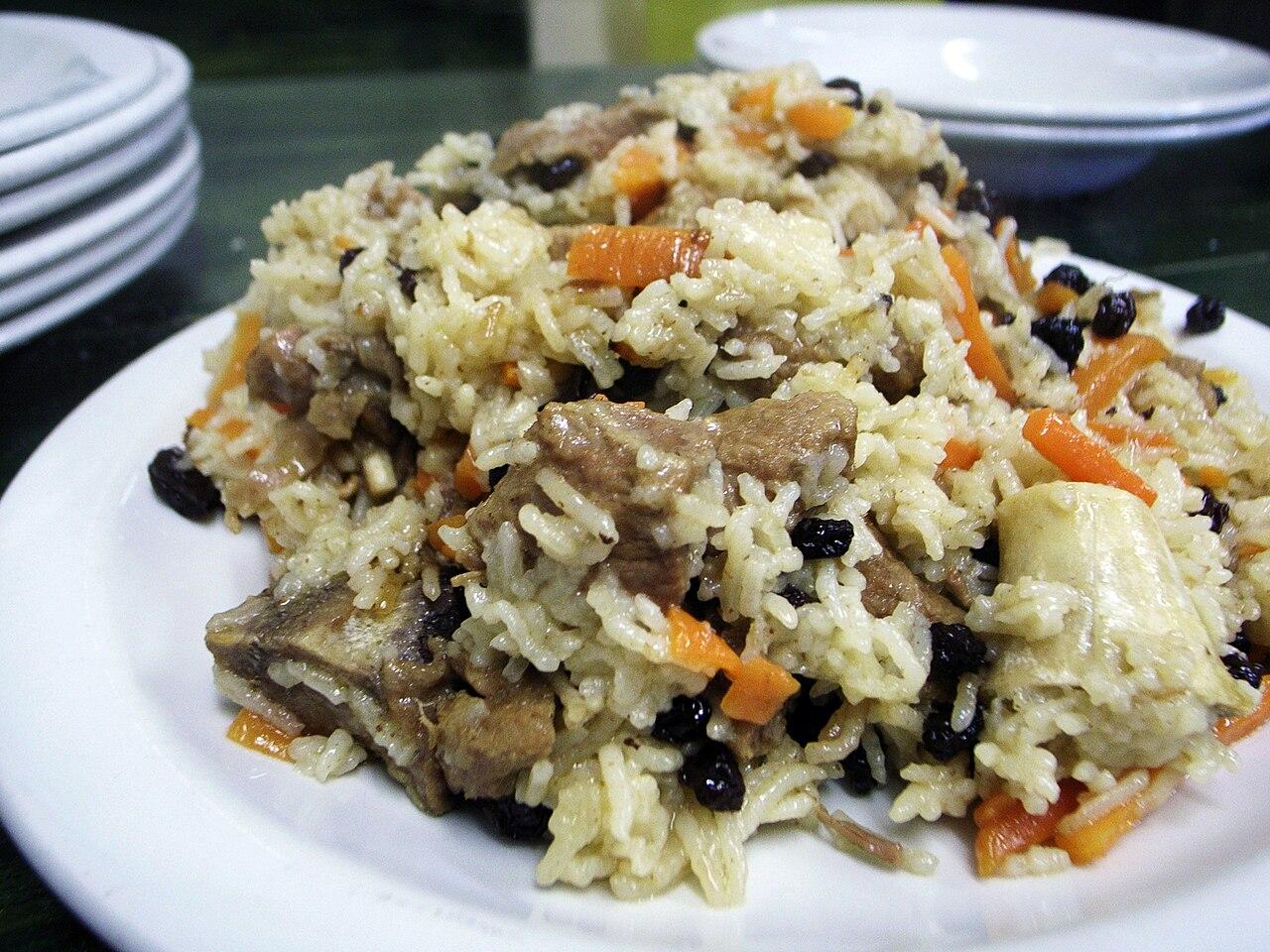
Short answer: one standard plate of lamb Kabuli pulao, about a cup and a half or roughly 350 g, has 500 to 600 calories. A cup on its own is about 300 to 360. The chicken version of the same plate is a little lighter at 450 to 550, and a big restaurant plate with extra oil and meat can reach 750 to 900. The rice is only part of the number. The meat, the oil it was cooked in, and the sweet topping decide where any single plate lands.
Kabuli pulao, also written Qabuli palaw, is the Afghan national dish and a fixture at weddings and family dinners across Pakistan, especially in Peshawar, Quetta and Karachi. Long grain basmati is cooked in a lightly spiced meat stock, then layered with tender lamb and a topping of caramelised carrots, raisins and sometimes almonds. It tastes sweet and savoury at once, which is what sets it apart from biryani. Biryani leans on heat and masala. Kabuli pulao leans on sweetness, whole spices and the richness of the meat stock.
Why one plate can vary by 300 calories
The meat. Lamb is the classic choice, and it is also the biggest variable. A lean piece of leg carries far less fat than a shoulder chop cooked on the bone. Chicken pulao made the same way runs about 50 to 100 calories lighter per plate, and a meat free version with extra carrots and raisins drops further still.
The oil. A home pot for six people usually takes three to four tablespoons of oil or ghee for the whole pot. A restaurant pot can take twice that. Oil is about 120 calories a tablespoon, and most of it ends up in the rice, so the difference between a careful home cook and a generous dhaba is easily 100 calories a plate. If you want one number to control, control this one.
The topping. Carrots are light, about 40 calories per 100 g raw, and they add bulk without much energy. Raisins are the opposite. USDA FoodData Central lists them at about 299 calories per 100 g, almost all of it natural sugar. A heavy hand with the raisins can add 50 to 80 calories to a plate before you notice. Almonds sit at the same end of the scale, close to 580 per 100 g, though most servings only carry a small scattering.
The serving. This is the one people get wrong most often. A cup of pulao looks modest next to a heaped plate, but a restaurant plate can hold two and a half cups without looking extreme. Weigh a plate once, or count it in cups, and the range below starts to make sense.
Kabuli pulao calories and macros
| Portion | Calories | Protein | Carbs | Fat |
|---|---|---|---|---|
| 100 g, lamb | 150 to 180 | 7 g | 20 g | 6 g |
| 1 cup, about 200 g, lamb | 300 to 360 | 13 to 16 g | 38 to 44 g | 10 to 13 g |
| 1 standard plate, about 350 g, lamb | 500 to 600 | 22 to 28 g | 65 to 75 g | 18 to 24 g |
| 1 large restaurant plate, about 500 g, lamb | 750 to 900 | 32 to 40 g | 95 to 110 g | 28 to 38 g |
| 1 standard plate, chicken | 450 to 550 | 28 to 34 g | 65 to 75 g | 12 to 18 g |
| 1 standard plate, no meat | 420 to 500 | 8 to 11 g | 70 to 80 g | 12 to 16 g |
The rice is the anchor. USDA FoodData Central lists cooked long grain white rice at about 130 calories per 100 g, with 2.7 g of protein and 28 g of carbs, and basmati lands in the same place. Cooked lamb runs about 200 to 250 per 100 g depending on the cut. Everything else in the dish, the oil, the raisins, the nuts, pushes the finished plate above plain rice.
Kabuli pulao vs biryani
A plate of chicken biryani usually lands in a similar range, 500 to 700 calories, but it gets there differently. Biryani's calories come from oil, fried onions and masala. Kabuli pulao's come from the meat stock, the cooking oil and the sweet topping. Biryani is hotter and sharper. Pulao is milder and sweeter, and the sugar from the raisins is the part people forget to count.
Against chicken pulao, the difference is smaller. Both are stock cooked rice dishes. Kabuli pulao is usually richer, with more meat per serving and the carrot and raisin topping on top, so expect it to run about 50 to 100 calories higher for the same sized plate.
The honest way to log Kabuli pulao
Count the rice in cups, then add the meat and the oil. "One plate of pulao" is not one number. A home plate is about 500 to 600 calories. A restaurant plate with a shiny layer of oil on top is closer to 800. Log the oil separately if you can, and say which meat you had, and the estimate stops lying to you.
In CalsFlow, type:
"1 plate lamb kabuli pulao, restaurant style, extra oil"
You get the estimate with the assumptions spelled out: plate size, meat, oil. Eating the home version with chicken instead? Say so in the entry and watch the number move. Two weeks of logging your usual plate and you will know it by heart.
Is Kabuli pulao good for weight loss?
It can be, as one meal. A standard home plate at 500 to 600 calories is a reasonable lunch or dinner, and the protein from the lamb keeps you full. The trouble is the second helping, and the oil. A heaped restaurant plate plus a second round of rice can pass 1,200 calories without feeling like a lot of food, and that is where a deficit disappears. The NHS suggests aiming for gradual weight loss of about 0.5 to 1 kg a week, which comes from a modest daily deficit rather than a crash. A lighter plate, chicken instead of lamb, less oil, a smaller first serving with salad on the side, keeps the dish in the meal plan. For more on keeping desi meals inside a target, see how to count calories in Pakistani food.
FAQs
How many calories are in 1 plate of Kabuli pulao? About 500 to 600 for a standard home plate of lamb Kabuli pulao, and 750 to 900 for a large restaurant plate. The chicken version is about 450 to 550.
How many calories are in 100g of Kabuli pulao? About 150 to 180 calories, with roughly 7 g of protein, 20 g of carbs and 6 g of fat.
Is Kabuli pulao healthier than biryani? They are close. Kabuli pulao is usually milder, with less fried onion and masala, but the raisins and cooking oil add calories of their own. The version with less oil and lean meat is the healthier plate, whichever dish it is.
What is the difference between Kabuli pulao and chicken pulao? Kabuli pulao is the Afghan dish, cooked with lamb or chicken in meat stock and topped with caramelised carrots, raisins and almonds. A Pakistani chicken pulao is usually simpler, with no sweet topping, and it is seasoned differently. Our chicken pulao calories post covers the local version.
Cover photo: Chen Zhao, Wikimedia Commons, CC BY 2.0.
CalsFlow provides nutrition estimates, not medical advice.