

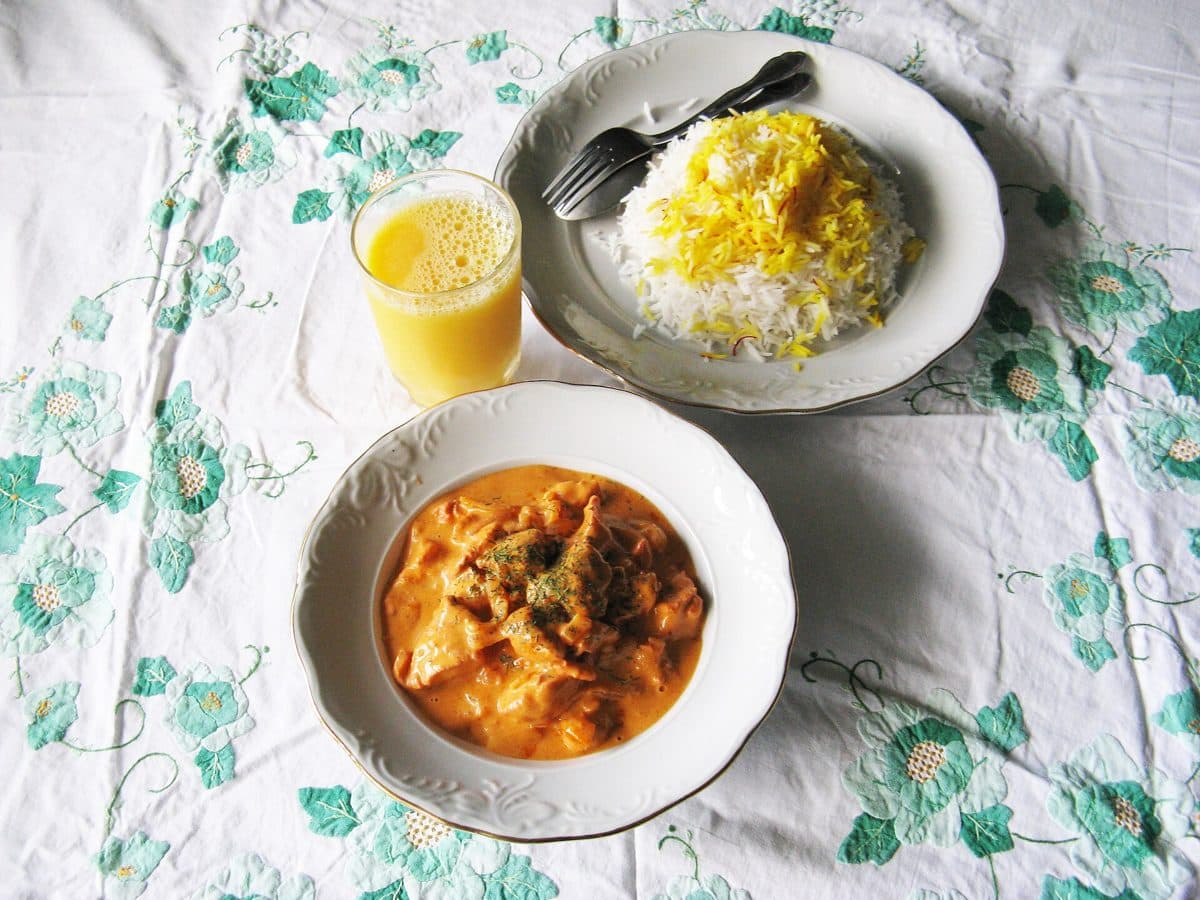
Short answer: one restaurant cup of butter chicken (about 240 g) has roughly 550–695 calories. A lighter homemade version of the same cup lands closer to 385–480. Per 100 g, expect roughly 160–200 kcal at home and 230–290 kcal at a restaurant. The chicken is not what moves the number. The sauce does.
What butter chicken actually is
Butter chicken, or murgh makhani, is tandoori style chicken folded into a smooth tomato sauce enriched with butter and cream. The usual story traces it to Delhi in the 1950s, where leftover tandoori chicken got a second life in that sauce. Whatever the exact origin, the modern restaurant version and the home version can be quite different dishes under the same name, and that is the whole reason the calories swing so much.
The base is lean enough. USDA FoodData Central lists cooked skinless chicken breast at about 165 kcal per 100 g, which is where a light version starts. Then butter, cream, and sometimes cashew paste or a spoon of sugar go in, and each one pushes the total up. Butter alone carries about 717 kcal per 100 g, so even a modest extra knob across a pot that serves four people adds up fast once it is divided into cups.
Why the range is so wide
A few decisions in the kitchen decide most of it:
How much butter and cream go in. This is the main variable. A home cook might finish a pot with a tablespoon or two of butter and a splash of cream. A restaurant can use several times that, plus extra butter melted over the top at serving.
How much sauce versus chicken is in your cup. A cup that is mostly chicken with a little sauce clinging to it is a different meal from a cup that is half sauce. Sauce is where the fat lives, so a saucy serving runs higher even at the same weight.
Cashew paste and sugar. Some recipes blend cashews into the sauce for body, and some add sugar to round off the tomatoes. Both add calories without adding much protein, and neither is obvious from looking at the plate.
The bread beside it. Butter chicken rarely arrives alone. A naan on the side can add as much again as a small serving of the dish itself, which is why the meal total surprises people more than the dish does. Our naan calories page breaks that part down.
Anyone giving you one exact number for butter chicken is guessing. Ranges are the honest answer.
Butter chicken calories and macros
Estimates for butter chicken as served, sauce included. A version heavy on chicken pieces runs a little higher in protein per 100 g; a version heavy on sauce runs higher in fat.
| Portion | Calories | Protein | Carbs | Fat |
|---|---|---|---|---|
| 100 g, homemade (light cream) | 160–200 | 14–17 g | 4–7 g | 9–13 g |
| 100 g, restaurant (rich sauce) | 230–290 | 13–16 g | 5–9 g | 17–23 g |
| 1 cup, homemade (~240 g) | 385–480 | 34–41 g | 10–17 g | 22–31 g |
| 1 cup, restaurant (~240 g) | 550–695 | 31–38 g | 12–22 g | 41–55 g |
| 1 plate, restaurant (~350 g) | 805–1015 | 46–56 g | 18–32 g | 60–80 g |
The protein holds up well in every version. A restaurant cup still gives you roughly 31–38 g of protein, which is a serious contribution to a day's intake (see how much protein you need per day). Butter chicken is not a low protein food. It is a high fat food that happens to carry a lot of protein with it.
Is butter chicken good for weight loss?
It can fit, but it needs more care than a grilled dish. Compare it with chicken tikka, which is essentially the same chicken without the sauce, and the gap is the sauce itself, often 100 kcal or more per 100 g. Two practical moves keep butter chicken in a plan without giving it up:
First, make the sauce work for you at home. Use yoghurt for part of the cream, go easy on the finishing butter, and skip the cashew paste. You keep the tomato and spice character and drop a meaningful chunk of fat.
Second, watch the pairing rather than the chicken. One roti instead of two naans, or a smaller portion of rice, changes the meal total more than picking at the chicken pieces does. The Pakistani food calorie guide walks through this pattern across the full menu.
If you eat it at a restaurant, log it as the rich version. That is the safer assumption, and it stops a 700 kcal cup from quietly entering your day as a 400 kcal one.
How to track butter chicken without guessing
Here is where it gets practical. In CalsFlow, you would type:
"1 cup restaurant butter chicken + 1 roti"
CalsFlow estimates the calories and macros, and shows its assumptions: the portion it guessed, and how rich a sauce it allowed for. Eating a homemade version with light cream? Dial the sauce richness down and watch the estimate drop by 100–200 calories for the cup. That editable assumption step is what turns a guess into a usable number.
Two weeks of logging butter chicken nights this way, and you will know your usual cup's numbers by heart, including whether your local restaurant's version sits near the top or the bottom of the range.
Butter chicken vs chicken karahi
Both are tomato based chicken dishes, but they land differently. Chicken karahi gets its calories mainly from cooking oil, while butter chicken gets its from butter and cream in the sauce. Per 100 g, a rich restaurant butter chicken usually runs a little higher than a typical karahi, because cream and butter are denser than the tomato masala in a karahi. Karahi also tends to carry less sauce per bite. If you had to pick one for a lighter meal, karahi with light oil usually wins. If butter chicken is the one you want, the homemade light version closes most of the gap.
FAQs
How many calories are in 1 cup of butter chicken? About 550–695 kcal for a rich restaurant cup of roughly 240 g, and about 385–480 kcal for a lighter homemade cup of the same weight.
Does homemade butter chicken have fewer calories than restaurant butter chicken? Almost always. Home cooks control the butter, cream, cashew paste and sugar, while restaurants cook for richness. Expect a homemade version to run roughly 25–35% lower per 100 g.
How much protein is in butter chicken? Roughly 13–17 g per 100 g as served. A restaurant cup gives you about 31–38 g, which is plenty for one meal.
Is butter chicken healthier than chicken tikka? Tikka is lighter, since it skips the butter and cream sauce. Butter chicken is richer and higher in fat, though it still delivers good protein. It comes down to how often you eat it and how rich the sauce is.
Butter chicken: 160–200 kcal per 100 g homemade, 230–290 kcal per 100 g at a restaurant, with strong protein in both. The sauce is the variable. Control that and it stays a dish you can enjoy regularly instead of a rare treat. Eating it tonight? Describe it in CalsFlow, set the sauce richness to match your plate, and get your real number in seconds.
CalsFlow provides nutrition estimates, not medical advice.